• Fri frakt över 249 kr
  • •
  • Snabba leveranser
  • •
  • Billiga böcker
Kundservice

Du är på sajten för privatpersoner.

Företag, bibliotek eller offentlig verksamhet?

Du handlar på classic.bokus.com, där alla dina funktioner finns intakta.
Till classic.bokus.com
Bokus logotyp. Gå till startsidan.
  • Erbjudanden
  • Nyheter
  • Student
  • Topplistor
  • Barn & ungdom
  • Bokus Play
  • E-böcker
  • Pocketböcker
  • Spel & pussel

10% studentrabatt med kod TERM26

Sidfot

Mina sidor

    Hjälp

    • Kundservice
    • Vanliga frågor och svar
    • Frakt och leverans
    • Retur vid ångerrätt
    • Reklamera vara
    • Betalning
    • Köpvillkor
    • Allmänna villkor
    • Information om webbplatsens tillgänglighet

    Om Bokus

    • Om oss
    • Pressrum
    • För studenter
    • För företag
    • För bibliotek och offentlig verksamhet
    • För leverantörer
    • Hållbarhet

    Populärt

    • Aktuella erbjudanden
    • Presentkort
    • Studentlitteratur
    • Nya böcker
    • Topplistor
    • Signerade böcker
    • Engelska böcker

    Inspiration

    • Boktips
    • BookTok
    • Populära bokserier
    • Barnbokskaraktärer
    • Populära författare
    Logotyp för Bokus
    Följ oss på Facebook (extern länk)Följ oss på Instagram (extern länk)Följ oss på YouTube (extern länk)Följ oss på TikTok (extern länk)
    bokus @ CookiesAnpassa cookiesIntegritetspolicyKöpvillkor
    Till Citymail hemsida (extern länk)Till Budbee hemsida (extern länk)Till Postnord hemsida (extern länk)Till Schenker hemsida (extern länk)Till Early Bird hemsida (extern länk)Till Walleys hemsida (extern länk)
    1. Samhälle och politik
    2. Politik och statsskick
    3. Offentlig förvaltning

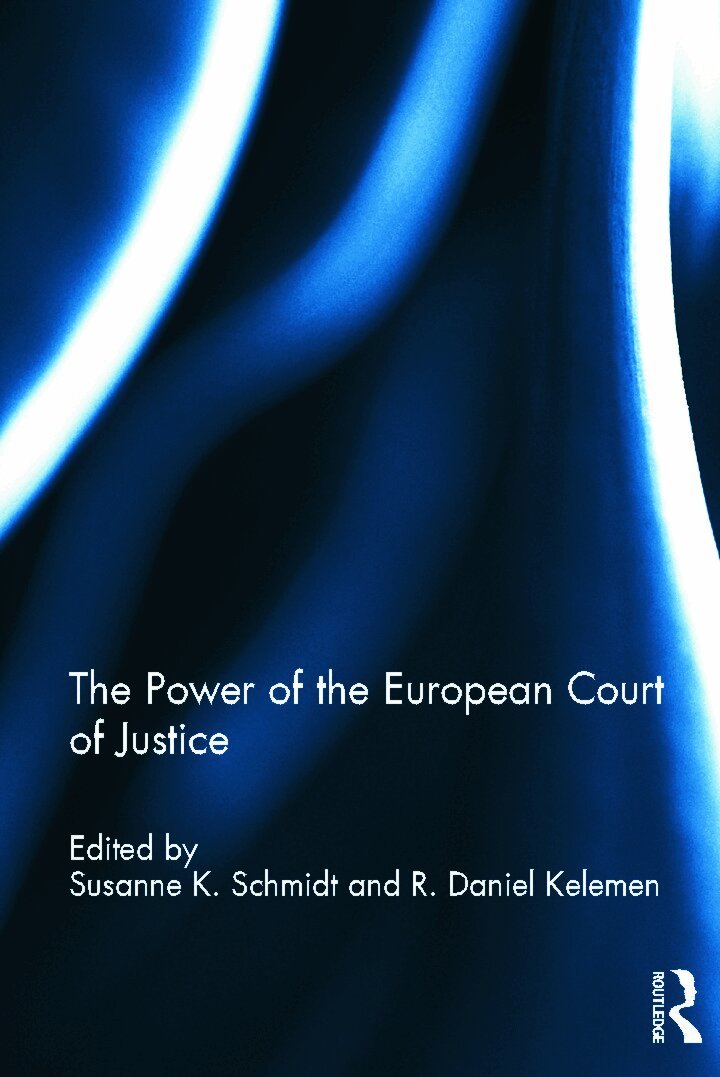
    Power of the European Court of Justice

    AvSusanne K. Schmidt,R. Daniel Kelemen

    Inbunden, Engelska, 2012

    Del i serien Journal of European Public Policy Series

    2 239 kr

    Beställningsvara. Skickas inom 10-15 vardagar. Fri frakt över 249 kr.

    Beskrivning

    The European Court of Justice (ECJ) has played a vital role in promoting the process of European integration. In recent years, however, the expansion of EU law has led it to impact ever more politically sensitive issues, and controversial ECJ judgments have elicited unprecedented levels of criticism. Can we expect the Court to sustain its role as a motor of deeper integration without Member States or other countervailing forces intervening? To answer this question, we need to revisit established explanations of the Court’s power to see if they remain viable in the Court’s contemporary environment. We also need to better understand the ultimate limits of the Court’s power – the means through which and extent to which national governments, national courts, litigants and the Court’s other interlocutors attempt to influence the Court and to limit the impact of its rulings.In this book, leading scholars of European law and politics investigate how the ECJ has continued to support deeper integration and whether the EU is experiencing an increase in countervailing forces that may diminish the Court’s ability or willingness to act as a motor of integration.This book was published as a special issue of the Journal of European Public Policy.

    Produktinformation

    • Utgivningsdatum:2012-10-17
    • Mått:156 x 234 x 14 mm
    • Vikt:460 g
    • Format:Inbunden
    • Språk:Engelska
    • Serie:Journal of European Public Policy Series
    • Antal sidor:156
    • Förlag:Taylor & Francis Ltd
    • ISBN:9780415627887

    Utforska kategorier

    • Offentlig förvaltning inom Samhälle och politik
    • Författningsrätt och förvaltningsrätt inom Juridik

    Mer om författaren

    Susanne K. Schmidt is Professor of Political Science at the University of Bremen.R. Daniel Kelemen is Jean Monnet Chair and Professor of Political Science at Rutgers University.

    Innehållsförteckning

    • 1. Introduction – the European Court of Justice and legal integration: perpetual momentum? 2. Who cares about nationality? The path-dependent case law of the ECJ from goods to citizens 3. The reference points of EU judicial politics 4. The political foundations of judicial independence in the European Union 5. Do ECJ judges all speak with the same voice? Evidence of divergent preferences from the judgments of chambers 6. Activism relocated. The self-restraint of the European Court of Justice in its national context 7. Rights adjudication and constitutional pluralism in Germany and Europe 8. With Luxembourg in mind ... the remaking of national policies in the face of ECJ jurisprudence 9. Perpetual momentum: directed and unconstrained?