• Fri frakt över 249 kr
  • •
  • Snabba leveranser
  • •
  • Billiga böcker
Kundservice

Du är på sajten för privatpersoner.

Företag, bibliotek eller offentlig verksamhet?

Du handlar på classic.bokus.com, där alla dina funktioner finns intakta.
Till classic.bokus.com
Bokus logotyp. Gå till startsidan.
  • Erbjudanden
  • Nyheter
  • Student
  • Topplistor
  • Barn & ungdom
  • Bokus Play
  • E-böcker
  • Pocketböcker
  • Spel & pussel

10% rabatt på allt med kod NYSTART10 →

Sidfot

Mina sidor

    Hjälp

    • Kundservice
    • Vanliga frågor och svar
    • Frakt och leverans
    • Retur vid ångerrätt
    • Reklamera vara
    • Betalning
    • Köpvillkor
    • Allmänna villkor
    • Information om webbplatsens tillgänglighet

    Om Bokus

    • Om oss
    • Pressrum
    • För studenter
    • För företag
    • För bibliotek och offentlig verksamhet
    • För leverantörer
    • Hållbarhet

    Populärt

    • Aktuella erbjudanden
    • Presentkort
    • Studentlitteratur
    • Nya böcker
    • Topplistor
    • Signerade böcker
    • Engelska böcker

    Inspiration

    • Boktips
    • BookTok
    • Populära bokserier
    • Barnbokskaraktärer
    • Populära författare
    Logotyp för Bokus
    Följ oss på Facebook (extern länk)Följ oss på Instagram (extern länk)Följ oss på YouTube (extern länk)Följ oss på TikTok (extern länk)
    bokus @ CookiesAnpassa cookiesIntegritetspolicyKöpvillkor
    Till Citymail hemsida (extern länk)Till Budbee hemsida (extern länk)Till Postnord hemsida (extern länk)Till Schenker hemsida (extern länk)Till Early Bird hemsida (extern länk)Till Walleys hemsida (extern länk)
    1. Naturvetenskap och teknik
    2. Teknik och industri
    3. Byggnadsteknik

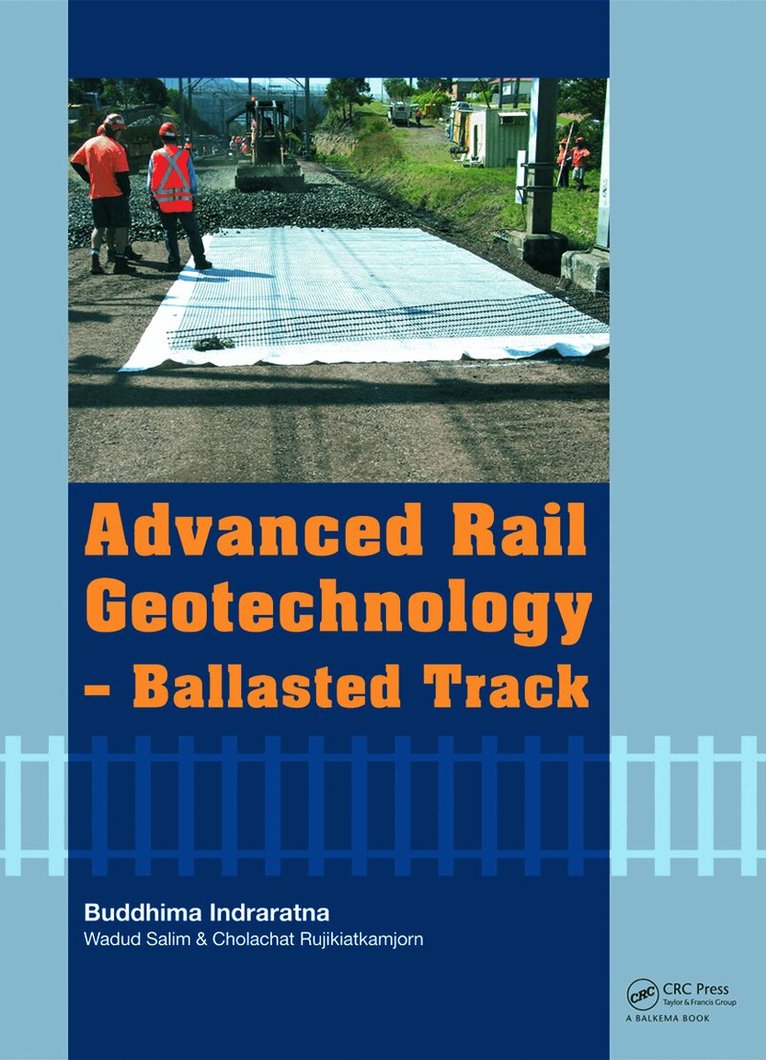
    Advanced Rail Geotechnology - Ballasted Track

    AvBuddhima Indraratna,Wadud Salim

    Inbunden, Engelska, 2011

    3 659 kr

    Beställningsvara. Skickas inom 10-15 vardagar. Fri frakt över 249 kr.

    Fler format och utgåvor

    Inbunden

    3 308 kr

    Häftad

    1 201 kr

    Beskrivning

    Ballast plays a vital role in transmitting and distributing train wheel loads to the underlying sub-ballast and subgrade. Bearing capacity of track, train speed, riding quality and passenger comfort all depend on the stability of ballast through mechanical interlocking of particles. Ballast attrition and breakage occur progressively under heavy cyclic loading, causing track deterioration and rail misalignment—affecting safety and demanding frequent and costly track maintenance. In the absence of realistic constitutive models, the track substructure is traditionally designed using empirical approaches.In Advanced Rail Geotechnology: Ballasted Track, the authors present detailed information on the strength, deformation and degradation, and aspects of fresh and recycled ballast under monotonic, cyclic, and impact loading using innovative geotechnical testing devices. The book presents a new stress-strain constitutive model for ballast incorporating particle breakage and validates mathematical formulations and numerical models using experimental evidence and field trials. The text also elucidates the effectiveness of various commercially available geosynthetics for enhancing track drainage and stability. It presents revised ballast gradations for modern high-speed trains capturing particle breakage and describes the use of geosynthetics in track design. It also provides insight into track design, capturing particle degradation, fouling, and drainage.This book is ideal for final year civil engineering students and postgraduates and is a solid reference for practicing railway engineers and researchers with the task of modernizing existing track designs for heavier and faster trains.

    Produktinformation

    • Utgivningsdatum:2011-03-16
    • Mått:174 x 246 x 25 mm
    • Vikt:980 g
    • Format:Inbunden
    • Språk:Engelska
    • Antal sidor:432
    • Förlag:Taylor & Francis Ltd
    • ISBN:9780415669573

    Utforska kategorier

    • Byggnadsteknik inom Naturvetenskap och teknik
    • Järnvägar inom Naturvetenskap och teknik

    Mer om författaren

    Professor Buddhima Indraratna is a Civil Engineering graduate from Imperial College London, UK and holds a Masters degree in Soil Mechanics from the same Institution. He obtained his PhD from the University of Alberta, Canada in 1982. After working in industry and academia for several years he joined the University of Wollongong, Australia in 1991, where he is now Professor of Civil (Geotechnical) Engineering, and the Head of School of Civil, Mining and Environmental Engineering.Professor Indraratna has earned the reputation as one of the world’s leading researchers in rail geotechnology. His work is elucidated in many scholarly journals and invited keynote papers in numerous international conferences since mid-1990’s. His contributions through research and development towards the understanding of ballast and subgrade soil behaviour have been incorporated by numerous rail organisations into their engineering practices for the design and maintenance of ballasted tracks. The outcomes through strategic real-life projects and extensive laboratory testing over the past decade have lead to a major revision of current New South Wales standards for the placement densities of ballast on track and its size gradations, leading to significant track enhancement allowing greater axle loads at much higher speeds.Among numerous national and international awards over the past decade for his research contributions, Professor Indraratna was awarded the prestigious 2009 Business-Higher Education Round Table (BHERT) award by the Australian Government for his outstanding contributions to rail track innovations in collaboration with industry.In September 2014 Professor Indranata was awarded the C. S. Desai Excellence Medal by the International Association of Computer Methods and Advances in Geomechanics (IACMAG).

    Innehållsförteckning

    • Introduction. Track Structure and Rail Load. Factors Governing Ballast Behaviour. State-of-the-art Laboratory Testing and Degradation Assessment of Ballast. Behaviour of Ballast with and without Geosynthetics and Energy Absorbing Mats. Existing Track Deformation Models. A Constitutive Model for Ballast. Track Drainage and Use of Geotextiles. Role of Subballast, its Drainage and Filtration Characteristics. Field Instrumentation for Track Performance Verification. DEM Modelling of Ballast Densification and Breakage. FEM Modelling of Tracks and Applications to Case Studies. Non-destructive Testing and Track Condition Assessment. Track Maintenance. Recommended Ballast Gradations. Bio-Engineering for Track Stabilisation. Appendices. Subject Index.