• Fri frakt över 249 kr
  • •
  • Snabba leveranser
  • •
  • Billiga böcker
Kundservice

Du är på sajten för privatpersoner.

Företag, bibliotek eller offentlig verksamhet?

Du handlar på classic.bokus.com, där alla dina funktioner finns intakta.
Till classic.bokus.com
Bokus logotyp. Gå till startsidan.
  • Erbjudanden
  • Nyheter
  • Student
  • Topplistor
  • Barn & ungdom
  • Bokus Play
  • E-böcker
  • Pocketböcker
  • Spel & pussel

10% studentrabatt med kod TERM26

Sidfot

Mina sidor

    Hjälp

    • Kundservice
    • Vanliga frågor och svar
    • Frakt och leverans
    • Retur vid ångerrätt
    • Reklamera vara
    • Betalning
    • Köpvillkor
    • Allmänna villkor
    • Information om webbplatsens tillgänglighet

    Om Bokus

    • Om oss
    • Pressrum
    • För studenter
    • För företag
    • För bibliotek och offentlig verksamhet
    • För leverantörer
    • Hållbarhet

    Populärt

    • Aktuella erbjudanden
    • Presentkort
    • Studentlitteratur
    • Nya böcker
    • Topplistor
    • Signerade böcker
    • Engelska böcker

    Inspiration

    • Boktips
    • BookTok
    • Populära bokserier
    • Barnbokskaraktärer
    • Populära författare
    Logotyp för Bokus
    Följ oss på Facebook (extern länk)Följ oss på Instagram (extern länk)Följ oss på YouTube (extern länk)Följ oss på TikTok (extern länk)
    bokus @ CookiesAnpassa cookiesIntegritetspolicyKöpvillkor
    Till Citymail hemsida (extern länk)Till Budbee hemsida (extern länk)Till Postnord hemsida (extern länk)Till Schenker hemsida (extern länk)Till Early Bird hemsida (extern länk)Till Walleys hemsida (extern länk)
    1. Samhälle och politik
    2. Samhälle och kultur
    3. Kultur och medier
    4. Referensverk och tvärvetenskap

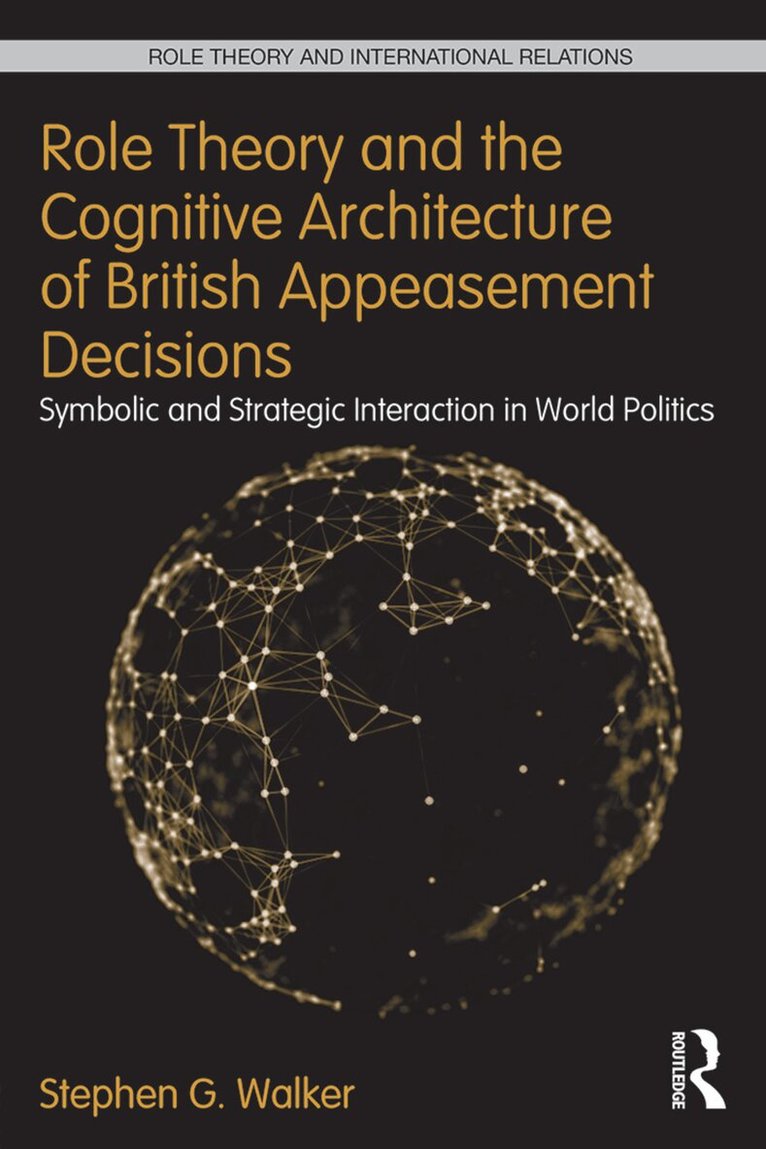
    Role Theory and the Cognitive Architecture of British Appeasement Decisions

    Symbolic and Strategic Interaction in World Politics

    AvStephen G. Walker

    Häftad, Engelska, 2014

    Del i serien Role Theory and International Relations

    698 kr

    Beställningsvara. Skickas inom 10-15 vardagar. Fri frakt över 249 kr.

    Fler format och utgåvor

    Inbunden

    2 434 kr

    E-bok

    846 kr

    Beskrivning

    Appeasement is a controversial strategy of conflict management and resolution in world politics. Its reputation is sullied by foreign policy failures ending in war or defeat in which the appeasing state suffers diplomatic and military losses by making costly concessions to other states. Britain’s appeasement policies toward Germany, Italy, and Japan in the 1930s are perhaps the most notorious examples of the patterns of failure associated with this strategy. Is appeasement’s reputation deserved or is this strategy simply misunderstood and perhaps improperly applied? Role theory offers a general theoretical solution to the appeasement puzzle that addresses these questions, and the answers should be interesting to political scientists, historians, students, and practitioners of cooperation and conflict strategies in world politics. As a social-psychological theory of human behavior, role theory has the capacity to unite the insights of various existing theories of agency and structure in the domain of world politics. Demonstrating this claim is the methodological aim in this book and its main contribution to breaking new ground in international relations theory.

    Produktinformation

    • Utgivningsdatum:2014-12-16
    • Mått:152 x 229 x 20 mm
    • Vikt:362 g
    • Format:Häftad
    • Språk:Engelska
    • Serie:Role Theory and International Relations
    • Antal sidor:246
    • Förlag:Taylor & Francis Ltd
    • ISBN:9780415709477

    Utforska kategorier

    • Referensverk och tvärvetenskap inom Samhälle och politik
    • Krig och försvar inom Samhälle och politik
    • Sociologi inom Samhälle och politik

    Mer om författaren

    Stephen G. Walker is Emeritus Professor of Political Science at Arizona State University. He served as a co-editor of International Studies Quarterly (1985) and as a vice-president of the International Society of Political Psychology (1997-1999) and the International Studies Association (2003-2004). He received the Distinguished Scholar Award from the Foreign Policy Section of the International Studies Association in 2003.

    Recensioner i media

    "This book unequivocally demonstrates the theoretical and empirical utility of role theory for IR while at the same time providing new insights into British foreign policy in the 1930s. Walker’s mix of historical narrative and formal analysis is unexcelled. All those concerned with agents and structures will find this book enlightening and refreshing—a must read."—John Vasquez, University of Illinois at Urbana-Champaign"Observers of world politics have long agreed that Britain's decisions to appease Imperial Japan, Mussolini's Italy and Hitler's Germany contributed to the outbreak of World War II, but they have proposed varying explanations for those decisions. Drawing upon both archival evidence and mathematical analysis, Stephen Walker's path-breaking new book develops a compelling case for role theory as a general analytic solution to ‘the appeasement puzzle.’ His conclusion indicates that leaders’ beliefs and preferences provide a powerful explanation for how and why foreign policy decisions are made."—Ole R. Holsti, Duke University

    Innehållsförteckning

    • Part I: Role Theory: The Puzzle of Britain’s Appeasement Decisions in the 1930s. 1. The Appeasement Puzzle in World Politics 2. Modeling the Appeasement Strategy. 3. Role Theory and the Uncertainty Problem in International Relations Theory. Part II: Role Demands: Substantive Rationality and Structural Adaptation. 4. Britain’s Roles in the Sino-Japanese Conflict, 1931-1933. 5. Britain’s Roles in the Italo-Abyssinian and Rhineland Conflicts, 1934-1936. 6. Britain’s Roles in the Search for Peace, 1937-1938. 7. Britain’s Roles on the Road to War, 1939-1941. Part III: Role Conceptions: Bounded Rationality and Experiential Learning. 8. Psychological Mechanisms and British Decision-Making Processes. 9. Turning Points for Peace: The Anschluss and the Sudeten Conflict in 1938. 10. Turning Points for War: The Prague Coup and the Polish Conflict, 1939. Part IV: Role Enactments: Communicative Rationality and Altercasting. 11. Binary Role Theory and Britain’s Appeasement Decisions. 12. Crossing Simon’s Bridge: Is Binary Role Theory a Theory of Everything