• Fri frakt över 249 kr
  • •
  • Snabba leveranser
  • •
  • Billiga böcker
Kundservice

Du är på sajten för privatpersoner.

Företag, bibliotek eller offentlig verksamhet?

Du handlar på classic.bokus.com, där alla dina funktioner finns intakta.
Till classic.bokus.com
Bokus logotyp. Gå till startsidan.
  • Erbjudanden
  • Nyheter
  • Student
  • Topplistor
  • Barn & ungdom
  • Bokus Play
  • E-böcker
  • Pocketböcker
  • Spel & pussel

10% rabatt på allt med kod: NYSTART10 →

Sidfot

Mina sidor

    Hjälp

    • Kundservice
    • Vanliga frågor och svar
    • Frakt och leverans
    • Retur vid ångerrätt
    • Reklamera vara
    • Betalning
    • Köpvillkor
    • Allmänna villkor
    • Information om webbplatsens tillgänglighet

    Om Bokus

    • Om oss
    • Pressrum
    • För studenter
    • För företag
    • För bibliotek och offentlig verksamhet
    • För leverantörer
    • Hållbarhet

    Populärt

    • Aktuella erbjudanden
    • Presentkort
    • Studentlitteratur
    • Nya böcker
    • Topplistor
    • Signerade böcker
    • Engelska böcker

    Inspiration

    • Boktips
    • BookTok
    • Populära bokserier
    • Barnbokskaraktärer
    • Populära författare
    Logotyp för Bokus
    Följ oss på Facebook (extern länk)Följ oss på Instagram (extern länk)Följ oss på YouTube (extern länk)Följ oss på TikTok (extern länk)
    bokus @ CookiesAnpassa cookiesIntegritetspolicyKöpvillkor
    Till Citymail hemsida (extern länk)Till Budbee hemsida (extern länk)Till Postnord hemsida (extern länk)Till Schenker hemsida (extern länk)Till Early Bird hemsida (extern länk)Till Walleys hemsida (extern länk)
    1. Samhälle och politik
    2. Politik och statsskick
    3. Internationella relationer

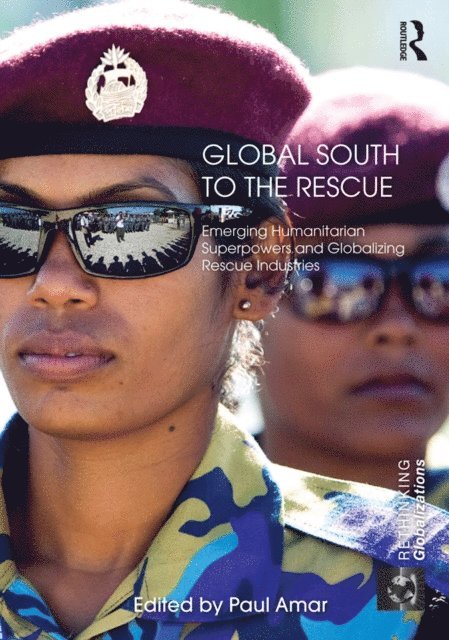
    Global South to the Rescue

    Emerging Humanitarian Superpowers and Globalizing Rescue Industries

    AvPaul Amar

    Häftad, Engelska, 2013

    Del i serien Rethinking Globalizations

    863 kr

    Beställningsvara. Skickas inom 10-15 vardagar. Fri frakt över 249 kr.

    Beskrivning

    This book provides the first comprehensive analysis of an epochal shift in global order – the fact that global-south countries have taken up leadership roles in peacekeeping missions, humanitarian interventions, and transnational military industries: Brazil has taken charge of the UN military mission in Haiti; Nigeria has deployed peacekeeping troops throughout West Africa; Indonesians have assumed crucial roles in UN Afghanistan operations; Fijians, South Africans, and Chileans have became essential actors in global mercenary firms; Venezuela and its Bolivarian allies have established a framework for "revolutionary" humanitarian interventions; and Turkey, India, Kenya, and Egypt are asserting themselves in bold new ways on the global stage.In this context, this collection sheds critical light on intersections between imperialism and humanitarianism, between neoliberal globalization and "rescue industry" transnationalism, and between patterns of geopolitical hegemony and trajectories of peacekeeping internationalism. These case studies are grouped into three clusters (I) Globalizing Peacekeeper Identities, (II) Assertive "Regional Internationalisms," and (III) Emergent Alternative Paradigms. Together, these articulate a new research agenda and offer significant contributions to fields of global studies, transnational gender and race studies, critical security studies and peace studies, comparative politics, police and military sociology, Third World diplomatic history, and international relations. This book was published as a special issue of Globalizations.


    Produktinformation

    • Utgivningsdatum:2013-08-14
    • Mått:189 x 246 x 12 mm
    • Vikt:760 g
    • Format:Häftad
    • Språk:Engelska
    • Serie:Rethinking Globalizations
    • Antal sidor:216
    • Förlag:Taylor & Francis Ltd
    • ISBN:9780415731188

    Utforska kategorier

    • Internationella relationer inom Samhälle och politik
    • Militär strategi inom Samhälle och politik

    Mer om författaren

    Paul Amar is an Associate Professor in the Global & International Studies Program at the University of California, Santa Barbara, USA. He is a political sociologist and urban ethnographer specializing in security politics, police-military relations, humanitarian law and authoritarian states. He researches the transnational and urban dynamics of police militarization as well as state violence against racial and sexual minorities in the cities of Latin America and the Middle East. Dr. Amar has worked at the United Nations, and on behalf of community struggles to fight police brutality and military atrocity, and to strengthen institutions of citizenship and cultures of legality.

    Innehållsförteckning

    • Foreword 1. Introduction: Global South to the Rescue Section One: Globalizing Peacekeeper Identities 2. Peacexploitation? Interrogating Labor Hierarchies and Global Sisterhood Amongst Indian and Uruguayan Female Peacekeepers 3. Martial Races and Enforcement Masculinities of the Global South: Weaponising Fijian, Chilean, and Salvadoran Postcoloniality in the Mercenary Sector 4. The Pacification of Soldiering, and the Militarization of Development: Contradictions Inherent in Provincial Reconstruction in Afghanistan Section Two: Assertive "Regional Internationalisms" 5. Turkey: An Emerging Hub of Globalization and Internationalist Humanitarian Actor? 6. Globalising Security Culture and Knowledge in Practice: Nigeria’s Hybrid Model 7. Indonesia and the Liberal Peace: Recovering Southern Agency in Global Governance 8. Kenya and International Security: Enabling Globalization, Stabilising ‘Stateness,’ and Deploying ‘Humanitarian Counterterrorism’ Section Three: Emergent Alternative Paradigms 9. Bolivarian Globalization?: The New Left’s Struggle in Latin America and the Caribbean to Negotiate a Revolutionary Approach to Humanitarian Militarism and International Intervention 10. Brazil’s Grand Design for Combining Global South Solidarity and National Interests: A Discussion of Peacekeeping Operations in Haiti and Timor 11. Egypt as a Globalist Power: Mapping Military Participation in Decolonizing Internationalism, Repressive Entrepreneurialism, and Humanitarian Globalization between the Revolutions of 1952 and 2011