• Fri frakt över 249 kr
  • •
  • Snabba leveranser
  • •
  • Billiga böcker
Kundservice

Du är på sajten för privatpersoner.

Företag, bibliotek eller offentlig verksamhet?

Du handlar på classic.bokus.com, där alla dina funktioner finns intakta.
Till classic.bokus.com
Bokus logotyp. Gå till startsidan.
  • Erbjudanden
  • Student
  • Topplistor
  • Barn & ungdom
  • Bokus Play
  • E-böcker
  • Ljudböcker
  • Pocketböcker
  • Spel & pussel

10% rabatt på allt med kod NYSTART10 →

Sidfot

Mina sidor

    Hjälp

    • Kundservice
    • Vanliga frågor och svar
    • Frakt och leverans
    • Retur vid ångerrätt
    • Reklamera vara
    • Betalning
    • Köpvillkor
    • Allmänna villkor
    • Information om webbplatsens tillgänglighet

    Om Bokus

    • Om oss
    • Pressrum
    • För studenter
    • För företag
    • För bibliotek och offentlig verksamhet
    • För leverantörer
    • Hållbarhet

    Populärt

    • Aktuella erbjudanden
    • Presentkort
    • Studentlitteratur
    • Nya böcker
    • Topplistor
    • Signerade böcker
    • Engelska böcker

    Inspiration

    • Boktips
    • BookTok
    • Populära bokserier
    • Barnbokskaraktärer
    • Populära författare
    Logotyp för Bokus
    Följ oss på Facebook (extern länk)Följ oss på Instagram (extern länk)Följ oss på YouTube (extern länk)Följ oss på TikTok (extern länk)
    bokus @ CookiesAnpassa cookiesIntegritetspolicyKöpvillkor
    Till Citymail hemsida (extern länk)Till Budbee hemsida (extern länk)Till Postnord hemsida (extern länk)Till Schenker hemsida (extern länk)Till Early Bird hemsida (extern länk)Till Walleys hemsida (extern länk)
    1. Samhälle och politik
    2. Samhälle och kultur
    3. Kultur och medier
    4. Kulturvetenskap

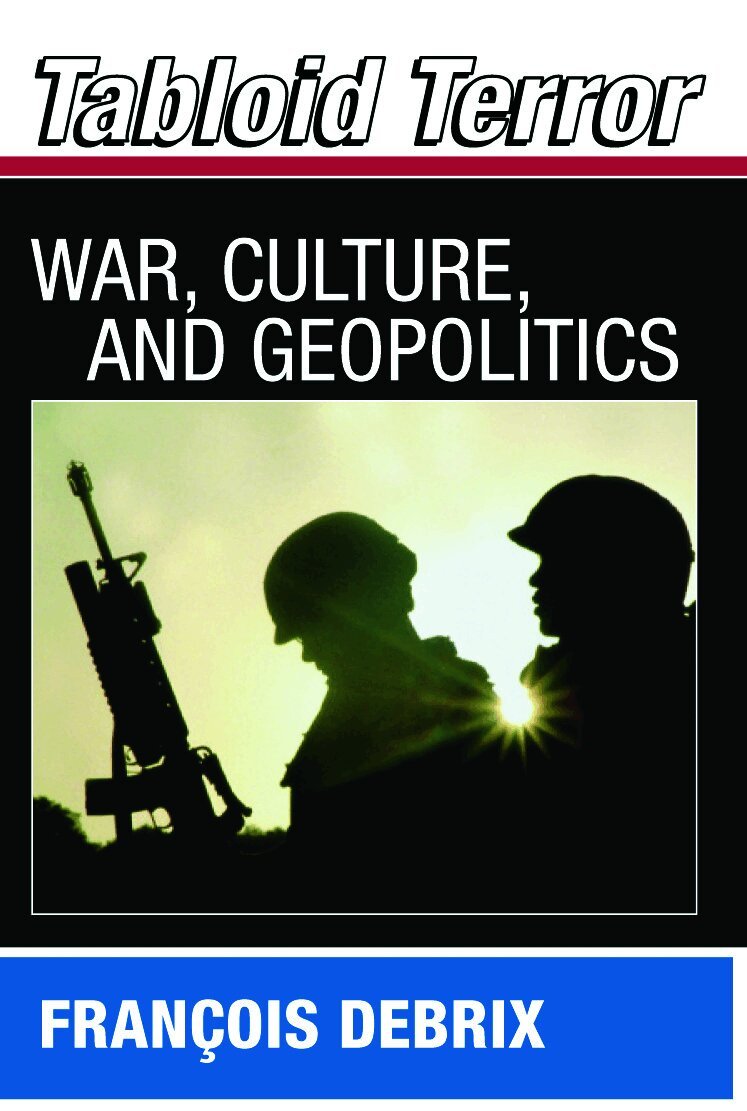
    Tabloid Terror

    War, Culture, and Geopolitics

    AvFrancois Debrix

    Häftad, Engelska, 2007

    722 kr

    Beställningsvara. Skickas inom 10-15 vardagar. Fri frakt över 249 kr.

    Fler format och utgåvor

    Inbunden

    2 642 kr

    E-bok

    855 kr

    E-bok

    858 kr

    Beskrivning

    This book analyzes the methods, effects, and mechanisms by which international relations reach the US citizen. Deftly dissecting the interrelationships of national identity formation, corporate ‘news and opinion’ dissemination, and the quasi-academic apparatus of war justification - focusing on the Bush administration's exploitation of the fear and insecurity caused by 9/11 and how this has manifested itself in the US media (especially the tabloid populist media). Debrix explains how all serve to defend and produce state power and develops a model of tabloidized international relations, where responses are both organized by, and supportive of, a strong centralized US government. The field of International Relations sorely needs such analytics, in so far as it explains how people in their everyday lives relate to transnational issues.Tabloid Terror critically covers a wide variety of US popular culture from the Internet to Fox News; analyzes diverse authors as Julia Kristeva, J.G. Ballard and Robert Kaplan and takes into account renowned international relations interlocutors as Don Imus, Bill O’Reilly, and Tommy Franks.

    Produktinformation

    • Utgivningsdatum:2007-08-23
    • Mått:156 x 234 x 13 mm
    • Vikt:380 g
    • Format:Häftad
    • Språk:Engelska
    • Antal sidor:204
    • Förlag:Taylor & Francis Ltd
    • ISBN:9780415772914

    Utforska kategorier

    • Kulturvetenskap inom Samhälle och politik
    • Internationella relationer inom Samhälle och politik

    Mer om författaren

    François Debrix is Associate Professor of International Relations at Florida International University in Miami, USA.

    Recensioner i media

    'This collection of essays on the tabloidization of the war on terror is analytically sharp, politically nuanced, and consistently well written. It deserves a wide audience within the policy-interested public as well as within academia.' - Michael Shapiro, University of Hawaii at Manoa, USA'In this compelling volume Francois Debrix investigates at length the discourses now used by journalists, think tank intellectuals, foreign policy writers, and talk show hosts to represent the world as a threatening place 'in need' of American military violence. This volume is both a valuable contribution to contemporary thinking about media and war, and simultaneously a powerful critique of the practices that legitimize geopolitical violence. In lucid prose Debrix reasserts the importance of using critical social and political theory to effectively tackle matters of geopolitics, identity and warfare. This very timely book deserves a wide readership wherever citizens and scholars are concerned with violence and war, and how their contemporary justifications are shaping culture in so many places.' - Simon Dalby, Carleton University, Canada'This critical analysis explores the discursive formations and political alliances emerging from tabloid news and entertainment programming in the U.S.A after September 11, 2001. For Debrix, the geopolitical worldviews of both elite decision-makers and mass publics now largely swirls through turbulent flow of media images. Instead of rational discourse, this re-mediated tabloid imagery simultaneously makes and maps the world as spaces where panics, conflict, anxieties, and disaster threaten everyone. Integrating ideas from media studies, international affairs, global studies, and moral philosophy, this engaging narrative is a challenging look at post-Cold War politics.' - Timothy W. Luke, Virginia Polytechnic Institute and State University, USA

    Innehållsförteckning

    • Introduction: From Images of Terror to Tabloid Geopolitics 1. Cyberterror and Media-Induced Fears: The Tabloid Production of Emergency Culture 2. Tabloid Realism and the Reconstruction of American Security Culture before 9/11 3. Discourses of War, Geographies of Abjection: American Intellectuals of Statecraft and the Avenging of 9/11 4. The United States and the War Machine: Proliferating Insecurity, Terror, and Agony after the Invasion of Iraq 5. The Sublime Spectatorship of the Iraq War: America’s Tabloid Aesthetics of Violence and the Erasure of the Event. Conclusion: Tabloid Terror and Precarious Lives