• Fri frakt över 249 kr
  • •
  • Snabba leveranser
  • •
  • Billiga böcker
Kundservice

Du är på sajten för privatpersoner.

Företag, bibliotek eller offentlig verksamhet?

Du handlar på classic.bokus.com, där alla dina funktioner finns intakta.
Till classic.bokus.com
Bokus logotyp. Gå till startsidan.
  • Erbjudanden
  • Student
  • Topplistor
  • Barn & ungdom
  • Bokus Play
  • E-böcker
  • Ljudböcker
  • Pocketböcker
  • Spel och pussel

Pocketfynda! Hundratals böcker för 49 kr/st →

Sidfot

Mina sidor

    Hjälp

    • Kundservice
    • Vanliga frågor och svar
    • Frakt och leverans
    • Retur vid ångerrätt
    • Reklamera vara
    • Betalning
    • Köpvillkor
    • Allmänna villkor
    • Information om webbplatsens tillgänglighet

    Om Bokus

    • Om oss
    • Pressrum
    • För studenter
    • För företag
    • För bibliotek och offentlig verksamhet
    • För leverantörer
    • Hållbarhet

    Populärt

    • Aktuella erbjudanden
    • Presentkort
    • Studentlitteratur
    • Nya böcker
    • Topplistor
    • Signerade böcker
    • Engelska böcker

    Inspiration

    • Boktips
    • BookTok
    • Barnbokskaraktärer
    • Populära författare
    Logotyp för Bokus
    Följ oss på Facebook (extern länk)Följ oss på Instagram (extern länk)Följ oss på YouTube (extern länk)Följ oss på TikTok (extern länk)
    bokus @ CookiesAnpassa cookiesIntegritetspolicyKöpvillkor
    Till Citymail hemsida (extern länk)Till Budbee hemsida (extern länk)Till Postnord hemsida (extern länk)Till Schenker hemsida (extern länk)Till Early Bird hemsida (extern länk)Till Walleys hemsida (extern länk)
    1. Filosofi och religion
    2. Religion och tro
    3. Islam

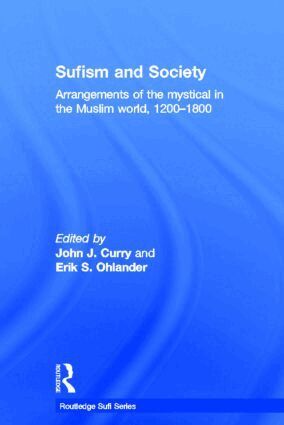
    Sufism and Society

    Arrangements of the Mystical in the Muslim World, 1200–1800

    AvJohn Curry,Erik Ohlander

    Inbunden, Engelska, 2011

    Del i serien Routledge Sufi Series

    2 410 kr

    Beställningsvara. Skickas inom 10-15 vardagar. Fri frakt över 249 kr.

    Beskrivning

    In recent years, many historians of Islamic mysticism have been grappling in sophisticated ways with the difficulties of essentialism. Reconceptualising the study of Islamic mysticism during an under-researched period of its history, this book examines the relationship between Sufism and society in the Muslim world, from the fall of the Abbasid caliphate to the heyday of the great Ottoman, Mughal and Safavid empires. Treating a heretofore under-researched period in the history of Sufism, this work establishes previously unimagined trajectories for the study of mystical movements as social actors of real historical consequence. Thematically organized, the book includes case studies drawn from the Middle Eastern, Turkic, Persian and South Asian regions by a group of scholars whose collective expertise ranges widely across different historical, geographical, and linguistic landscapes. Chapters theorise why, how, and to what ends we might reconceptualise some of the basic methodologies, assumptions, categories of thought, and interpretative paradigms which have heretofore shaped treatments of Islamic mysticism and its role in the social, cultural and political history of pre-modern Muslim societies.Proposing novel and revisionist treatments of the subject based on the examination of many under-utilized sources, the book draws on a number of disciplinary perspectives and methodological approaches, from art history to religious studies. As such, it will appeal to students and scholars of Middle East studies, religious history, Islamic studies and Sufism.

    Produktinformation

    • Utgivningsdatum:2011-08-31
    • Mått:156 x 234 x 22 mm
    • Vikt:710 g
    • Format:Inbunden
    • Språk:Engelska
    • Serie:Routledge Sufi Series
    • Antal sidor:296
    • Förlag:Taylor & Francis Ltd
    • ISBN:9780415782234

    Utforska kategorier

    • Islam inom Filosofi och religion
    • Religion: allmänt inom Filosofi och religion
    • Mellanösterns historia inom Historia och arkeologi

    Mer om författaren

    John J. Curry is Assistant Professor of History at the University of Nevada, Las Vegas, where he has taught courses in Islamic and world history since 2006. His most recent research has focused on Ottoman Sufi orders, and he has recently published The Transformation of Muslim Mystical Thought in the Ottoman Empire: The Rise of the Halveti Order, 1350-1650.Erik S. Ohlander is Associate Professor of Religious Studies at Indiana University--Purdue University Fort Wayne. An historian of religion and specialist in Islamic studies, he has written widely in the areas of Islamic mysticism, Qur’anic studies, and Islamic intellectual history and religious movements.

    Recensioner i media

    "This diverse collection of papers will appeal to a variety of readers. Its focus on political, social, and cultural contexts, illustrates clearly that the history of Sufijism belongs within any full conception of Islamic history. Thus for historians of all stripes, these papers will offer novel insights for debate, and new materials for consideration." - Richard McGregor, Vanderbilt University; Journal of Sufiji Studies 2 (2013).'[This text] is a pioneering project that provides us with new insights. The proposed re-reading of the existing sources presents us with an excellent academic model for treating Sufi sources, especially hagiographies, which were subjected to a long history of scholarly suspicion... [The authors'] treatment of the socio-political contexts of Sufi activities at different points in time and place lays the groundwork and provides the instruments for new research of a broader spectrum.' - Arin Salamah-Qudsi; JERUSALEM STUDIES IN ARABIC AND ISLAM 39, 2012.

    Innehållsförteckning

    • Introduction Part I: Historiography 1. Intersections between Sufism and Power: Narrating the Shaykhs and Sultans of Northern India, 1200–1400 2. Mecca Real and Imagined: Texts, Transregional Networks and the Curious Case of Bahā' al-Dīn Zakariyyā of Multan 3. Hagiography, Court Records, and Early Modern Sufi Brotherhoods: Shaykh Khālid and Social Movement Theory Part II: Landscapes 4. Mystical Authority and Governmentality in Medieval Islam 5. Writing Down the Feats and Setting up the Scene: Hagiographers and Architectural Patrons in the Age of Empires 6. Between Patron and Piety: Jahān Ārā Begam’s Sufi Affiliations and Articulations in Seventeenth-century Mughal India Part III: Praxis 7. Between Center and Periphery: The Development of the Sufi Fatwa in Late-Medieval Egypt 8. Inventing a Sufi Tradition: The Use of the Futuwwa Ritual Gathering as a Model for the Qizilbash Djem 9. İsmā'īl Rusūhī Ankaravī: An Early Mevlevi Intervention into the Emerging Kadızadeli-Sufi Conflict Part IV: Negotiations 10. Banishment, Persecution and Incarceration: İbrāhīm-i Gülşeni’s Years as a Subversive Force During the Final Years of the Mamluk Sultanate, ca. 1507–1517 11. "The Meeting of the Two Sultans:" Three Sufi Mystics Negotiate with the Court of Murād III 12. In the Dream Realm of a Sixteenth-century Ottoman Biographer: Taşköprizade and the Sufi Shaykhs