• Fri frakt över 249 kr
  • •
  • Snabba leveranser
  • •
  • Billiga böcker
Kundservice

Du är på sajten för privatpersoner.

Företag, bibliotek eller offentlig verksamhet?

Du handlar på classic.bokus.com, där alla dina funktioner finns intakta.
Till classic.bokus.com
Bokus logotyp. Gå till startsidan.
  • Erbjudanden
  • Nyheter
  • Student
  • Topplistor
  • Barn & ungdom
  • Bokus Play
  • E-böcker
  • Pocketböcker
  • Spel & pussel

Må bättre, för mindre! Upp till 50% rabatt på hälsoböcker

Sidfot

Mina sidor

    Hjälp

    • Kundservice
    • Vanliga frågor och svar
    • Frakt och leverans
    • Retur vid ångerrätt
    • Reklamera vara
    • Betalning
    • Köpvillkor
    • Allmänna villkor
    • Information om webbplatsens tillgänglighet

    Om Bokus

    • Om oss
    • Pressrum
    • För studenter
    • För företag
    • För bibliotek och offentlig verksamhet
    • För leverantörer
    • Hållbarhet

    Populärt

    • Aktuella erbjudanden
    • Presentkort
    • Studentlitteratur
    • Nya böcker
    • Topplistor
    • Signerade böcker
    • Engelska böcker

    Inspiration

    • Boktips
    • BookTok
    • Populära bokserier
    • Barnbokskaraktärer
    • Populära författare
    Logotyp för Bokus
    Följ oss på Facebook (extern länk)Följ oss på Instagram (extern länk)Följ oss på YouTube (extern länk)Följ oss på TikTok (extern länk)
    bokus @ CookiesAnpassa cookiesIntegritetspolicyKöpvillkor
    Till Citymail hemsida (extern länk)Till Budbee hemsida (extern länk)Till Postnord hemsida (extern länk)Till Schenker hemsida (extern länk)Till Early Bird hemsida (extern länk)Till Walleys hemsida (extern länk)
    1. Naturvetenskap och teknik
    2. Teknik och industri
    3. Energiteknik

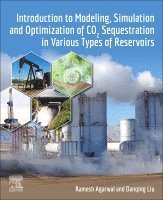
    Introduction to Modeling, Simulation and Optimization of CO2 Sequestration in Various Types of Reservoirs

    AvRamesh Agarwal,Danqing Liu

    Häftad, Engelska, 2024

    1 933 kr

    Beställningsvara. Skickas inom 10-15 vardagar. Fri frakt över 249 kr.

    Beskrivning

    Carbon capture and sequestration has become an essential technology for addressing the mitigation of global warming and adverse climate change due to increasing CO2 emissions from fossil fuel combustion worldwide. However, the scientific/engineering community still lacks thorough and practical knowledge about various types of reservoirs capable of effective long-term CO2 sequestration. Introduction to Modeling, Simulation, and Optimization of CO2 Sequestration in Various Types of Reservoirs pulls together the relevant basic scientific knowledge and applications to help reservoir engineering practitioners learn and utilize the potential of CO2 sequestration in saline, oil, gas, shale, basalt, and geothermal reservoirs. After presenting the fundamental properties of various reservoirs, the authors describe each type of reservoir and explain basic parameters, benchmark cases, experimental data, optimization strategies for CO2 sequestration, prospects, and outlook. Rounding out the text with a glossary and consideration of future developments, this book delivers the necessary tools for engineers to better understand carbon sequestration and advance the energy transition.

    • Introduces the physical characteristics of saline, oil, gas, shale, basalt, and geothermal reservoirs
    • Describes the physics and chemistry of CO2 sequestration in different types of reservoirs and their modeling
    • Applies numerical simulation and optimization methodology to various reservoirs with real-world examples
    • Reviews machine learning applications to carbon capture and sequestration

    Produktinformation

    • Utgivningsdatum:2024-11-27
    • Mått:191 x 235 x 24 mm
    • Vikt:980 g
    • Format:Häftad
    • Språk:Engelska
    • Antal sidor:486
    • Förlag:Elsevier Science
    • ISBN:9780443153310

    Utforska kategorier

    • Energiteknik inom Naturvetenskap och teknik
    • Miljövetenskap och miljöpolitik inom Naturvetenskap och teknik

    Mer om författaren

    Ramesh Agarwal is currently the William Palm Professor Chair at Washington University in St. Louis. Previously, he was the Sam Bloomfield Distinguished Professor and Executive Director of the National Institute for Aviation Research at Wichita State University, Kansas and the Program Director and McDonnell Douglas Fellow at McDonnell Douglas Research Laboratories in St. Louis. Dr. Agarwal received his PhD from Stanford University, M.S. from the University of Minnesota and B.S. in Mechanical Engineering from the Indian Institute of Technology, Kharagpur, India. He is the author and coauthor of over 600 publications. He has given many plenary, keynote and invited lectures in over sixty countries. He is a Fellow of 24 professional societies American Society of Mechanical Engineers (ASME), Institute of Electrical and Electronics Engineers (IEEE), Society of Automotive Engineers (SAE). He has received many prestigious national/international awards including the SAE Medal of Honor, ASME Honorary Fellowship and Honorary Fellowship from Royal Aeronautical Society. Dr. Danqing Liu is currently an Assistant Professor in the School of Environmental Sciences in China University of Geosciences in Wuhan, China. She received her PhD from China University of Geosciences. She is the author and co-author of nearly 50 papers in many prestigious journals in the area of CCS in saline aquifers, shale, basalt and other reservoirs.

    Innehållsförteckning

    • PrefaceAcknowledgmentsChapter 1 Carbon capture, utilization and storage: technology development and applications, policy considerations and techno-economic analysisChapter 2 Basic properties of CO2, ground water and geological storage sitesChapter 3 Numerical methods and codes used in CCUS simulation and optimizationChapter 4 Geological sequestration of CO2 in deep saline aquifersChapter 5 CO2 sequestration in basaltic reservoirChapter 6 CO2 Enhanced Oil Recovery(CO2-EOR)Chapter 7 CO2 Enhanced Gas Recovery(CO2-EGR)Chapter 8 CO2 Enhanced Geothermal System Recovery(CO2-EGS)Chapter 9 CO2 Enhanced Shale Gas Recovery(CO2-ESGR)Chapter 10 CO2 Enhanced Water Recovery(CO2-EWR)Chapter 11 Application of machine learning in CCUS