• Fri frakt över 249 kr
  • •
  • Snabba leveranser
  • •
  • Billiga böcker
Kundservice

Du är på sajten för privatpersoner.

Företag, bibliotek eller offentlig verksamhet?

Du handlar på classic.bokus.com, där alla dina funktioner finns intakta.
Till classic.bokus.com
Bokus logotyp. Gå till startsidan.
  • Erbjudanden
  • Nyheter
  • Student
  • Topplistor
  • Barn & ungdom
  • Bokus Play
  • E-böcker
  • Pocketböcker
  • Spel & pussel

10% rabatt på allt med kod: NYSTART10 →

Sidfot

Mina sidor

    Hjälp

    • Kundservice
    • Vanliga frågor och svar
    • Frakt och leverans
    • Retur vid ångerrätt
    • Reklamera vara
    • Betalning
    • Köpvillkor
    • Allmänna villkor
    • Information om webbplatsens tillgänglighet

    Om Bokus

    • Om oss
    • Pressrum
    • För studenter
    • För företag
    • För bibliotek och offentlig verksamhet
    • För leverantörer
    • Hållbarhet

    Populärt

    • Aktuella erbjudanden
    • Presentkort
    • Studentlitteratur
    • Nya böcker
    • Topplistor
    • Signerade böcker
    • Engelska böcker

    Inspiration

    • Boktips
    • BookTok
    • Populära bokserier
    • Barnbokskaraktärer
    • Populära författare
    Logotyp för Bokus
    Följ oss på Facebook (extern länk)Följ oss på Instagram (extern länk)Följ oss på YouTube (extern länk)Följ oss på TikTok (extern länk)
    bokus @ CookiesAnpassa cookiesIntegritetspolicyKöpvillkor
    Till Citymail hemsida (extern länk)Till Budbee hemsida (extern länk)Till Postnord hemsida (extern länk)Till Schenker hemsida (extern länk)Till Early Bird hemsida (extern länk)Till Walleys hemsida (extern länk)
    1. Naturvetenskap och teknik
    2. Teknik och industri
    3. Byggnadsteknik

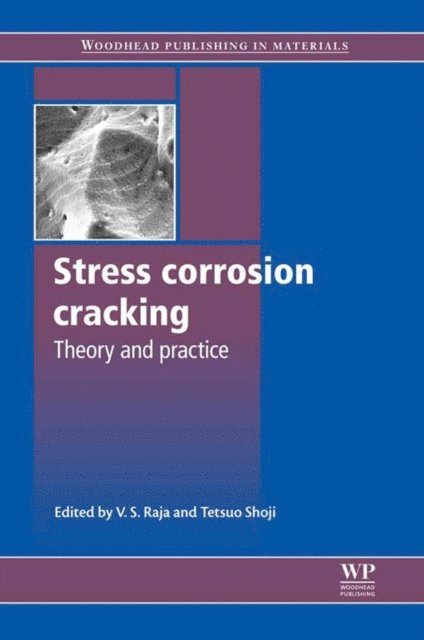
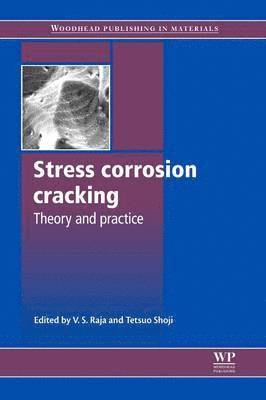
    Stress Corrosion Cracking

    Theory and Practice

    AvV S Raja,Bai Cui

    Häftad, Engelska, 2025

    Del i serien Woodhead Publishing Series in Metals and Surface Engineering

    3 300 kr

    Kommande

    Beskrivning

    Stress Corrosion Cracking: Theory and Practice, Second Edition provides a cutting-edge overview of the stress corrosion cracking (SCC) field as well as numerous case studies in over ten different industries (such as refineries and biomaterials) to aid corrosion researchers and engineers in their work. This updated edition has been revised to include new insights on SCC prevention technologies, electrochemical aspects of SCC, hydrogen permeation and related techniques, and SCC in a variety of materials and settings, including high strength steels, ceramics and glasses, biomaterials, and more. Particular emphasis is placed on the role of hydrogen in metal deformation behavior.

    This new edition provides a cutting-edge overview of the stress corrosion cracking (SCC) field as well as numerous case studies in over ten different industries (such as refineries and biomaterials) to aid corrosion researchers and engineers in their work. It includes new insights on SCC prevention technologies, electrochemical aspects of SCC, hydrogen permeation and related techniques, and SCC in a variety of materials and settings, including high strength steels, ceramics and glasses, biomaterials, and more.

    • Updated to include new insights on electrochemical aspects of stress corrosion cracking (SCC), hydrogen embrittlement, in situ and ex situ techniques for SCC research, computational research for environmentally assisted cracking (EAC), and much more
    • Discusses new experimental methodologies and computational models
    • Features case studies in over ten different fields

    Produktinformation

    • Utgivningsdatum:2025-10-01
    • Mått:152 x 229 x undefined mm
    • Format:Häftad
    • Språk:Engelska
    • Serie:Woodhead Publishing Series in Metals and Surface Engineering
    • Antal sidor:880
    • Upplaga:2
    • Förlag:Elsevier Science
    • ISBN:9780443156120

    Utforska kategorier

    • Byggnadsteknik inom Naturvetenskap och teknik
    • Maskinteknik och material inom Naturvetenskap och teknik

    Mer om författaren

    Prof. V.S Raja received his doctorate from the Indian Institute of Science in Bangalore in 1987, then joined the faculty at the Indian Institute of Technology in Bombay, where he is now the Institute Chair Professor in the Department of Metallurgical Engineering and Materials Science. His research focuses broadly on the field of corrosion. He worked as a guest researcher at Chalmers University of Technology in Sweden, as a Visiting Professor at the University of Nevada in the United States, and as a Guest Scientist at GKSS in Germany and Tohoku University in Japan. He is currently working on numerous corrosion-related challenges in Canada, France, Australia, Belgium, and the Netherlands.He is a member of the CSIR and DRDO laboratories' Research Councils, and he sat on the NACE international research committee from 2009 to 2013. He has garnered multiple national accolades and is a NACE fellow as a result of his efforts. At UN-L he heads The Advanced Materials and Manufacturing for Extreme Environments Laboratory, where he and his team produce new materials that can survive harsh environments such as high temperature, irradiation, and corrosive gas or liquid. It also creates new advanced production procedures for these materials and elucidates key manufacturing mechanisms. Acta Materialia and the Journal of the American Ceramic Society have both published his work. He received the Richard Brook Prize for Best PhD in Ceramics in the UK (2012), the Gustav Eirich Award from the European Centre for Refractories (2012), the Tony Evans Prize for Best Ceramics Thesis (2012), and the Lee Family Scholarship from the Nuclear Regulatory Commission (2008-2011). Tetsuo Shoji is Professor at the Fracture and Reliability Research Institute at Tohoku University, Japan.

    Innehållsförteckning

    • Part I Fundamental aspects of stress corrosion cracking and hydrogen embrittlement1. Mechanistic and fractographic aspects of stress-corrosion cracking2. Electrochemical aspects of stress corrosion cracking3. Hydrogen embrittlement phenomena and mechanisms4. New perspectives in hydrogen embrittlement or EACPart II Test methods for determining stress corrosion cracking susceptibilities5. Testing and evaluation methods for stress corrosion cracking in metals6. Advanced in situ and ex-situ techniques for SCC research7. Computational research on EAC8. Hydrogen permeation and related techniques9. SCC prevention technologies and long-term operationPart III Stress corrosion cracking in specific materials10. Stress corrosion cracking in low and medium strength carbon steels11. Stress corrosion cracking in stainless steels12. Factors affecting stress corrosion cracking and fundamental mechanistic understanding of stainless steels13. Stress corrosion cracking in high strength steels14. Stress corrosion cracking of austenitic stainless and ferritic steel weldments15. Stress corrosion cracking in nickel-based alloys16. Stress corrosion cracking in aluminum alloys17. Stress corrosion cracking in magnesium alloys18. Stress corrosion cracking and hydrogen-assisted cracking in titanium alloys19. Stress corrosion cracking in copper and copper-based alloys20. Stress corrosion cracking in polymer composites21. Stress corrosion cracking in ceramics and glasses22. Stress corrosion cracking in bio-materialsPart IV Environmentally assisted cracking problems in various industries23. Stress corrosion cracking in boilers and cooling water systems24. Environmentally-assisted cracking in oil and gas production25. Stress corrosion cracking in aerospace vehicles26. Prediction of stress corrosion cracking in nuclear power systems27. Failures of structures and components by metal-induced embrittlement28. Stress corrosion cracking in pipelines29. SCC in refineries30. Hydrogen transportation and storage31. Machine Learning, Data Science/Base