• Fri frakt över 249 kr
  • •
  • Snabba leveranser
  • •
  • Billiga böcker
Kundservice

Du är på sajten för privatpersoner.

Företag, bibliotek eller offentlig verksamhet?

Du handlar på classic.bokus.com, där alla dina funktioner finns intakta.
Till classic.bokus.com
Bokus logotyp. Gå till startsidan.
  • Erbjudanden
  • Nyheter
  • Student
  • Topplistor
  • Barn & ungdom
  • Bokus Play
  • E-böcker
  • Pocketböcker
  • Spel & pussel

10% rabatt på allt med kod: NYSTART10 →

Sidfot

Mina sidor

    Hjälp

    • Kundservice
    • Vanliga frågor och svar
    • Frakt och leverans
    • Retur vid ångerrätt
    • Reklamera vara
    • Betalning
    • Köpvillkor
    • Allmänna villkor
    • Information om webbplatsens tillgänglighet

    Om Bokus

    • Om oss
    • Pressrum
    • För studenter
    • För företag
    • För bibliotek och offentlig verksamhet
    • För leverantörer
    • Hållbarhet

    Populärt

    • Aktuella erbjudanden
    • Presentkort
    • Studentlitteratur
    • Nya böcker
    • Topplistor
    • Signerade böcker
    • Engelska böcker

    Inspiration

    • Boktips
    • BookTok
    • Populära bokserier
    • Barnbokskaraktärer
    • Populära författare
    Logotyp för Bokus
    Följ oss på Facebook (extern länk)Följ oss på Instagram (extern länk)Följ oss på YouTube (extern länk)Följ oss på TikTok (extern länk)
    bokus @ CookiesAnpassa cookiesIntegritetspolicyKöpvillkor
    Till Citymail hemsida (extern länk)Till Budbee hemsida (extern länk)Till Postnord hemsida (extern länk)Till Schenker hemsida (extern länk)Till Early Bird hemsida (extern länk)Till Walleys hemsida (extern länk)
    1. Naturvetenskap och teknik
    2. Teknik och industri
    3. Agronomi och lantbruk
    4. Djurhållning

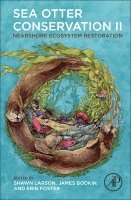
    Sea Otter Conservation II

    Nearshore Ecosystem Restoration

    AvShawn Larson,James Bodkin

    Inbunden, Engelska, 2025

    1 440 kr

    Beställningsvara. Skickas inom 10-15 vardagar. Fri frakt över 249 kr.

    Beskrivning

    Driven to the brink of extinction by the maritime fur trade, sea otter recovery is a remarkable success story, one with broad implications to our understanding of their life history, ecology, and socio-ecology. Sea Otter Conservation II: Nearshore Ecosystem Restoration summarizes current knowledge regarding sea otter recovery and the role it plays in the restoration and resilience of coastal systems. Written by experts in the field, this volume describes the influence of sea otters in kelp, seagrass, salt marsh, and mixed sediment communities, and how their ecological effects can link marine and terrestrial systems. The authors consider the ecological and socio-ecological consequences of the maritime fur trade, the ways in which abundant food and space have affected sea otter recovery, and the potential of future sea otter reintroductions to aid their recovery and that of related ecosystems. This book reviews the latest methods in monitoring sea otter behavior, population status and genetic diversity, and the impact of climate change on sea otters and their associated communities. Sea Otter Conservation II: Nearshore Ecosystem Restoration is an important resource for anyone studying ecology, conservation, or restoration.

    • Covers the fundamental biological and ecological aspects of sea otter conservation
    • Provides a detailed account of the influences of sea otters in community ecology, and the broad importance of keystone species recovery in restoring ecosystems
    • Describes how historical processes can shape subsequent ecological relationships, particularly when species recover to places from which they were previously extirpated

    Produktinformation

    • Utgivningsdatum:2025-06-25
    • Mått:152 x 229 x 25 mm
    • Vikt:1 020 g
    • Format:Inbunden
    • Språk:Engelska
    • Antal sidor:408
    • Upplaga:2
    • Förlag:Elsevier Science
    • ISBN:9780443188053

    Utforska kategorier

    • Djurhållning inom Naturvetenskap och teknik
    • Zoologi inom Naturvetenskap och teknik
    • Marinbiologi inom Naturvetenskap och teknik

    Mer om författaren

    Dr. Shawn Larson received her Ph.D. from the University of Washington School of Aquatic and Fishery Science. Shawn is the Senior Conservation Research Manager at the Seattle Aquarium. She has been working with sea otters for 28 years focusing on sea otter reproduction, population genetics, diet characteristics, nearshore ecology, and most recently the sea otter’s role in mitigating climate change. Dr. Larson has organized and run the Sea Otter Conservation Workshop in Seattle since 1999, serves as the Sea Otter Species Coordinator for the International Union for the Conservation of Nature’s Species Survival Commission’s Otter Specialist Group and co-edited Volume 1 of Sea Otter Conservation. James Bodkin is Scientist Emeritus with the US Geological Survey. Jim received a MSc degree from California Polytechnic State University, San Luis Obispo in 1986. He led the sea otter and nearshore ecosystem research program for the USGS, Alaska Science Center until his retirement in 2013 and continues to consult with government, private and academic organizations regarding sea otters and coastal marine ecosystems. Jim has 47 years of experience with sea otters and marine ecosystems and co-edited Volume I of Sea Otter Conservation. Dr. Erin Foster is a postdoctoral Research Scientist with the Cetacean Research Program at Fisheries and Oceans Canada’s Pacific Biological Station. Erin received a PhD from the University of Victoria, examining the effects of sea otter range expansion, their influence on eelgrass population genetics and community ecology, and the ancient relationships between sea otters, clams, and Indigenous clam gardening. Erin has 17 years of experience with sea otters and nearshore ecology and is interested in restoring the ecological interactions that have been lost or modified where keystone species are reduced.

    Innehållsförteckning

    • Chapter 1: How the history of harvest and recovery influenced our understanding of the ecological role of sea ottersChapter 2: Sea otters and rocky reef communitiesChapter 3: The role of sea otters in seagrass and salt marsh communitiesChapter 4 Sea otters in mixed sediment habitatsChapter 5: Sea otter-mediated linkages among oceanic, nearshore, and terrestrial ecosystemsChapter 6: A catastrophic and unintended experiment: Revising our understanding of sea otters and their social and ecological importance based on a system in transitionChapter 7: Monitoring sea otter population recovery from the maritime fur tradeChapter 8: The intersection of individual space use and landscape-level geography and their defining influence on sea otter conservationChapter 9: What drives sea otter population growth and recovery: A large-scale perspectiveChapter 10: Insights from molecular methods into past and present sea otter populationsChapter 11: Reintroductions and restoring nearshore ecosystems ­‑‑ the Elakha Alliance: A new approach to sea otter conservationChapter 12: Envisioning sea otter recovery in the 21st century