• Fri frakt över 249 kr
  • •
  • Snabba leveranser
  • •
  • Billiga böcker
Kundservice

Du är på sajten för privatpersoner.

Företag, bibliotek eller offentlig verksamhet?

Du handlar på classic.bokus.com, där alla dina funktioner finns intakta.
Till classic.bokus.com
Bokus logotyp. Gå till startsidan.
  • Erbjudanden
  • Nyheter
  • Student
  • Topplistor
  • Barn & ungdom
  • Bokus Play
  • E-böcker
  • Pocketböcker
  • Spel & pussel

10% rabatt på allt med kod NYSTART10 →

Sidfot

Mina sidor

    Hjälp

    • Kundservice
    • Vanliga frågor och svar
    • Frakt och leverans
    • Retur vid ångerrätt
    • Reklamera vara
    • Betalning
    • Köpvillkor
    • Allmänna villkor
    • Information om webbplatsens tillgänglighet

    Om Bokus

    • Om oss
    • Pressrum
    • För studenter
    • För företag
    • För bibliotek och offentlig verksamhet
    • För leverantörer
    • Hållbarhet

    Populärt

    • Aktuella erbjudanden
    • Presentkort
    • Studentlitteratur
    • Nya böcker
    • Topplistor
    • Signerade böcker
    • Engelska böcker

    Inspiration

    • Boktips
    • BookTok
    • Populära bokserier
    • Barnbokskaraktärer
    • Populära författare
    Logotyp för Bokus
    Följ oss på Facebook (extern länk)Följ oss på Instagram (extern länk)Följ oss på YouTube (extern länk)Följ oss på TikTok (extern länk)
    bokus @ CookiesAnpassa cookiesIntegritetspolicyKöpvillkor
    Till Citymail hemsida (extern länk)Till Budbee hemsida (extern länk)Till Postnord hemsida (extern länk)Till Schenker hemsida (extern länk)Till Early Bird hemsida (extern länk)Till Walleys hemsida (extern länk)
    1. Naturvetenskap och teknik
    2. Teknik och industri
    3. Transportteknik
    4. Flyg- och rymdteknik

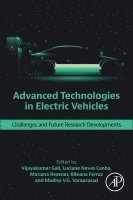
    Advanced Technologies in Electric Vehicles

    Challenges and Future Research Developments

    AvVijayakumar Gali,Luciane Neves Canha

    Häftad, Engelska, 2024

    1 776 kr

    Beställningsvara. Skickas inom 10-15 vardagar. Fri frakt över 249 kr.

    Beskrivning

    Advanced Technologies in Electric Vehicles: Challenges and Future Research Developments discusses fundamental and advanced concepts, challenges, and future perspectives surrounding EVs. Sections cover advances and long-term challenges such as battery life span, efficiency, and power management systems. In addition, the book covers all aspects of the EV field, including vehicle performance, configuration, control strategy, design methodology, modeling and simulation for different conventional and modern vehicles based on mathematical equations. By tackling the fundamentals, theory and design of conventional electric vehicles (EVs), hybrid electric vehicles (HEVs), and fuel cell vehicles (FCVs), this book presents a comprehensive reference.

    Investment in hybrid and electric vehicle (EV) technology research has been increasing steadily in recent years, both from governments and within companies. The role of the combustion engine in causing climate change has put the automobile industry on a path of rapid evolution towards electric vehicles, bringing experts with a range of backgrounds into the field.


    • Provides the latest advances in battery management systems to address power quality issues
    • Explains step-by-step methodologies for the testing of EV battery systems
    • Explores the technological options for charging systems and charging infrastructure

    Produktinformation

    • Utgivningsdatum:2024-02-29
    • Mått:152 x 229 x 30 mm
    • Vikt:450 g
    • Format:Häftad
    • Språk:Engelska
    • Antal sidor:560
    • Förlag:Elsevier Science
    • ISBN:9780443189999

    Utforska kategorier

    • Flyg- och rymdteknik inom Naturvetenskap och teknik

    Mer om författaren

    Dr Gali is an Assistant Professor of electrical & electronics engineering at Poornima University, Jaipur. His research includes integration of renewable energy sources, power quality, DC-DC converters design for renewable and electric vehicle applications. Luciane Neves Canha Electrical Engineer (1994), Doctor in Electrical Engineering (2004), Full Professor at the Federal University of Santa Maria (UFSM), PQ-1D Researcher at the National Research Council of Brazil and IEEE Senior Member. In 2021 she was included among the 21 most influential women in mobility in the world by Vulog – Top 21 of 2021 Influential Women in Mobility. Responsible for installing the first fast charging station on highways in the state of Rio Grande do Sul, Brazil. In 2022, she received the Gaucho Research Award in the category Researcher in Companies by the Research Support Foundation of Rio Grande do Sul (FAPERGS). She has experience in Electrical Engineering, with an emphasis on power systems, energy transition, electrical mobility, renewable energy sources, smart grids, energy storage, microgrids and distributed generation. Mariana Resener (Senior Member, IEEE) received the Ph.D. degree from the Federal University of Rio Grande do Sul, Rio Grande, Brazil, in 2016. She is currently an Assistant Professor with the School of Sustainable Energy Engineering, Simon Fraser University, Surrey, BC, Canada. Her research interests include power systems operation and planning, optimization and uncertainties. Bibiana Ferraz received the Ph.D. in Electrical Engineering from the Federal University of Rio Grande do Sul (UFRGS), Brazil, in 2020. She is currently a Professor with the Department of Automation and Energy, UFRGS. Her research interests include power systems planning, optimization and uncertainties. Madisa V. G. Varaprasad, Dr. Madisa V. G. Varaprasad received the B.Tech and M.Tech degrees in Electrical and Electronics Engineering from Vignan's Institute of Information Technology, Visakhapatnam, India in 2011 and 2013, respectively. He completed his Ph.D. at the National Institute of Technology, Rourkela, India in 2020. Currently, he is working as Associate Professor in the department of Electrical and Electronics Engineering at Vignan's Institute of Information Technology, Visakhapatnam, India. His research interest include modeling, analysis and control of photovoltaic and power electronic converters systems.

    Innehållsförteckning

    • Overview1. Advanced Configurations of Electric Vehicle: An Overview of Hybrid Electric Vehicles2. Plug-In Hybrid Electric Vehicle System and its Future Advanced Technology3. A Review on Modeling and Estimation of SOC of Lithium-Ion BatteryEnvironmental and Social Aspects4. Environmental and Social Impact of Electric Vehicles5. Electric Vehicles Progression in the Society & Their ConsequencesDistribution Grid6. Electric-Vehicle-Enabled Hosting Capacity Enhancement in Distribution Systems7. Power Quality Issues with Electric Vehicle Charging Stations8. Power Quality Impacts in the Context of Electric Mobility9. Probabilistic Analysis of the Technical Impacts of High Penetrations of Electric Vehicles on Distribution Networks10. Planning the Operation and Expansion of Power Distribution Systems Considering EVs (smart charging)11. Power Losses Analysis in Distribution Systems considering the Massive Penetration of Electric Vehicles12. Impacts on Power Systems: Integrating Electric Vehicles and Charging StationsBusiness and Economics13. Business Model and Economic Feasibility of Electric Vehicle Fast Charging Stations with Photovoltaic Electric Generation and Battery Storage in Brazil14. Logistical and Economic Impact on the Transport Sector with the Insertion of Electric Trucks for Last-Mile Transport15. Demand Side and Flexible Energy Resource Management when Operating Smart Electric Vehicle Charging StationsPower Electronics16. Role of Harris Hawks Optimization Based Sliding Mode Control of AC-DC Converter in Electric Vehicle Onboard Battery Charger17. Bidirectional Electric Vehicle Application Using Isolated DC-DC Converter Fed DC Motor18. PV Charger Used to Charge the Battery for Off-Board Electric Vehicles with ANFIS19. Grid Connected Solar PV-Battery and Diesel Generator Based Eletrical Vehicle Charging Station Design and Implementation of ANFIS Controller20. Design of Bi-Directional Converter for Electric Vehicles Battery Charger21. Battery Thermal Management System in Electric Vehicles Employing Thermoelectric Cooling Method22. Design and Control of Bidirectional Onboard Battery Charger for an Electric VehicleFinal remarks/Challenges23. Towards Electromobility: Challenges in Integrating Electric Vehicles and Charging Stations on Power Systems