• Fri frakt över 249 kr
  • •
  • Snabba leveranser
  • •
  • Billiga böcker
Kundservice

Du är på sajten för privatpersoner.

Företag, bibliotek eller offentlig verksamhet?

Du handlar på classic.bokus.com, där alla dina funktioner finns intakta.
Till classic.bokus.com
Bokus logotyp. Gå till startsidan.
  • Erbjudanden
  • Nyheter
  • Student
  • Topplistor
  • Barn & ungdom
  • Bokus Play
  • E-böcker
  • Pocketböcker
  • Spel & pussel

10% studentrabatt med kod TERM26

Sidfot

Mina sidor

    Hjälp

    • Kundservice
    • Vanliga frågor och svar
    • Frakt och leverans
    • Retur vid ångerrätt
    • Reklamera vara
    • Betalning
    • Köpvillkor
    • Allmänna villkor
    • Information om webbplatsens tillgänglighet

    Om Bokus

    • Om oss
    • Pressrum
    • För studenter
    • För företag
    • För bibliotek och offentlig verksamhet
    • För leverantörer
    • Hållbarhet

    Populärt

    • Aktuella erbjudanden
    • Presentkort
    • Studentlitteratur
    • Nya böcker
    • Topplistor
    • Signerade böcker
    • Engelska böcker

    Inspiration

    • Boktips
    • BookTok
    • Populära bokserier
    • Barnbokskaraktärer
    • Populära författare
    Logotyp för Bokus
    Följ oss på Facebook (extern länk)Följ oss på Instagram (extern länk)Följ oss på YouTube (extern länk)Följ oss på TikTok (extern länk)
    bokus @ CookiesAnpassa cookiesIntegritetspolicyKöpvillkor
    Till Citymail hemsida (extern länk)Till Budbee hemsida (extern länk)Till Postnord hemsida (extern länk)Till Schenker hemsida (extern länk)Till Early Bird hemsida (extern länk)Till Walleys hemsida (extern länk)
    1. Medicin
    2. Medicin: allmänt
    3. Samhällsmedicin och preventiv medicin
    4. Folkhälsa och hälsopedagogik

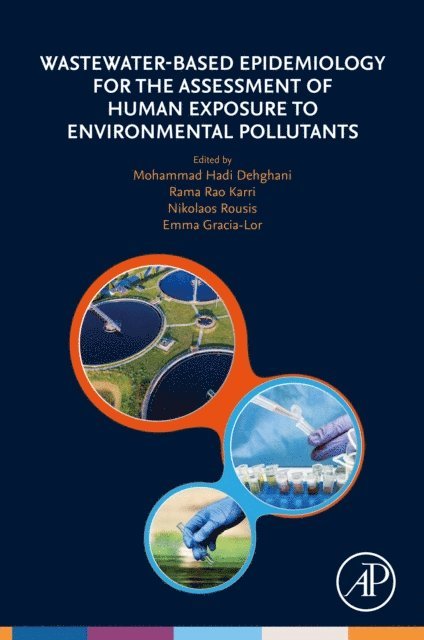
    Wastewater-Based Epidemiology for the Assessment of Human Exposure to Environmental Pollutants

    AvMohammad Hadi Dehghani,Rama Rao Karri

    Häftad, Engelska, 2023

    1 824 kr

    Beställningsvara. Skickas inom 10-15 vardagar. Fri frakt över 249 kr.

    Beskrivning

    Wastewater-based Epidemiology for the Assessment of Human Exposure to Environmental Pollutants discusses wastewater-based epidemiology (WBE) and its use in risk assessment and monitoring of human exposure to hazardous pollutants and pathogens. The book explores the health impacts of organic and inorganic pollutants from pesticides, heavy metals, pharmaceuticals, phthalates, personal care products, and endocrine disruptors in the wastewater environment. The book examines the application of wastewater-based epidemiology in determining health risk and exposure to infectious diseases caused by viruses, such as SARS-CoV-2, parasites, and bacteria. Other topics include detection techniques, sampling techniques, analytical methods, biomarkers, and the use of biosensors in wastewater-based epidemiology studies.

    • Presents evidence mapping to identify emerging areas in wastewater-based epidemiology studies
    • Offers expansion and diversification strategies in pandemic conditions to serve immediate public health goals
    • Explains the surveillance of the spread of pathogens through wastewater

    Produktinformation

    • Utgivningsdatum:2023-08-09
    • Mått:152 x 229 x 20 mm
    • Vikt:450 g
    • Format:Häftad
    • Språk:Engelska
    • Antal sidor:284
    • Förlag:Elsevier Science
    • ISBN:9780443191725

    Utforska kategorier

    • Folkhälsa och hälsopedagogik inom Medicin
    • Miljöteknik inom Naturvetenskap och teknik

    Mer om författaren

    Prof. Dr. Mohammad Hadi Dehghani is a full professor at the Tehran University of Medical Sciences (TUMS), School of Public Health, Department of Environmental Health Engineering, Tehran, Islamic Republic of Iran. His scientific research interests include environmental science. He is the author of various research studies published in national and international journals and conference proceedings and head of several research projects at the TUMS. He has authored 20 books, 26 book chapters and more than 270 full papers published in peer-reviewed journals. He is an editorial board member, guest editor, and reviewer in many internal and international journals and a member of several international science committees worldwide. He also has the distinction of being listed in the top 2% of the world’s most influential scientists in the area of environmental sciences. He is a supervisor and advisor for many PhD and MSc theses at the TUMS. He is currently also a member of the Iranian Association of Environmental Health (IAEH) and member of the Institute for Environmental Research (IER) at the TUMS. He is an editor for 14 edited books (English): (1) Soft Computing Techniques in Solid Waste and Wastewater Management, (2) Environmental and Health Management of Novel Coronavirus Disease (COVID-19), (3) Green Technologies for the Defluoridation of Water, (4) Pesticide Remediation Technologies From Water and Wastewater, (5) COVID-19 and Sustainable Development Goals, (6) Industrial Wastewater Treatment: Emerging Technologies for Sustainability, (7) Sustainable Materials for Sensing and Remediation of Noxious Pollutants, (8) Wastewater-Based Epidemiology for the Assessment of Human Exposure to Environmental Pollutants, (9) Water Treatment Using Engineered Carbon Nanotubes, (10) Water, the Environment and the Sustainable Development Goals, (11) Sustainable Remediation Technologies for Emerging Pollutants in Aqueous Environment, (12) Health and Environmental Effects of Ambient Air Pollution, (13) Health Effects of Indoor Air Pollution, (14) Diseases Attributed to Air Pollution.Rama Rao Karri is an Associate Professor in the Faculty of Engineering at Universiti Teknologi Brunei. He holds a PhD from IIT Delhi and a Master’s from IIT Kanpur in Chemical Engineering. With over 20 years of experience in academia, industry, and research, he has experience working in multidisciplinary fields and has expertise in various evolutionary optimization techniques and process modelling. His expertise extends to process modeling and simulation, focusing on optimizing chemical and environmental processes to improve efficiency and sustainability. He serves on editorial boards of several international journals and acts as a peer reviewer for numerous reputed publications. He is also a guest editor for special issues on nanocomposites and environmental engineering topics. Additionally, he contributes to authoring and editing books on sustainable technologies, environmental remediation, and process monitoring with leading academic publishers. Dr. Nikolaos Rousis is a Chemist and works as a Researcher at the National and Kapodistrian University of Athens, Greece, and the Queensland Alliance for Environmental Health Sciences (QAEHS), University of Queensland, Australia. He was awarded his PhD at the Mario Negri Institute for Pharmacological Research in Milan, Italy. His scientific research interests mainly focus on analytical and environmental chemistry and wastewater-based epidemiology. He has published numerous peer-reviewed papers in international journals and book chapters. He is also a reviewer for many international scientific journals. Prof. Emma Gracia-Lor is a Professor in the Department of Analytical Chemistry and part of the Faculty of Chemistry at Complutense University in Madrid, Spain. She received her PhD in Chemistry from the University Jaume I of Castellón (Spain), where she received the Extraordinary Doctorate Award. Her research is focused on analytical and environmental chemistry and wastewater-based epidemiology. She has published numerous peer-reviewed papers in international journals and book chapters.

    Innehållsförteckning

    • Contributors About the editors Preface Acknowledgments 1. Wastewater-based epidemiology: Evidence mapping toward identifying emerging areas of researchMina Aghaei, Masud Yunesian, Hosna Janjani and Mohammad Hadi Dehghani1.1 Introduction 1.2 Material and methods 1.3 Results and discussion 1.4 Challenges and limitations 1.5 Conclusion Conflict of interest Acknowledgment References 2. Moving beyond wastewater analysis toward epidemiologyCobus Gerber, Emma L. Jaunay, Bradley S. Simpson and Jason M. White2.1 Introduction 2.2 Drug consumption, metabolism, and excretion 2.3 Wastewater sampling and analysis 2.4 Beyond analysis toward epidemiology 2.5 Conclusions References 3. Sampling techniques in wastewater-based epidemiology approachLilian Feltraco Lizot, Marcos Frank Bastiani, Camila Favretto de Souza, Roberta Zilles Hahn and Rafael Linden3.1 Introduction 3.2 Active sampling 3.3 Passive sampling 3.4 Conclusion References 4. Assessment of in-sample and in-sewer stability of biomarkers in wastewater-based epidemiology: an important stepJianfa Gao, Jake W. O’Brien, Jiaying Li, Phil Choi, Yijing Li and Phong K. Thai4.1 Introduction 4.2 Methodology used to evaluate biomarker stability 4.3 In-sewer stabilities of biomarkers 4.4 In-sample stability of biomarkers and the selection of preservative methods 4.5 Factors affecting the degradation of biomarkers 4.6 Implications for wastewater-based epidemiology 4.7 Conclusions Acknowledgement References 5. Population biomarkers for wastewater-based epidemiologyJake W. O’Brien, Phong K. Thai and Benjamin J. Tscharke5.1 Introduction 5.2 Flowdthe first proposed wastewater population biomarker 5.3 What makes a good wastewater-based epidemiology population marker? 5.4 Summary and perspective: continuing the quest for identifying population biomarkers Acknowledgements References 6. Wastewater-based epidemiology through pharmaceuticals as biochemical markers and associated challengesCharu Juneja, Purusottam Tripathy, Om Prakash, Deepak Panchal, Abhishek Sharma, Ritesh Vijay and Sukdeb Pal6.1 Introduction 6.2 Water fingerprinting through WBE: a new approach to evaluating public health 6.3 Biomarkers of pharmaceuticals and personal care products 6.4 Population biomarker: a paradigm for PPCPs prevalence 6.5 Limitations 6.6 Conclusion Acknowledgments References 7. The complexities associated with the detection of new psychoactive substances in wastewaterRichard Bade, Dhayaalini Nadarajan and Cobus Gerber7.1 Introduction 7.2 Analytical methods 7.3 Considerations for future methods 7.4 Conclusion References 8. Wastewater-based epidemiology for assessing and monitoring human exposure to pesticidesEvsen Yavuz Guzel, Asli Atasoy Aydin and Nebile Daglioglu8.1 Introduction 8.2 Pesticides groups 8.3 Analytical method 8.4 Stability of parent pesticides and their metabolites in wastewater 8.5 Human risk assessment 8.6 Limitations and future research needs 8.7 Conclusion References 9. Expansion and diversification of wastewater-based epidemiology strategies in pandemic conditions to serve immediate public health goalsErin M. Driver, Devin A. Bowes and Rolf U. Halden9.1 Introduction 9.2 Materials and methods 9.3 Results and discussion 9.4 Conclusion References 10. Viral surveillance of wastewater as a promising tool to assess the spread of pathogens in the population: the experience of SARS-CoV-2Giulia Salmoiraghi, Silvia Schiarea, Laura Pellegrinelli, Valeria Primache, Sandro Binda, Elena Pariani, Giovanni Nattino, Guido Bertolini, Francesca Pizza, Ettore Zuccato and Sara Castiglioni10.1 Introduction 10.2 Aim of the study 10.3 Material and methods 10.4 Results and discussion 10.5 Conclusion Acknowledgments References Index