• Fri frakt över 249 kr
  • •
  • Snabba leveranser
  • •
  • Billiga böcker
Kundservice

Du är på sajten för privatpersoner.

Företag, bibliotek eller offentlig verksamhet?

Du handlar på classic.bokus.com, där alla dina funktioner finns intakta.
Till classic.bokus.com
Bokus logotyp. Gå till startsidan.
  • Erbjudanden
  • Student
  • Topplistor
  • Barn & ungdom
  • Bokus Play
  • Bokus Play
  • E-böcker
  • Ljudböcker
  • Pocketböcker
  • Spel & pussel

10% rabatt på allt med kod NYSTART10 →

Sidfot

Mina sidor

    Hjälp

    • Kundservice
    • Vanliga frågor och svar
    • Frakt och leverans
    • Retur vid ångerrätt
    • Reklamera vara
    • Betalning
    • Köpvillkor
    • Allmänna villkor
    • Information om webbplatsens tillgänglighet

    Om Bokus

    • Om oss
    • Pressrum
    • För studenter
    • För företag
    • För bibliotek och offentlig verksamhet
    • För leverantörer
    • Hållbarhet

    Populärt

    • Aktuella erbjudanden
    • Presentkort
    • Studentlitteratur
    • Nya böcker
    • Topplistor
    • Signerade böcker
    • Engelska böcker

    Inspiration

    • Boktips
    • BookTok
    • Populära bokserier
    • Barnbokskaraktärer
    • Populära författare
    Logotyp för Bokus
    Följ oss på Facebook (extern länk)Följ oss på Instagram (extern länk)Följ oss på YouTube (extern länk)Följ oss på TikTok (extern länk)
    bokus @ CookiesAnpassa cookiesIntegritetspolicyKöpvillkor
    Till Citymail hemsida (extern länk)Till Budbee hemsida (extern länk)Till Postnord hemsida (extern länk)Till Schenker hemsida (extern länk)Till Early Bird hemsida (extern länk)Till Walleys hemsida (extern länk)
    1. Data och IT
    2. Systemvetenskap och AI
    3. Artificiell intelligens

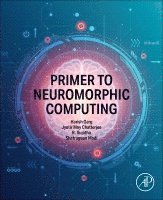
    Primer to Neuromorphic Computing

    AvGarg,Haris,Harish Garg

    Häftad, Engelska, 2024

    1 727 kr

    Beställningsvara. Skickas inom 10-15 vardagar. Fri frakt över 249 kr.

    Beskrivning

    Primer to Neuromorphic Computing highlights critical and ongoing research into the diverse applications of neuromorphic computing. It includes an overview of primary scientific concepts for the research topic of neuromorphic computing, such as neurons as computational units, artificial intelligence, machine learning, and neuromorphic models. It also discusses the fundamental design method and organization of neuromorphic architecture.

    Hardware for neuromorphic systems can be developed by exploiting the magnetic properties of different materials. These systems are more energy efficient and enable faster computation . Magnetic tunnel junctions and magnetic textures can be employed to act as neurons and synapses. Neuromorphic systems have general intelligence like humans as they can apply knowledge gained in one domain to other domains.


    • Discusses potential neuromorphic applications in computing
    • Presents current trends and models in neuromorphic computing and neural network hardware architectures
    • Shows the development of novel devices and hardware to enable neuromorphic computing
    • Offers information about computation and learning principles for neuromorphic systems
    • Provides information about Neuromorphic implementations of neurobiological learning algorithms
    • Discusses biologically inspired neuromorphic systems and devices (including adaptive bio interfacing and hybrid systems consisting of living matter and synthetic matter)

    Produktinformation

    • Utgivningsdatum:2024-11-15
    • Mått:152 x 229 x 15 mm
    • Vikt:450 g
    • Format:Häftad
    • Språk:Engelska
    • Antal sidor:278
    • Förlag:Elsevier Science
    • ISBN:9780443214806

    Utforska kategorier

    • Artificiell intelligens inom Data och IT

    Mer om författaren

    Dr. Garg is Associate Professor of Mathematics at Thapar Institute of Engineering and Technology, Patiala, Punjab, India. He is the recipient of the Obada-Prize 2022 – Young Distinguished Researchers. He is also the recipient of the Top-Cited paper by an India-based author (2015 – 2019) from Elsevier Publisher. He also serves as an advisory board member of the Universal Scientific Education and Research Network (USERN).Dr. Garg's research interests include computational intelligence, multi-criteria decision making, evolutionary algorithms, reliability analysis, expert systems, and decision support systems, computing with words, and soft computing. He has authored more than 400 papers published in refereed international journals. He has also authored seven book chapters. He has also edited 8 books from Elsevier, Springer, and other publishers. Dr. Garg also serves on editorial boards of several leading international journals, this includes the Founding Editor-in-Chief of the Journal of Computational and Cognitive Engineering. He is also the Associate Editor of IEEE Transaction of Fuzzy Systems, Soft Computing, Alexandria Engineering Journal, Journal of Intelligent & Fuzzy Systems, Complex and Intelligent Systems, Journal of Industrial & Management Optimization, and CAAI Transactions on Intelligence Technology. Jyotir Moy Chatterjee is currently an Assistant Professor in Department of Computer Science and Engineering at Graphic Era (Deemed to be University), in Dehradun, India. He also serves as a Visiting Faculty member in Information Technology at Lord Buddha Education Foundation, which is affiliated with the Asia Pacific University of Technology & Innovation in Kathmandu, Nepal. His research interests focus on advancements in Machine Learning and Deep Learning.Dr. R. Sujatha received the B.E. degree in computer science from Madras University, in 2001, the M.E. degree in computer science from Anna University, in 2009, with university ninth rank, the master’s degree in financial management from Pondicherry University, in 2005, and the Ph.D. degree in data mining from the Vellore Institute of Technology (VIT), Vellore, in 2017. She has 15 years of teaching experience and has been serving as an Associate Professor with the School of Information Technology and Engineering, VIT. She has organized and attended several workshops and faculty development programs. She actively involves herself in the growth of the institute by contributing to various committees at both academic and administrative levels. She gives technical talks in colleges for the symposium and various sessions. She acts as an advisory, editorial member, and technical committee member in conferences conducted in other educational institutions and in-house too. She has published a book Software Project Management for college students. Also, she has published research articles and papers in reputed journals. She used to guide projects for undergraduate and postgraduate students and currently guides doctoral students. She is interested in learning upcoming things and gets herself acquainted with the student’s level. Her areas of research interests include data mining, machine learning, software engineering, soft computing, big data, deep learning, and blockchain. Dr. Shatrughan Modi is an Assistant Professor at Department of Computer Science, Indian Institute of Information Technology Una, India. Prior to that he worked at a Computer Science and Engineering Department of Thapar University, Patiala. He has more than 9 years of teaching experience and 2 years of industry experience. Her areas of research interests include data mining, neural network, pattern recognition, Autonomous vehicles, software engineering, machine learning, deep learning.

    Innehållsförteckning

    • 1. Neuromorphic Computing for Machine Learning: An Overview2. Designing of GAN for real time image processing in neurocomputing3. Review of Existing Neuromorphic Systems4. Neuromorphic System for Cardiovascular Disorders5. Neuromorphic System for Real-time Healthcare Applications6. Neuromorphic Systems for Smart home Devices7. Neuromorphic systems for real-time image processing8. Real time Visual Data Processing using Neuromorphic Systems9. Future Prospective of Neuromorphic Computing in Artificial Intelligence: A Review, Methods and Challenges10. Neuromorphic Systems for Smart home Devices11. Neuroscience-inspired - Facial Mask Recognition using MobileNet and Computer Vision in real-time video streaming12. A Neuro-Inspired Journey: Tracing the Evolution and Objectives of Neuromorphic Systems13. Deploying Shark Smell Optimization algorithm with Neuromorphic computing principles for prediction of COVID-19 disease