• Fri frakt över 249 kr
  • •
  • Snabba leveranser
  • •
  • Billiga böcker
Kundservice

Du är på sajten för privatpersoner.

Företag, bibliotek eller offentlig verksamhet?

Du handlar på classic.bokus.com, där alla dina funktioner finns intakta.
Till classic.bokus.com
Bokus logotyp. Gå till startsidan.
  • Erbjudanden
  • Nyheter
  • Student
  • Topplistor
  • Barn & ungdom
  • Bokus Play
  • E-böcker
  • Pocketböcker
  • Spel & pussel

10% rabatt på allt med kod NYSTART10 →

Sidfot

Mina sidor

    Hjälp

    • Kundservice
    • Vanliga frågor och svar
    • Frakt och leverans
    • Retur vid ångerrätt
    • Reklamera vara
    • Betalning
    • Köpvillkor
    • Allmänna villkor
    • Information om webbplatsens tillgänglighet

    Om Bokus

    • Om oss
    • Pressrum
    • För studenter
    • För företag
    • För bibliotek och offentlig verksamhet
    • För leverantörer
    • Hållbarhet

    Populärt

    • Aktuella erbjudanden
    • Presentkort
    • Studentlitteratur
    • Nya böcker
    • Topplistor
    • Signerade böcker
    • Engelska böcker

    Inspiration

    • Boktips
    • BookTok
    • Populära bokserier
    • Barnbokskaraktärer
    • Populära författare
    Logotyp för Bokus
    Följ oss på Facebook (extern länk)Följ oss på Instagram (extern länk)Följ oss på YouTube (extern länk)Följ oss på TikTok (extern länk)
    bokus @ CookiesAnpassa cookiesIntegritetspolicyKöpvillkor
    Till Citymail hemsida (extern länk)Till Budbee hemsida (extern länk)Till Postnord hemsida (extern länk)Till Schenker hemsida (extern länk)Till Early Bird hemsida (extern länk)Till Walleys hemsida (extern länk)
    1. Naturvetenskap och teknik
    2. Teknik och industri
    3. Elektronik och kommunikationer

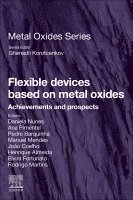
    Flexible Devices Based on Metal Oxides

    Achievements and Prospects

    AvDaniela Nunes,Ana Pimentel

    Häftad, Engelska, 2024

    Del i serien Metal Oxides

    2 430 kr

    Beställningsvara. Skickas inom 10-15 vardagar. Fri frakt över 249 kr.

    Beskrivning

    Flexible devices based on metal oxides: Achievements and prospects focuses on the integration of flexibility in electronic circuitry, sensing applications, energy conversion and storage, and environmental remediation. Flexibility in these applications offers great potential, especially in the areas of wearable sensors, solar cells, transistors, electronic skin, and human body monitoring. The book investigates flexible and wearable devices based on metal oxide nanostructures or thin films that are capable of bending, rolling, compression, and folding, all while maintaining their performance.

    Metal oxide nanomaterials display exceptional properties that include mechanical stress tolerance, high optical transparency, high carrier mobilities, wide band gap, high dielectric constant, and superconductivity, amongst others. In some cases, they are also earth abundant, environmentally benign, cost-effective, chemically stable, and compatible with low-cost wet-chemical synthesis routes. The focus of the book is on wearables manufactured using sustainable manufacturing methods and integrated into substrates that are flexible, inexpensive, recyclable, abundant, and lightweight, including polymer, textile, cellulose and cork substrates.


    • Provides a comprehensive guide to flexibility in next-generation devices and applications
    • Emphasizes green technologies and sustainability in production, including substrates
    • Considers current and future problems for the continued development of flexible devices and applications

    Produktinformation

    • Utgivningsdatum:2024-11-28
    • Mått:152 x 229 x undefined mm
    • Vikt:990 g
    • Format:Häftad
    • Språk:Engelska
    • Serie:Metal Oxides
    • Antal sidor:608
    • Förlag:Elsevier Science
    • ISBN:9780443216565

    Utforska kategorier

    • Elektronik och kommunikationer inom Naturvetenskap och teknik
    • Energiteknik inom Naturvetenskap och teknik
    • Maskinteknik och material inom Naturvetenskap och teknik

    Mer om författaren

    Daniela Nunes is an Assistant Professor at the Materials Science Department of FCT-UNL lecturing the courses of Micro and Nanotechnology seminars and dissertation initiation.Her research mainly focuses on electron microscopy and materials characterization. She is co-author of 50 peer-reviewed papers. She participated on the EU project, CEOPS project with the grant agreement no: 309984. Currently Ana Pimental is working as Post.Doc on the synthesis of ZnO nanoparticles to be used in nanoelectronics.Her main scientific interests include: Synthes of ZnO nanoparticles by microwave assisted hydrothermal method, on glass and paper based substrates, to be used in different application, such as UV sensors catalysis, platform for SERS applications, piezoelectricity and as an antibacterial agent. Pedro Barquinha is an Assistant Professor at the Materials Science Department of FCT-UNL. He is also responsible for 3 research laboratories at CENIMAT focusing on electrical characterization, photolithography and nanofabrication, including the management and operation of a dual-beam SEM-FIB tool.He has been involved in transparent electronics from 2004, covering all the areas from the design, deposition and characterization of conductive, semiconductive and insulating multicomponent oxides, fabrication and advanced characterization of oxide TFTs, to the intregation of these devices on electronic circuits (analog and digital) on flexible substrates. His work on this field contributed to take performance and integration levels of this technology to levels of great interest to the display industry. He is co-author of 98 peer-reviewed papers, with more than 3800 citations. He co-authored 2 books and 2 book chapters on this area as well. He won important scientific prizes, such as the “Stimulus to research 2008” (Calouste Gulbenkian Foundation) and “Innovation Prize for Young Engineers 2008” (Portuguese Order of Engineers) and gave more than 30 invited lectures including 2 key-notes in international scientific conferences and workshops. He was program coordinator in ITC2012 conference and co-organizer of the 1st E-MRS/MRS-J Bilateral Symposia, “Materials Frontier for Transparent Advanced Electronics”. Since 2004 he participated in more than 20 research and inovation projects, being currently principal investigator from FCT-UNL on two EU projects (FP7 i-FLEXIS and H2020 Roll-Out). Prof. Manuel J. Mendes was born in Lisbon, in 1982. He received the Engineering degree in Physics in 2005 from Instituto Superior Técnico, Univ. de Lisboa (IST-UL), the Master of Science degree in Applied Physics in 2008 from Rice University (Houston, USA), and the Ph.D. in Photovoltaic Solar Energy in 2012 from Instituto de Energía Solar (Madrid, Spain) on the novel topic of Nanophotonics for Multi-Band Photovoltaics.He has been involved in >35 projects in energy-related areas while working in USA (2005-08), Spain (2008-12), Italy (2012-14) and Portugal (2014-present). His research in Portugal has been performed at the Materials Research Center CENIMAT-i3N of NOVA School of Science & Technology (Univ. Nova de Lisboa), where he has been PI of 6 projects (3 national, 3 European) and institution responsible for other 6 projects (5 national, 1 European) related with Photonic-enhanced Solar Cells, Quantum-structured Semiconductors, Building-integrated photovoltaics (BIPV) and Solar Fuels. Overall, he attracted a total funding of ~6 M€ to NOVA via projects that he coordinated.He has acted as reviewer for >40 scientific journals, is author of >70 peer-reviewed publications, and co-inventor of 2 U.S. Patents. The first patent was distinguished with an award from NASA Inventions and Contributions Board, and the second opened a research line in plasmonic intermediate-band solar cells.He has been awarded with 2 prestigious Marie Curie Experienced-Research Fellowships (in 2012 and 2014) related with light management for solar cells, as well as 10 prestigious scientific honours, such as the 2020 FEMS Communication Award for Excellence in Materials Science & Eng. and the 2021 IN3+ Award of Imprensa Nacional Casa da Moeda (INCM) - the highest national prize for individual innovation projects.In 2023, an ERC Consolidator Grant was awarded to his project X-STREAM (Power-to-X: Streaming Hydrogen from 3-Band Solar Cells boosted with Photonic Management).João Coelho is a researcher at NOVA School of Science and Technology (FCT NOVA), one of the three largest and most prestigious schools of Engineering and Sciences in Portugal. In 2007, he received his Bachelor degree in physics followed by a Master degree in 2009 (Faculty of Sciences, University of Porto). In 2016, he was awarded his PhD degree by Trinity College Dublin, Ireland. During this period, he became a materials scientist focused on the processing of 2D-materials for energy storage/conversion applications. Throughout this process, he developed crucial skills not only on materials synthesis and characterization, but in the design, fabrication and testing of supercapacitors and lithium-ion batteries. He had the chance to work with world renowned scientists and companies, such as Nokia Bell Labs and to participate in several international scientific meeting, such as MRS Spring and ECS Prime. These collaborations led to publications in high impact journals, namely Science and Nature, resulting a h-index of 19. Besides technical and scientific work, he is passionate about teaching and science outreach activities. Up to now, he has supervised several BSc, MSc and one PhD thesis.In 2020, after being selected for the prestigious Individual Call to Scientific Employment Stimulus, he joined the Materials Research Center (CENIMAT) of the Associated Laboratory i3N, the Institute of Nanostructures, Nanomodeling and Nanofabrication (FCT NOVA). Currently, his research objectives are focused on the development and integration of flexible energy storage devices, produced by inkjet printing and laser engraving.Elvira Fortunato is full professor in Materials Science Department of Faculty of Science and Technology of New University of Lisbon, a Fellow of the Portuguese Engineering Academy since 2009 and decorated with the grade of Grand Officer of the Order of Prince Henry the Navigator by the President of the Republic in 2010, due to her scientific achievements worldwide. In 2015 she was appointed by the Portuguese President Chairman of the Organizing Committee of the Celebrations of the National Day of Portugal, Camões and the Portuguese Communities.She was also a member of the Portuguese National Scientific and Technological Council between 2012-2015 and a member of the advisory board of DG CONNECT (2014-2015). Since November 2015 she become Deputy Adviser of the High Level Group of Scientific Advice Mechanism from DG Research & Innovation European Commission.Currently she is the director of the Institute of Nanomaterials, Nanofabrication and Nanomodeling and of CENIMAT. She is member of the board of trustees of Luso-American Foundation (Portugal/USA, 2013-2020). Dr. Martins earned his Ph.D. in Energy Conversion and Semiconductor Materials at the University of Lisbon in the 190s as well as Aggregate in Materials Science (Semiconductors and Microelectronics). He became full Professor of University of Lisbon and the head of the Materials Science Department. He is a full Member of CENIMAT and head of Optoelectronic and Electronic Materials Group at CENIMAT. He is a co-author of the book Transparent Oxide Electronics and more than 500 articles.His main scientific interests include: Optoelectronics and Electronic Materials and Devices. Micro and nanoelectronics processes. Semiconductor Technologies (amorphous to crystalline). Nanomaterials and nanotechnologies. Henrique Vazão de Almeida received his Bachelor’s and Master’s degrees in Materials Engineering from Universidade NOVA (2007). Before starting his Ph.D., he worked in the Biomaterials field for 5 years (Industry-based). Henrique graduated in 2016 with his Ph.D. in Bioengineering from Trinity College Dublin, Ireland (Daniel J. Kelly and Fergal O’Brien as supervisors). In 2016, Henrique started to work as a Postdoc at Lino Ferreira’s Lab (University of Coimbra), and in 2017 he was awarded an FCT postdoctoral fellowship. In the context of the postdoctoral fellowship in cardiac tissue engineering, he moved to ITQB/iBET (2018). In 2019, he was awarded a junior PI funding (iBETXplore) to execute a project in the context of 3D bioprinted tissues for drug screening and disease modeling. In 2021, Henrique was awarded the “Individual Call to Scientific Employment Stimulus - 3rd Edition” fellowship. In the context of his recently granted award, Henrique moved to CENIMAT|i3N (2022).Henrique is a bioengineer, material engineer, and expert in nature-derived biomaterials. He is interested in novel tissue engineering and regenerative medicine approaches to restore damaged biological tissues and bioengineer in vitro models. Currently, he is focused on developing cardiac tissue engineering strategies based on conductive biomaterials. He also started to work with point-of-care devices for disease management and regenerative medicine.

    Innehållsförteckning

    • Part 1: General considerations1: Introduction to flexible electronics2: Substrates for flexible devices3: Features of metal oxides deposition on flexible substrates4: Printing technology in metal oxide-based flexible devicesPart 2: Energy conversion devices5: Metal oxides based flexible supercapacitors6: Metal oxides based flexible fuels cells7: Metal oxides based flexible batteries8: Novel metal oxide-based materials for light harvesting and emission9: Flexible solar cells improved with photonic metal oxides10: Metal oxides based flexible nanogeneratorsPart 3: Flexible sensors and electronics11: Metal oxides based flexible gas sensors12: Metal oxides based flexible biosensors13: Metal oxides based flexible photocatalysts14: Metal oxides based flexible thin-film transistors15: Metal oxides based flexible photodetectors16: Conclusions and future perspectives on the field