• Fri frakt över 249 kr
  • •
  • Snabba leveranser
  • •
  • Billiga böcker
Kundservice

Du är på sajten för privatpersoner.

Företag, bibliotek eller offentlig verksamhet?

Du handlar på classic.bokus.com, där alla dina funktioner finns intakta.
Till classic.bokus.com
Bokus logotyp. Gå till startsidan.
  • Erbjudanden
  • Nyheter
  • Student
  • Topplistor
  • Barn & ungdom
  • Bokus Play
  • E-böcker
  • Pocketböcker
  • Spel & pussel

10% rabatt på allt med kod: NYSTART10 →

Sidfot

Mina sidor

    Hjälp

    • Kundservice
    • Vanliga frågor och svar
    • Frakt och leverans
    • Retur vid ångerrätt
    • Reklamera vara
    • Betalning
    • Köpvillkor
    • Allmänna villkor
    • Information om webbplatsens tillgänglighet

    Om Bokus

    • Om oss
    • Pressrum
    • För studenter
    • För företag
    • För bibliotek och offentlig verksamhet
    • För leverantörer
    • Hållbarhet

    Populärt

    • Aktuella erbjudanden
    • Presentkort
    • Studentlitteratur
    • Nya böcker
    • Topplistor
    • Signerade böcker
    • Engelska böcker

    Inspiration

    • Boktips
    • BookTok
    • Populära bokserier
    • Barnbokskaraktärer
    • Populära författare
    Logotyp för Bokus
    Följ oss på Facebook (extern länk)Följ oss på Instagram (extern länk)Följ oss på YouTube (extern länk)Följ oss på TikTok (extern länk)
    bokus @ CookiesAnpassa cookiesIntegritetspolicyKöpvillkor
    Till Citymail hemsida (extern länk)Till Budbee hemsida (extern länk)Till Postnord hemsida (extern länk)Till Schenker hemsida (extern länk)Till Early Bird hemsida (extern länk)Till Walleys hemsida (extern länk)
    1. Naturvetenskap och teknik
    2. Geovetenskap
    3. Miljövetenskap och miljöpolitik

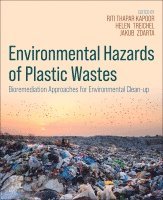
    Environmental Hazards of Plastic Wastes

    Bioremediation Approaches for Environmental Clean-up

    AvJakub Zdarta,Riti Thapar Kapoor

    Häftad, Engelska, 2025

    1 511 kr

    Beställningsvara. Skickas inom 10-15 vardagar. Fri frakt över 249 kr.

    Beskrivning

    Environmental Hazards of Plastic Wastes: Bioremediation Approaches for Environmental Clean-up focuses on the exploitation of various biological treatment technologies, their use to treat plastic contaminants, and restoration of contaminated sites. The book also addresses the biological treatment of plastic waste and its management of sustainable technologies for its reuse for environmental protection. The book examines advanced technologies, updated information, and future directions for researchers and scientists working in the bioremediation and biodegradation of plastic contaminants and reutilization of plastic wastes in the production of construction materials for environmental safety.

    The treatment of plastic wastes with environmentally benign approaches will be assessed in this book and will also provide ways to protect our natural environment by managing hazardous plastic pollutants through various techno-based, eco-friendly strategies.


    • Describes how bioremediation approaches can be successfully applied for waste management, eco-restoration, and environmental protection
    • Provides information on the state-of-art application of microbes, whether individual or synergistic, for treating plastic waste and environmental protection
    • Offers a substantial contribution to solving the problem of plastic waste which contains many hazardous organic compounds

    Produktinformation

    • Utgivningsdatum:2025-06-06
    • Mått:191 x 235 x 23 mm
    • Vikt:1 090 g
    • Format:Häftad
    • Språk:Engelska
    • Antal sidor:404
    • Förlag:Elsevier Science
    • ISBN:9780443235993

    Utforska kategorier

    • Miljövetenskap och miljöpolitik inom Naturvetenskap och teknik
    • Miljöteknik inom Naturvetenskap och teknik

    Mer om författaren

    Associate Professor Jakub Zdarta graduated from the Faculty of Chemistry of the A. Mickiewicz University in Poznań in 2010 and the Faculty of Chemical Technology at the Poznań University of Technology in 2013. In 2017, he obtained the degree of Doctor of Chemical Sciences in the field of chemical technology, and in 2021 he become an associate professor. In 2017-2018 and in 2021, he completed internships at the Technical University of Denmark, and in 2019 at the University of Technology Sydney. Since 2018, he has been employed at the Institute of Chemical Technology and Engineering at the Faculty of Chemical Technology of the Poznań University of Technology. His research area focuses on biotechnology, biocatalysis, enzyme immobilization, biological wastewater treatment, bioremediation, organic pollutant removal, membrane processes, membrane bioreactors, biomass pretreatment and conversion, as well as hybrid materials and biomaterials. Riti Thapar Kapoor is Professor in Amity Institute of Biotechnology, Amity University Uttar Pradesh, Noida, India. She received her Ph.D from University of Allahabad and worked as post - doctoral fellow at Banaras Hindu University, Varanasi, India. She has fourteen years of teaching and research experience and her area of specialization is environmental biotechnology, bioremediation, wastewater treatment and abiotic stresses. She has received prestigious travel award from Bill & Melinda Gates Research Foundation under CGIAR project for participation in International training programme held at International Rice Research Institute (IRRI), Manila, Philippines in 2010. She is also recipient of DST travel grant for participation in International Conference held at Sri Lanka in 2013. She has been awarded with Teacher’s Research Fellowship from Indian Academy of Sciences, Bengaluru in 2019. ALong with this, she has supervised and mentored a number of research projects sanctioned by different government funding agencies such as DAE, DST and UPCST etc. Prof. Helen Treichel is a Research Productivity Scholar at level 1C in Environmental Sciences. She holds a degree in Food Engineering from the Federal University of Rio Grande (1999), a Master's and a Ph.D. in Food Engineering from the State University of Campinas (2001 and 2004, respectively). She is currently a Professor and Researcher at the Federal University of Fronteira Sul (UFFS)-Campus Erechim. She works in undergraduate courses in Environmental and Sanitary Engineering, Biological Sciences, and Agronomy and is a Permanent Professor in the Graduate Programs in Environmental Science and Technology (UFFS-Campus Erechim), Food Science and Technology (UFFS-Campus Laranjeiras do Sul) and Biotechnology and Biosciences (UFSC). She coordinates the Laboratory of Microbiology and Bioprocesses (LAMIBI) at UFFS (Erechim), working mainly on the following topics, design of experiments and statistical optimization of processes; production, purification, immobilization, and application of enzymes; use of microorganisms and enzymes in the treatment and/or recovery of effluents and residues; bioherbicides; biofuels. She acts as the leader of the Agroenergy research group.

    Innehållsförteckning

    • 1. Plastic in the environment, properties, types, and application2. Hazardous effects of plastic waste on the ecosystem, human-beings, and animal health.3. Microplastics in marine ecosystem and Current trends in environmental pollution and mechanisms of toxicological profile.4. Biodegradation of plastics: current scenario and prospects for environmental safety5. Accumulation of plastic waste in the natural environment. and its life cycle assessment6. Relevance of microbes in plastic waste degradation7. Fungal degradation of plastics8. Bacterial degradation of plastics9. Synergistic approaches for the bioremediation of plastic pollutants10. Role of earthworms in the degradation of microplastics11. Mechanism of plastic biodegradation12. Role of microbial enzymes in the degradation of plastics13. Use of waste plastic in preparation of value-added construction materials.14. Bioplastics for circular economy15. Current achievements in removal of plastic wastes, new technologies involved and economics16. Application of plastics for production of fuel17. Recent development in the use of enzymes for degradation of microplastics18. Economic approaches for plastic waste removal/disposal and reuse.19.Mechanism and pathways for recycling of plastic wastes and application possibilities.20. Practical strategy to reduce supermarket plastic bags with technical and economic data and to check its global impact on pollution reduction21. Case studies from Asia, Europe, and America for plastic waste removal/recycling22. Monitoring tools and technologies for plastics in the natural environment (soil, sediment, water)23. Regulations, policies and acts related for the management of plastic wastes in different countries