• Fri frakt över 249 kr
  • •
  • Snabba leveranser
  • •
  • Billiga böcker
Kundservice

Du är på sajten för privatpersoner.

Företag, bibliotek eller offentlig verksamhet?

Du handlar på classic.bokus.com, där alla dina funktioner finns intakta.
Till classic.bokus.com
Bokus logotyp. Gå till startsidan.
  • Erbjudanden
  • Nyheter
  • Student
  • Topplistor
  • Barn & ungdom
  • Bokus Play
  • E-böcker
  • Pocketböcker
  • Spel & pussel

10% rabatt på allt med kod: NYSTART10 →

Sidfot

Mina sidor

    Hjälp

    • Kundservice
    • Vanliga frågor och svar
    • Frakt och leverans
    • Retur vid ångerrätt
    • Reklamera vara
    • Betalning
    • Köpvillkor
    • Allmänna villkor
    • Information om webbplatsens tillgänglighet

    Om Bokus

    • Om oss
    • Pressrum
    • För studenter
    • För företag
    • För bibliotek och offentlig verksamhet
    • För leverantörer
    • Hållbarhet

    Populärt

    • Aktuella erbjudanden
    • Presentkort
    • Studentlitteratur
    • Nya böcker
    • Topplistor
    • Signerade böcker
    • Engelska böcker

    Inspiration

    • Boktips
    • BookTok
    • Populära bokserier
    • Barnbokskaraktärer
    • Populära författare
    Logotyp för Bokus
    Följ oss på Facebook (extern länk)Följ oss på Instagram (extern länk)Följ oss på YouTube (extern länk)Följ oss på TikTok (extern länk)
    bokus @ CookiesAnpassa cookiesIntegritetspolicyKöpvillkor
    Till Citymail hemsida (extern länk)Till Budbee hemsida (extern länk)Till Postnord hemsida (extern länk)Till Schenker hemsida (extern länk)Till Early Bird hemsida (extern länk)Till Walleys hemsida (extern länk)
    1. Medicin
    2. Andra medicinska specialiteter
    3. Farmakologi

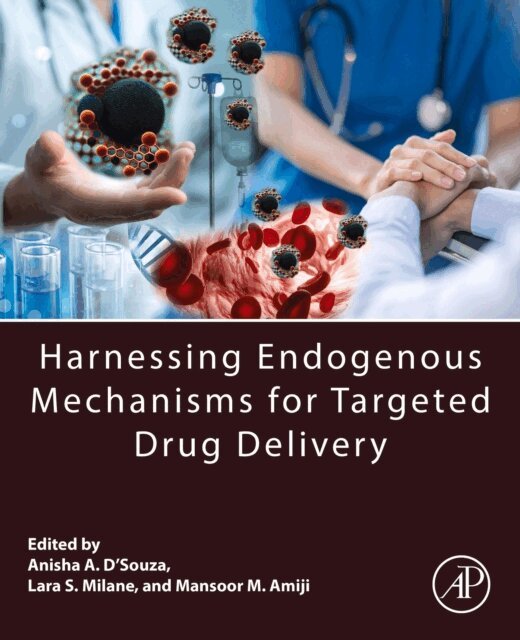
    Harnessing Endogenous Mechanisms for Targeted Drug Delivery

    AvAnisha A. D'Souza,Lara Scheherazade Milane

    Häftad, Engelska, 2025

    2 099 kr

    Beställningsvara. Skickas inom 10-15 vardagar. Fri frakt över 249 kr.

    Beskrivning

    Harnessing Endogenous Mechanisms for Targeted Drug Delivery explores the cutting-edge advancements in the world of targeted drug delivery leveraging human biological mechanisms. This essential guide addresses the urgent need to enhance the efficiency of drug delivery and foster safe and effective therapies, particularly for biological agents like proteins, peptides, and nucleic acid molecules. The book offers a comprehensive exploration of tissue- and cell-specific delivery methods, emphasizing endogenous or biological techniques that can be utilized to improve drug delivery. It identifies the challenges associated with delivering complex molecules and accessing hard-to-reach sites, and provides practical solutions through endogenous strategies. Topics such as exploiting disease-specific stimuli to enhance delivery efficiency, the role of plasma proteins in drug delivery, and the utilization of extracellular vesicles to boost delivery efficiency are presented. Harnessing Endogenous Mechanisms for Targeted Drug Delivery emphasizes the clinical and commercial translation of these techniques, making this book an ideal resource for researchers, clinicians, and anyone interested in the future of drug delivery.

    Produktinformation

    • Utgivningsdatum:2025-12-19
    • Mått:191 x 235 x 36 mm
    • Vikt:1 110 g
    • Format:Häftad
    • Språk:Engelska
    • Antal sidor:1 196
    • Förlag:Elsevier Science
    • ISBN:9780443274299

    Utforska kategorier

    • Farmakologi inom Medicin
    • Tillverkningsteknik inom Naturvetenskap och teknik

    Mer om författaren

    Dr. D’Souza is a Research Fellow at Massachusetts Eye and Ear Infirmary, Harvard Medical School, and is a Visiting Scholar at the Northeastern University, Department of Pharmaceutical Sciences, in Boston, MA. She earned her PhD (Tech.) in Pharmaceutics from the Department of Pharmaceutical Sciences and Technology at the Institute of Chemical Technology, Mumbai (ICT, formerly UDCT). Following her postdoctoral at IIT-Bombay, she served as a Research Formulation Scientist at Piramal Enterprises Limited, Mumbai. In this role, she contributed to projects achieving successful Abbreviated New Drug Application (ANDA) approvals by the US FDA. Dr. D’Souza’s research interests primarily revolve around colloidal drug delivery systems, viz., polymeric and solid lipid nanoparticles for enhanced bioavailability, controlled delivery and targeting. Additionally, she also explores nucleic acid delivery platforms for addressing CNS-related neurodegenerative disorders. She has published research papers and reviews in peer-reviewed journals, authored numerous book chapters, and co-edited a Springer-published book titled “Targeted Intracellular Drug Delivery by Receptor-Mediated Endocytosis”.Dr. Lara Milane is Assistant Teaching Professor in Biotechnology at the Bouvé College of Health Sciences at Northeastern University. She is interested in Mitochondrial Medicine. She is working on developing nanomedicines for a range of diseases (cancer, neurodegenerative disease, aging) that manipulate mitochondria for therapeutic outcomes. Dr. Milane was trained as a National Cancer Institute/ National Science Foundation Nanomedicine Fellow at Northeastern University, Boston, MA. Dr. Milane is an intuitive cancer biologist with research interests in developing translational nanomedicines that exploit the hallmarks of cancer. Mansoor M. Amiji is the Distinguished Professor and Chairman of the Department of Pharmaceutical Sciences at the Bouvé College of Health Sciences at Northeastern University. Dr. Amiji has edited a number of books and is a frequently published author. His research focuses on the synthesis of novel polymeric materials for medical and pharmaceutical applications, drug delivery systems and nanomedical technologies, and his contributions in research advising, grant reviews for various organizations and editorial work for journals are invaluable.

    Innehållsförteckning

    • SECTION 1: Delivery challenges and opportunities1. Introduction and impact statement 2. Challenges and opportunities in targeted deliverySECTION 2: Delivery barriers3. Blood—tumor barriers4. The blood—brain barrier5. Overcoming ocular barriers for effective drug delivery6. Pulmonary barriers to targeted delivery7. Exploiting gastrointestinal barriers for targeted drug delivery8. Cellular and intracellular barriers for drug deliverySECTION 3: Endogenous targeting strategies9. Overview of endogenous targeted delivery strategies10. Endogenous pH alterations for precision drug delivery11. Hypoxia responsive delivery systems12. Redox-responsive micellar drug delivery systems13. Nutrient transporter-targeted drug delivery14. Glyco-targeted delivery systems15. Surface-modified delivery systems for stealth functionSECTION 4: Drug conjugates16. Therapeutic exploitation of the neonatal Fc receptor in albumin-based drug designs17. Lectin conjugates for targeted deliverySECTION 5: Protein corona-enabled delivery18. Overview of protein corona formation and implications19. Protein corona-mediated targeted delivery20. Protein corona—enabled cloaking systems for drug delivery21. Harnessing the protein corona for brain targeted deliverySECTION 6: Cell-based drug delivery22. Stem cell-based drug delivery system23. Leukocyte-targeting drug delivery systems24. Large peritoneal macrophage tropism for targeted delivery25. Neutrophil-based drug delivery systems26. Erythrocyte-based delivery27. Platelet-based drug delivery systemsSECTION 7: Cellular “backpacks”28. Cellular backpacks as drug delivery systems29. Immune cell backpacks30. Red blood cell as a hitchhiking platform for targeted systemic drug deliverySECTION 8: Extracellular vesicles31. Extracellular vesicle journey: Cellular secretion, communication, and functions32. Extracellular vesicles for targeted delivery33. Surface-engineered extracellular vesicles34. Role of bacterial extracellular vesicles in health and diseasesSECTION 9: Viral particles for targeted delivery35. Engineered viral vectors as tools for therapeutic gene delivery36. Targeted delivery using virus-like particles37. Engineered plant virusesSECTION 10: Clinical Translation―Challenges and Opportunities38. Manufacturing of complex pharmaceuticals