• Fri frakt över 249 kr
  • •
  • Snabba leveranser
  • •
  • Billiga böcker
Kundservice

Du är på sajten för privatpersoner.

Företag, bibliotek eller offentlig verksamhet?

Du handlar på classic.bokus.com, där alla dina funktioner finns intakta.
Till classic.bokus.com
Bokus logotyp. Gå till startsidan.
  • Erbjudanden
  • Nyheter
  • Student
  • Topplistor
  • Barn & ungdom
  • Bokus Play
  • E-böcker
  • Pocketböcker
  • Spel & pussel

10% studentrabatt med kod TERM26

Sidfot

Mina sidor

    Hjälp

    • Kundservice
    • Vanliga frågor och svar
    • Frakt och leverans
    • Retur vid ångerrätt
    • Reklamera vara
    • Betalning
    • Köpvillkor
    • Allmänna villkor
    • Information om webbplatsens tillgänglighet

    Om Bokus

    • Om oss
    • Pressrum
    • För studenter
    • För företag
    • För bibliotek och offentlig verksamhet
    • För leverantörer
    • Hållbarhet

    Populärt

    • Aktuella erbjudanden
    • Presentkort
    • Studentlitteratur
    • Nya böcker
    • Topplistor
    • Signerade böcker
    • Engelska böcker

    Inspiration

    • Boktips
    • BookTok
    • Populära bokserier
    • Barnbokskaraktärer
    • Populära författare
    Logotyp för Bokus
    Följ oss på Facebook (extern länk)Följ oss på Instagram (extern länk)Följ oss på YouTube (extern länk)Följ oss på TikTok (extern länk)
    bokus @ CookiesAnpassa cookiesIntegritetspolicyKöpvillkor
    Till Citymail hemsida (extern länk)Till Budbee hemsida (extern länk)Till Postnord hemsida (extern länk)Till Schenker hemsida (extern länk)Till Early Bird hemsida (extern länk)Till Walleys hemsida (extern länk)
    1. Naturvetenskap och teknik
    2. Teknik och industri
    3. Tillverkningsteknik

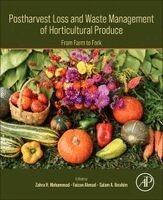
    Postharvest Loss and Waste Management of Horticultural Produce

    From Farm to Fork

    AvZahra H. Mohammad,Faizan Ahmad

    Häftad, Engelska, 2026

    1 722 kr

    Kommande

    Beskrivning

    Postharvest Loss and Waste Management of Horticultural Produce: From Farm to Fork addresses the major challenges and root causes of postharvest losses while also presenting solutions to reduce losses using innovative technologies. Sections introduce an overview of postharvest challenges, such as postharvest handling, storage, and transportation of fruits, vegetables, and berries, along with the impact of COVID-19 on postharvest losses. Other sections cover postharvest biological issues and control, such as postharvest diseases and microbiology issues of produce, novel technologies for reducing postharvest loss and waste in horticulture, like biological control, packaging, MAP films, etc., and mitigation strategies.

    A final section explores the environmental, economic, and social impact of postharvest losses across the food supply chain. Edited by a team of experts in the field, this is an excellent resource that brings sustainable solutions to reduce postharvest losses on a global level. Attracting a wider audience in the fields of food engineering and technology, as well as professionals, researchers, and academicians working in the fields of postharvest losses and their management, this book will be a welcomed resource.

    • Provides the present status of postharvest losses of horticulture crops, including problems, root causes, and strategies to reduce them
    • Explores the impact of COVID-19 on postharvest losses of horticultural crops from a “farm to fork” perspective
    • Presents the causes and management of postharvest diseases of horticultural crops
    • Highlights sustainable solutions to reduce postharvest losses such as biological control, packaging, MAP films, etc.

    Produktinformation

    • Utgivningsdatum:2026-11-01
    • Mått:191 x 235 x undefined mm
    • Vikt:450 g
    • Format:Häftad
    • Språk:Engelska
    • Antal sidor:424
    • Förlag:Elsevier Science
    • ISBN:9780443276644

    Utforska kategorier

    • Tillverkningsteknik inom Naturvetenskap och teknik

    Mer om författaren

    Dr. Zahra H. Mohammad, Ph.D., is currently working at Advanced Health and Education Services Organization as CEO/president of the organization, managing various training and research programs. She previously worked as a Food Microbiology and Extension Specialist at the University of Houston for many years. She has completed a BSc degree in Chemical Engineering. She was awarded a master’s and Ph.D. in Food Science and Technology /Food Microbiology from Texas A&M University. Her research interests focus on detecting pathogens in food, water, and food-related environments and how to counteract, prevent, and control their potential threat. She took a leading role in a wide variety of research projects addressing food safety, the environment, and the quality and shelf life of foods using conventional and modern intervention technologies, including thermal, non-thermal, molecular, and nanotechnology approaches. She has more than 10 years of teaching, extension, and industry experience and she published more than 40 publications in peer-reviewed journals, one book, and two review articles. She is a Produce Safety Alliance lead instructor, FSPCA Preventive Control for Human Food Lead Instructor, and International HACCP Alliance Lead instructor. She took a leading role in training growers in Texas Produce Safety Training and PCQI training across all of Texas. Dr. Faizan Ahmad, MTech, Ph.D., is currently working as an assistant professor at the Department of Post-Harvest Engineering and Technology, Faculty of Agricultural Sciences, Aligarh Muslim University, India. Dr. Ahmad has completed his BTech and MTech degrees in Chemical Engineering from Zakir Husain College of Engineering and Technology, Aligarh Muslim University, and his Ph.D. in Post Harvest Engineering and Technology from the Department of Post Harvest Engineering and Technology, A.M.U., Aligarh in Post harvest quality assessment of fruits and vegetables. He has more than 09 years of teaching and research experience. His current research is focused on developing food packaging by incorporating essential oils and nanoparticles. His research also includes quality evaluation of fruits and vegetables, food processing, preservation, and new product development by incorporating agricultural waste. He has published around 20 research papers in international and national reputed journals and more than 15 book chapters. Dr. Salam A. Ibrahim is a Professor of Food Science in the Food and Nutritional Science Program at North Carolina Agricultural and Technical State University, USA. He has established a research program around dairy technology, yogurt starter cultures, probiotics, and bioconversion processes, in addition to food safety and the use of natural compounds to inhibit the growth of foodborne illnesses. His program is well-funded by the National Institute of Food and Agriculture-United States Department of Agriculture (NIFA-USDA), the Department of Homeland Security (DHS), and other funding agencies. In addition, the food microbiology laboratory has strong connections with the food industry and often receives funds to support students around fermentation and the production of stable and functional probiotics products.

    Innehållsförteckning

    • Part 1. Overview of postharvest challenges1. Introduction2. Postharvest Loss and Waste in Horticulture Crops: Problems, Root Causes, and Management Strategies.3. Impact Of Covid-19 On Postharvest Losses of Horticultural Crops “Farm to Fork”4. Postharvest Handling, Storage, and Transportation of Horticultural Produce: Critical Issues and Factors of Losses5. Postharvest losses and the measures for their prevention for fruits vegetables, and berries.​​​Part 2. Postharvest biological issues and control6. Postharvest Diseases of Horticultural Crops: Causes and Management7. Biological Control: a novel, sustainable and practical approach for Postharvest Diseases Management of Horticultural Produce.8. Microbiology issues of produce and postharvest washing as a solution and preventive measures.9. Biological Contaminations Prevention and Control in Horticultural Crops from Farm-to-Fork (Escherichia coli, Salmonella, Listeria and Fungi)10. Influence of Water Quality on Post-Harvest Quality of Fruits and Vegetables11. Food safety: food borne pathogens and chemical pesticide residue on horticulture cropsPart 3. Novel technologies for reducing postharvest loss and waste in horticulture12. Emerging Technologies for Reducing Postharvest loss and waste of Horticultural Crops13. Postharvest Storage and Processing Technology of Fruits and Vegetables14. Improving Harvesting Methods Reduces Postharvest Losses15. MAP Films for Postharvest Packaging of Horticulture Produce16. Drying Methods of Grain Crops and Impact on Postharvest LossesPart 4. Mitigation strategies for postharvest loss and waste in horticulture17. Pre- or Postharvest Elicitors Treatments to reduce Post-Harvest Diseases in Horticulture Crops18. Packaging for Reducing Postharvest Losses of Fruits and Vegetables: Advancements and Challenges19. On-site outreach as a Solution to Reduce Agricultural Postharvest Losses20. Food Loss and Waste Prevention Strategies from Farm to ForkPart 5. Environmental, economic and social impact21. Reducing Postharvest Losses during Storage of Grain Crops to Strengthen Food Security in Developing Countries22. Environmental and Economic Influences of Postharvest Losses across the Food Supply Chain in the Developing Countries23. Impact of future climate change on postharvest losses and mitigation.