• Fri frakt över 249 kr
  • •
  • Snabba leveranser
  • •
  • Billiga böcker
Kundservice

Du är på sajten för privatpersoner.

Företag, bibliotek eller offentlig verksamhet?

Du handlar på classic.bokus.com, där alla dina funktioner finns intakta.
Till classic.bokus.com
Bokus logotyp. Gå till startsidan.
  • Erbjudanden
  • Nyheter
  • Student
  • Topplistor
  • Barn & ungdom
  • Bokus Play
  • E-böcker
  • Pocketböcker
  • Spel & pussel

10% rabatt på allt med kod: NYSTART10 →

Sidfot

Mina sidor

    Hjälp

    • Kundservice
    • Vanliga frågor och svar
    • Frakt och leverans
    • Retur vid ångerrätt
    • Reklamera vara
    • Betalning
    • Köpvillkor
    • Allmänna villkor
    • Information om webbplatsens tillgänglighet

    Om Bokus

    • Om oss
    • Pressrum
    • För studenter
    • För företag
    • För bibliotek och offentlig verksamhet
    • För leverantörer
    • Hållbarhet

    Populärt

    • Aktuella erbjudanden
    • Presentkort
    • Studentlitteratur
    • Nya böcker
    • Topplistor
    • Signerade böcker
    • Engelska böcker

    Inspiration

    • Boktips
    • BookTok
    • Populära bokserier
    • Barnbokskaraktärer
    • Populära författare
    Logotyp för Bokus
    Följ oss på Facebook (extern länk)Följ oss på Instagram (extern länk)Följ oss på YouTube (extern länk)Följ oss på TikTok (extern länk)
    bokus @ CookiesAnpassa cookiesIntegritetspolicyKöpvillkor
    Till Citymail hemsida (extern länk)Till Budbee hemsida (extern länk)Till Postnord hemsida (extern länk)Till Schenker hemsida (extern länk)Till Early Bird hemsida (extern länk)Till Walleys hemsida (extern länk)
    1. Naturvetenskap och teknik
    2. Geovetenskap
    3. Miljövetenskap och miljöpolitik

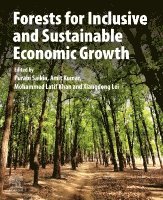
    Forests for Inclusive and Sustainable Economic Growth

    AvPurabi Saikia,Amit Kumar

    Häftad, Engelska, 2025

    1 726 kr

    Beställningsvara. Skickas inom 10-15 vardagar. Fri frakt över 249 kr.

    Beskrivning

    Forests for Inclusive and Sustainable Economic Growth addresses all major issues surrounding forest resources, also including global examples, case studies, literature reviews, latest developments, and future research prospects. To enhance understanding, the content is enriched with maps, figures, tables, and colorful illustrations, making it accessible to a broad readership. Students specializing in forest ecology and researchers will discover a wealth of knowledge on critical topics such as major ecological disturbances, the role of forests in poverty reduction and livelihood security, as well as participatory forest management techniques, landscape restoration, forest policies, and nature-based solutions.

    Importantly, this comprehensive volume highlights the pivotal role of forests in fostering employment, income generation, and food security to support inclusive and sustainable economic growth.

    • Includes case studies covering deforestation and forest degradation, forest carbon stocks, climate change, invasive species, and forest fires<
    • Covers statistical modeling-based and earth observation-based methods and techniques
    • Divided into four sections and edited by global experts in the areas of ecology, environmental sustainability, and economics

    Produktinformation

    • Utgivningsdatum:2025-05-21
    • Mått:216 x 276 x 22 mm
    • Vikt:1 490 g
    • Format:Häftad
    • Språk:Engelska
    • Antal sidor:550
    • Förlag:Elsevier Science
    • ISBN:9780443314063

    Utforska kategorier

    • Miljövetenskap och miljöpolitik inom Naturvetenskap och teknik
    • Skogsbruk inom Naturvetenskap och teknik

    Mer om författaren

    Dr. Purabi Saikia is an Associate Professor at Banaras Hindu University, India, working in plant ecology, conservation of threatened species, plant–soil interactions, and ecosystem restoration across Indian forest ecosystems. She is an active member of the IUCN Commission on Ecosystem Management and the Global Forest Biodiversity Initiative. She is a recipient of the Vigyan Yuva–Shanti Swarup Bhatnagar Award 2024 in Environmental Science and the Assam Saurabh Award 2024. She has published extensively in leading journals including Nature, PNAS, and Nature Ecology & Evolution, and has edited or co-authored several books.Dr. Amit Kumar is an Assistant Professor in the Department of Geoinformatics, Central University of Jharkhand, India. He is involved in interdisciplinary research with a focus on man-environment interaction, disaster risk and resilience, and climate change implications primarily in the urban milieu. His main areas of research are improving urban ecology through physio-socio-economic-hazard-risk investigations and methods to augment ecological quality using geoinformatics and machine learning techniques. He is engaged with various research projects including state-of-the-art LTEO projects of the Ministry of Environment, Forest and Climate Change; NASA-ISRO SAR; GISAT; and Airborne Hyperspectral Sensing missions. Dr Kumar has published over 60 research articles in various journals and books of international and national repute. He is a member of various academic societies including IUCN-Commission on Ecosystem Management (South Asia), National Association of Geographers India, and Global Forest Biodiversity Initiatives, USA. Dr. Mohamed Latif Khan is a Professor of Forestry and Coordinator of Scientific & Industrial Research Cell and also Deputy Coordinator of Bioinformatics Centre at North Eastern Regional Institute of Science & Technology (Deemed University), NIRJULI, Arunachal Pradesh. He is a plant ecologist and conservation biologist, obtained his doctoral degree from North Eastern Hill University, Shillong, India. His research interests have gradually expanded from tree regeneration to the fields of biodiversity conservation and eco-restoration. Dr. Khan is presently engaged in the studies on conservation and regeneration of endangered and medicinal plant species, inventory and analyses of biodiversity of sacred groves, exploration of germplasm of bamboo and cane species. Dr. Khan is also trained to study the phylogeny and genetic diversity of plant species. He has also been trained at Indian Institute of Remote Sensing, Dehra Dun for the application of remote sensing and GIS in biodiversity conservation. He also has research collaboration with Concordia University, Canada, Grand valley State University and Kansas University, USA. Through his research program, he has supervised twenty five undergraduate, five graduate and ten Ph. D. theses and currently he is supervising eight Ph.D. theses. He has contributed 103 peer-reviewed papers and 33 conference papers, invited presentations, and lectures. One book has also been co-edited by him. Dr. Khan is a recipient of prestigious Nanda Memorial Young Scientist Medal from the Indian Society for Tree Scientists for his outstanding research in the field of Forest Ecology and Biodiversity Conservation. He is a recipient of DST-BOYSCAST and DBT-Overseas fellowships in thrust area ‘Biodiversity Conservation’ and worked as visiting faculty at University of Massachusetts, Boston, USA, and Concordia University, Montreal, Canada. Xiangdong Lei is a professor of Forest management in the Institute of Forest Resource Information Techniques (IFRIT), Chinese Academy of Forestry (CAF). His research interests cover forest growth yield and modeling, multiple-functional forest management, and forest inventory. He had been as the Chief Technical Advisor of multiple use forestry demonstration project fund by the APFNet. He published more than 130 research papers and book chapters. He is the PI of national key R&D project “Forest site quality evaluation and muti-functional and full cycle forest management “.

    Innehållsförteckning

    • Section A: General Perspectives of Forests and Forest Resources1. An Introduction to Forests and Forest Resources2. Major Drivers of Deforestation and Forest Degradation3. Major Forest Carbon Stocks and Pools and their role in climate change mitigation4. Climate Change Impacts on Forests and Forest Resources5. Impacts of Land Use Change on Forest Biodiversity6. Forest fires and its impacts on Forest Biodiversity7. Invasive Plant Species and Altered Ecosystem ServiceSection B: Forest and Forest Resource Monitoring Methods8. Forest Monitoring Tools and Techniques9. Advanced Forest Monitoring Tools and Techniques10. Application of Molecular Phylogeny in determining the Evolutionary trends of Forest Species11. Species Distribution Models for Forest Conservation and Management12. Vegetation Indices and their uses to determine forest composition and health13. Forests and Forest Resources for Livelihood Security and Poverty Alleviation14. Forests and forest resources for Inclusive and Sustainable Economic growth15. Major Forest Biodiversity and Ecosystem Goods and Services16. Forest biodiversity and wildlife trading17. Forests and Forest Resources for Socioeconomic Development and Environmental Sustainability18. Forest Resources as an economic commodity and marketable goods19. Challenges and opportunities for balancing sustainability and economic activities in and around protected areas20. Role of Tree outside forests and Urban Forestry in Forests Management21. Management of Human-Wildlife Conflicts for Sustainable Forest Resource Conservation22. Sustainable Forests Management: Participatory Forests Management Strategies23. Policy Intervention for Forests and Forest Resource Conservation and Management24. Nature-based Solutions for Forests Management and Conservations