Mohammed Latif Khan – författare
Visar alla böcker från författaren Mohammed Latif Khan. Handla med fri frakt och snabb leverans.
10 produkter
10 produkter
Häftad, Engelska, 2025
1 390 kr
Skickas inom 10-15 vardagar
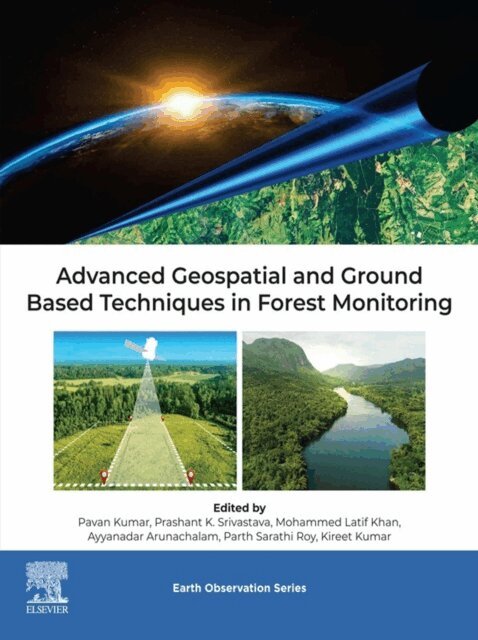
Advanced Geospatial and Ground Based Techniques in Forest Monitoring provides insights into advanced geospatial technology in the field of forestry. The book provides both traditional and special techniques for monitoring the forest, including biophysical and biochemical parameters, retrieval, species identification, mapping, and classification. In addition, it covers the latest technologies using SAR data, hyperspectral data, and the integration of datasets for the enhanced accuracy of the results and its outcome. This book will benefit the academic and research communities with the latest research ideas and problem-solving skills in forestry and land management.Includes the application of EO data for forest monitoring in both natural resources mapping and forest sustainable managementPresents advancements in geospatial technology using multispectral, hyperspectral, radar microwave, and LIDAR data in forest monitoring and its parameter retrievalCovers upcoming satellite missions for forest monitoring
E-bok
Engelska, 20251 756 kr
Läs direkt efter köp
Advanced Geospatial and Ground Based Techniques in Forest Monitoring provides insight into advanced geospatial technology in the field of forestry. It provides both traditional and special techniques for monitoring the forest, including biophysical and biochemical parameters, retrieval, species identification, mapping, and classification. The book covers the latest technology to using SAR data, hyperspectral data, and the integration of data sets for the enhanced accuracy of the results and its outcome. Advanced Geospatial and Ground Based Techniques in Forest Monitoring will benefit the academic and the research community with latest research ideas and problem-solving skills in forestry and land management. - Includes the application of EO data for forest monitoring in both natural resources mapping and forest sustainable management- Presents advancements in geospatial technology using multispectral, hyperspectral, radar microwave, and LIDAR data in forest monitoring and its parameter retrieval- Covers upcoming satellite missions for forest monitoring
Häftad, Engelska, 2025
1 666 kr
Skickas inom 10-15 vardagar
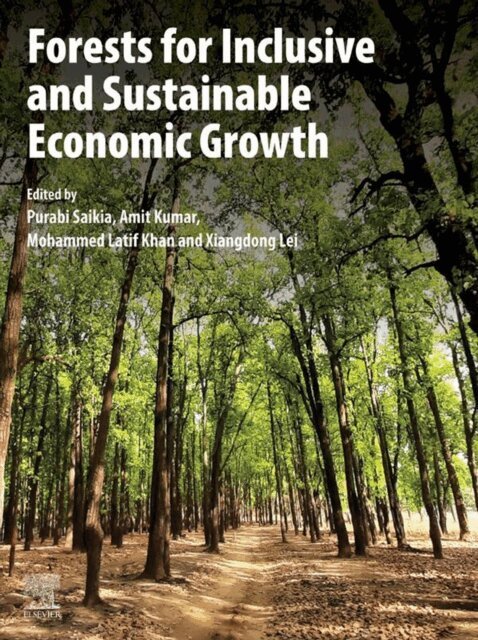
Forests for Inclusive and Sustainable Economic Growth addresses all major issues surrounding forest resources, also including global examples, case studies, literature reviews, latest developments, and future research prospects. To enhance understanding, the content is enriched with maps, figures, tables, and colorful illustrations, making it accessible to a broad readership. Students specializing in forest ecology and researchers will discover a wealth of knowledge on critical topics such as major ecological disturbances, the role of forests in poverty reduction and livelihood security, as well as participatory forest management techniques, landscape restoration, forest policies, and nature-based solutions.Importantly, this comprehensive volume highlights the pivotal role of forests in fostering employment, income generation, and food security to support inclusive and sustainable economic growth.Includes case studies covering deforestation and forest degradation, forest carbon stocks, climate change, invasive species, and forest fires<Covers statistical modeling-based and earth observation-based methods and techniquesDivided into four sections and edited by global experts in the areas of ecology, environmental sustainability, and economics
E-bok
Engelska, 20252 107 kr
Läs direkt efter köp
Forests for Inclusive and Sustainable Economic Growth addresses all major issues surrounding forest resources, also including global examples, case studies, literature reviews, latest developments, and future research prospects. To enhance understanding, the content is enriched with maps, figures, tables, and colorful illustrations, making it accessible to a broad readership. Students specializing in forest ecology and researchers will discover a wealth of knowledge on critical topics such as major ecological disturbances, the role of forests in poverty reduction and livelihood security, as well as participatory forest management techniques, landscape restoration, forest policies, and nature-based solutions.Importantly, this comprehensive volume highlights the pivotal role of forests in fostering employment, income generation, and food security to support inclusive and sustainable economic growth.- Includes case studies covering deforestation and forest degradation, forest carbon stocks, climate change, invasive species, and forest fires<- Covers statistical modeling-based and earth observation-based methods and techniques- Divided into four sections and edited by global experts in the areas of ecology, environmental sustainability, and economics
Inbunden, Engelska, 2019
1 573 kr
Skickas inom 5-8 vardagar
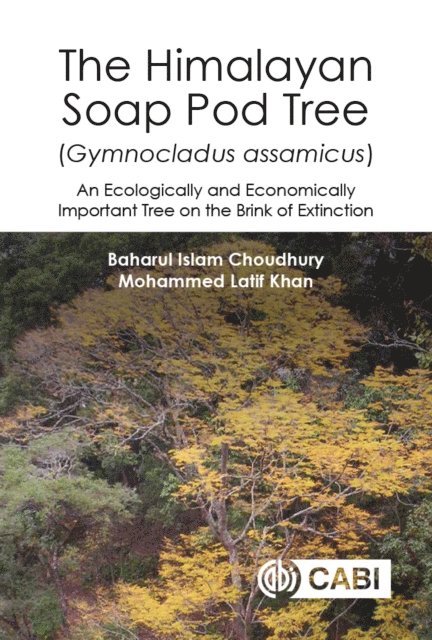
Extinction of species has alarmingly increased in recent decades due to anthropogenic activities, natural calamities and climate change. The life history, ecology and evolution of such species have often not been well studied. Gymnocladus assamicus is an archaic tree endemic to the Eastern Himalayan region of Northeast India. Locally known as 'Menangmanba-shi' by the Monpa tribe of Arunachal Pradesh (India), mature G. assamicus pods contain high saponin and are used traditionally for cleansing purposes and rituals. We rediscovered the species after more than 70 years from high altitude areas in the Himalayas through extensive field explorations and employing an ecological niche modeling approach. Our study revealed a very few actively reproducing mature G. assamicus trees surviving in unique microclimatic conditions. The species is classified as 'critically endangered' (IUCN red list). The book contains detailed information about G. assamicus and discusses its current distribution, population status, ethnobotanical uses and other ecological parameters. Major intrinsic and extrinsic factors that might be responsible for population decline are described. More importantly, we reported a very rare mating system known as 'androdioecy' in which male and hermaphrodite individuals co-exist in the natural population. Overall, the book highlights the story of a critically endangered tree species with a unique biological and socio-cultural importance and will serve as a case study and referencefor other similar species both locally and globally.
E-bok
PDF, Engelska, 20191 631 kr
Läs direkt efter köp
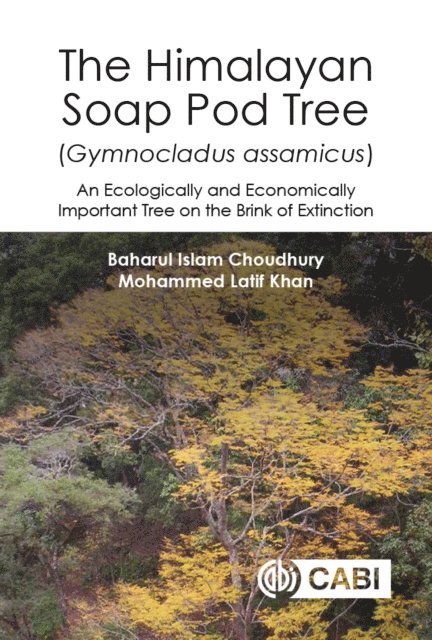
Extinction of species has alarmingly increased in recent decades due to anthropogenic activities, natural calamities and climate change. The life history, ecology and evolution of such species have often not been well studied. Gymnocladus assamicus is an archaic tree endemic to the Eastern Himalayan region of Northeast India. Locally known as 'Menangmanba-shi' by the Monpa tribe of Arunachal Pradesh (India), mature G. assamicus pods contain high saponin and are used traditionally for cleansing purposes and rituals. We rediscovered the species after more than 70 years from high altitude areas in the Himalayas through extensive field explorations and employing an ecological niche modeling approach. Our study revealed a very few actively reproducing mature G. assamicus trees surviving in unique microclimatic conditions. The species is classified as 'critically endangered' (IUCN red list). The book contains detailed information about G. assamicus and discusses its current distribution, population status, ethnobotanical uses and other ecological parameters. Major intrinsic and extrinsic factors that might be responsible for population decline are described. More importantly, we reported a very rare mating system known as 'androdioecy' in which male and hermaphrodite individuals co-exist in the natural population. Overall, the book highlights the story of a critically endangered tree species with a unique biological and socio-cultural importance and will serve as a case study and referencefor other similar species both locally and globally.
E-bok
Engelska, 20191 631 kr
Läs direkt efter köp
Extinction of species has alarmingly increased in recent decades due to anthropogenic activities, natural calamities and climate change. The life history, ecology and evolution of such species have often not been well studied. Gymnocladus assamicus is an archaic tree endemic to the Eastern Himalayan region of Northeast India. Locally known as 'Menangmanba-shi' by the Monpa tribe of Arunachal Pradesh (India), mature G. assamicus pods contain high saponin and are used traditionally for cleansing purposes and rituals. We rediscovered the species after more than 70 years from high altitude areas in the Himalayas through extensive field explorations and employing an ecological niche modeling approach. Our study revealed a very few actively reproducing mature G. assamicus trees surviving in unique microclimatic conditions. The species is classified as 'critically endangered' (IUCN red list). The book contains detailed information about G. assamicus and discusses its current distribution, population status, ethnobotanical uses and other ecological parameters. Major intrinsic and extrinsic factors that might be responsible for population decline are described. More importantly, we reported a very rare mating system known as 'androdioecy' in which male and hermaphrodite individuals co-exist in the natural population. Overall, the book highlights the story of a critically endangered tree species with a unique biological and socio-cultural importance and will serve as a case study and referencefor other similar species both locally and globally.
Inbunden, Engelska, 2022
2 718 kr
Skickas inom 10-15 vardagar
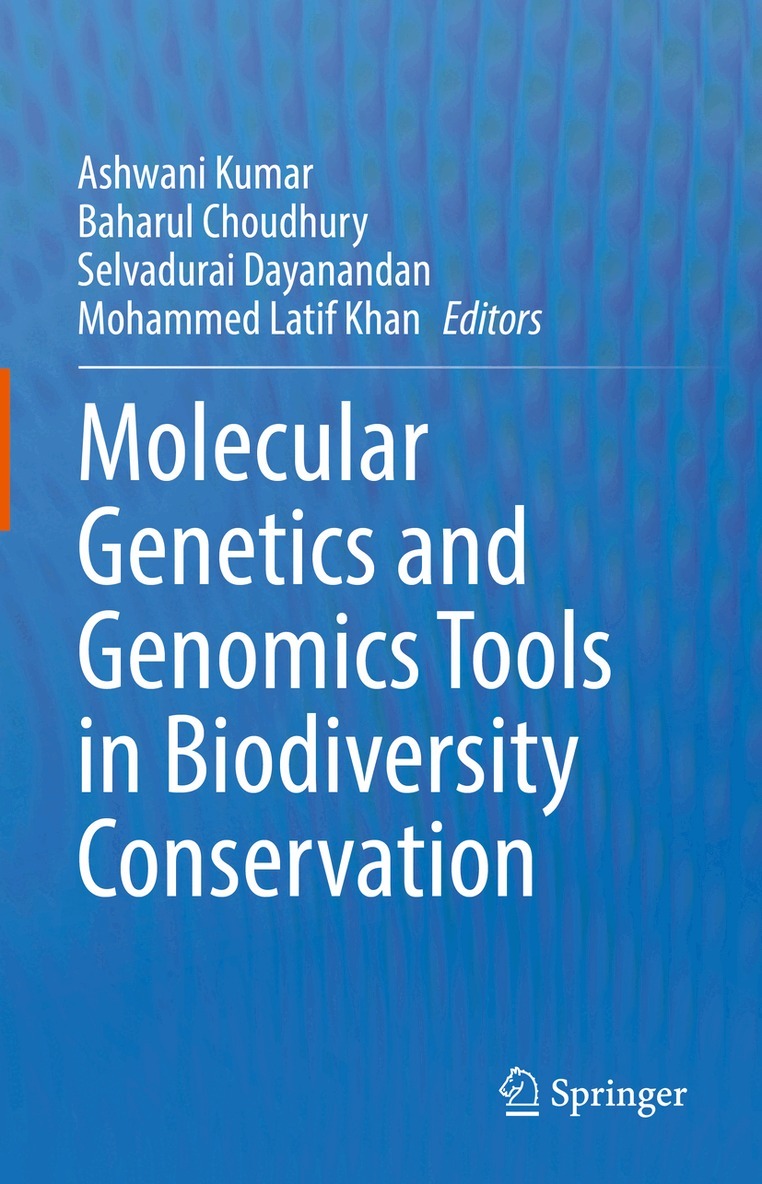
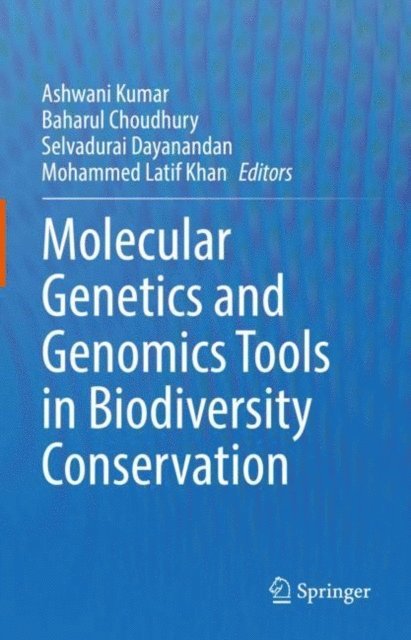
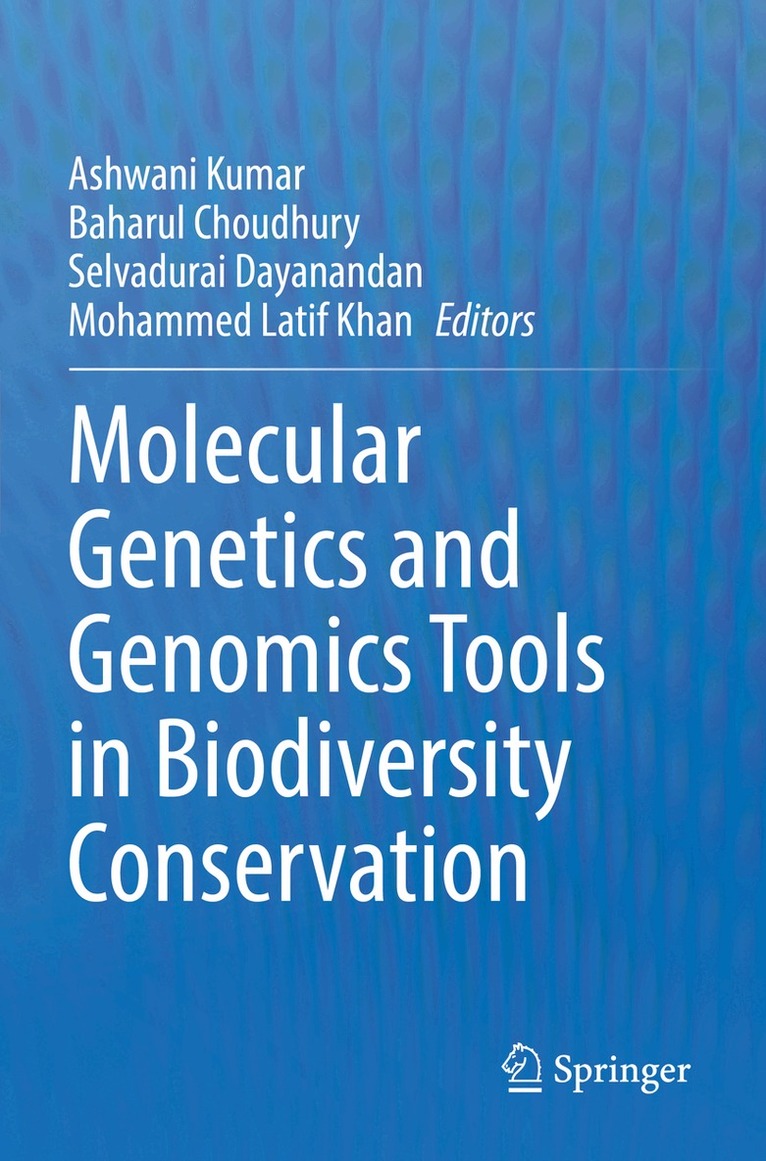
This book provides insight into the use of molecular and genomic techniques to the study of populations of critically important species at various geographical scales. It delves into a wide range of issues relevant to biodiversity conservation, such as population differentiation, landscape genomics, ecological interactions, phylogenetics, phylogeography, metagenomics, molecular methods, and data processing. The current rate of biodiversity loss is unprecedented and valuable genetic resources are being lost at an alarmingly rate. Effective strategies to conserve these genetic resources are essential to maintain healthy ecosystems with inter-dependent species. The book is an invaluable resource for training undergraduate and graduate students, postdoctoral fellows, and for young researchers. This book is particularly useful for the policy makers and academics who want to learn about important concepts in population and conservation genetics and genomics.
E-bok
Engelska, 20223 351 kr
Läs direkt efter köp
This book provides insight into the use of molecular and genomic techniques to the study of populations of critically important species at various geographical scales. It delves into a wide range of issues relevant to biodiversity conservation, such as population differentiation, landscape genomics, ecological interactions, phylogenetics, phylogeography, metagenomics, molecular methods, and data processing. The current rate of biodiversity loss is unprecedented and valuable genetic resources are being lost at an alarmingly rate. Effective strategies to conserve these genetic resources are essential to maintain healthy ecosystems with inter-dependent species. The book is an invaluable resource for training undergraduate and graduate students, postdoctoral fellows, and for young researchers. This book is particularly useful for the policy makers and academics who want to learn about important concepts in population and conservation genetics and genomics.
Häftad, Engelska, 2023
2 718 kr
Skickas inom 10-15 vardagar
This book provides insight into the use of molecular and genomic techniques to the study of populations of critically important species at various geographical scales. It delves into a wide range of issues relevant to biodiversity conservation, such as population differentiation, landscape genomics, ecological interactions, phylogenetics, phylogeography, metagenomics, molecular methods, and data processing. The current rate of biodiversity loss is unprecedented and valuable genetic resources are being lost at an alarmingly rate. Effective strategies to conserve these genetic resources are essential to maintain healthy ecosystems with inter-dependent species. The book is an invaluable resource for training undergraduate and graduate students, postdoctoral fellows, and for young researchers. This book is particularly useful for the policy makers and academics who want to learn about important concepts in population and conservation genetics and genomics.