Häftad, Engelska, 2026
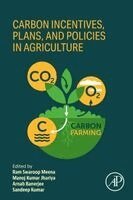
Carbon Incentives, Plans, and Policies in Agriculture
Av Ram Swaroop Meena, Manoj Kumar Jhariya, Arnab Banerjee, Sandeep Kumar
1855 kr
Beställningsvara. Skickas inom 10-15 vardagar. Fri frakt över 249 kr.
Beskrivning
Economic incentives intended to catalyze environmentally responsible behavior have assumed a central role in confronting climate change, food insecurity, and natural resource degradation. Notwithstanding their promise, many programs underperform owing to methodological gaps, limited transparency, and insufficient regulatory oversight. Carbon Incentives, Plans, and Policies in Agriculture undertakes a critical appraisal of these constraints and advances evidence-based propositions for strengthening carbon credit mechanisms across agricultural systems and value chains.
The volume assembles a globally diverse authorship to synthesize emergent strategies and forward trajectories in carbon financing and monetization, green accounting, ecological and environmental economics, and carbon credit trading, while situating these within the broader sustainability imperatives of agroecosystems. Distinctive emphasis is placed on measurement and methodological rigor, including quantification protocols, MRV frameworks, and domain-specific estimation approaches for soils, croplands, grasslands, and agroforestry, together with field-level interventions (e.g., energy and water use efficiency, best management practices, and green manuring) and technological enablement (notably, AI-supported assessment). Integrating scientific, policy, and economic perspectives, this book furnishes a conceptual and operational foundation for scholars, researchers, industry practitioners, and policymakers seeking to design effective, transparent, and equitable governance and planning protocols for a low-carbon agricultural transition.
The volume assembles a globally diverse authorship to synthesize emergent strategies and forward trajectories in carbon financing and monetization, green accounting, ecological and environmental economics, and carbon credit trading, while situating these within the broader sustainability imperatives of agroecosystems. Distinctive emphasis is placed on measurement and methodological rigor, including quantification protocols, MRV frameworks, and domain-specific estimation approaches for soils, croplands, grasslands, and agroforestry, together with field-level interventions (e.g., energy and water use efficiency, best management practices, and green manuring) and technological enablement (notably, AI-supported assessment). Integrating scientific, policy, and economic perspectives, this book furnishes a conceptual and operational foundation for scholars, researchers, industry practitioners, and policymakers seeking to design effective, transparent, and equitable governance and planning protocols for a low-carbon agricultural transition.
- Surfaces the carbon-storage contribution of perennial fruit-tree systems and tree-crop ecologies, extending sequestration analysis beyond annual cropping
- Consolidates expertise spanning agronomy, soil microbiology, forestry, environmental law and economics, and AI-enabled analytics, yielding multi-scalar insights
- Provides methodologies for carbon credit assessment across different land use types, highlighting ecosystem-specific constraints and opportunities that inform context-sensitive decision-making and carbon incentive policy frameworks
- Examines the evolving role of private sector actors in agricultural carbon markets and financing, documenting novel industry-level initiatives and investment patterns that shape real-world adoption and successful implementation of carbon incentives in agriculture
Produktinformation
- Utgivningsdatum: 2026-08-17
- Mått: 216 x 276 x 28 mm
- Vikt: 450 g
- Format: Häftad
- Språk: Engelska
- Antal sidor: 530
- Förlag: Elsevier Science
- ISBN: 9780443335570
Utforska kategorier
Betyg & recensioner
0 recensioner
Inga recensioner tillgängliga.