• Fri frakt över 249 kr
  • •
  • Snabba leveranser
  • •
  • Billiga böcker
Kundservice

Du är på sajten för privatpersoner.

Företag, bibliotek eller offentlig verksamhet?

Du handlar på classic.bokus.com, där alla dina funktioner finns intakta.
Till classic.bokus.com
Bokus logotyp. Gå till startsidan.
  • Erbjudanden
  • Student
  • Topplistor
  • Barn & ungdom
  • Bokus Play
  • E-böcker
  • Ljudböcker
  • Pocketböcker
  • Spel & pussel

Upp till 25% på utvalda nyheter →

Sidfot

Mina sidor

    Hjälp

    • Kundservice
    • Vanliga frågor och svar
    • Frakt och leverans
    • Retur vid ångerrätt
    • Reklamera vara
    • Betalning
    • Köpvillkor
    • Allmänna villkor
    • Information om webbplatsens tillgänglighet

    Om Bokus

    • Om oss
    • Pressrum
    • För studenter
    • För företag
    • För bibliotek och offentlig verksamhet
    • För leverantörer
    • Hållbarhet

    Populärt

    • Aktuella erbjudanden
    • Presentkort
    • Studentlitteratur
    • Nya böcker
    • Topplistor
    • Signerade böcker
    • Engelska böcker

    Inspiration

    • Boktips
    • BookTok
    • Populära bokserier
    • Barnbokskaraktärer
    • Populära författare
    Logotyp för Bokus
    Följ oss på Facebook (extern länk)Följ oss på Instagram (extern länk)Följ oss på YouTube (extern länk)Följ oss på TikTok (extern länk)
    bokus @ CookiesAnpassa cookiesIntegritetspolicyKöpvillkor
    Till Citymail hemsida (extern länk)Till Budbee hemsida (extern länk)Till Postnord hemsida (extern länk)Till Schenker hemsida (extern länk)Till Early Bird hemsida (extern länk)Till Walleys hemsida (extern länk)
    1. Naturvetenskap och teknik
    2. Matematik och naturvetenskap
    3. Biologi
    4. Biovetenskap

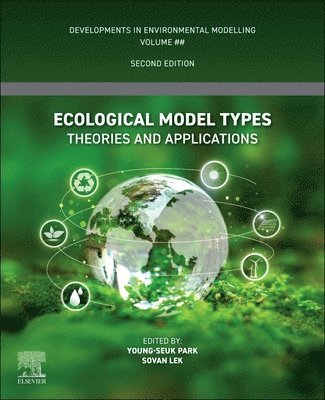
    Ecological Model Types

    Theories and Applications

    AvYoung-Seuk Park,Sovan Lek

    Inbunden, Engelska, 2025

    Del i serien Developments in Environmental Modelling

    1 191 kr

    Beställningsvara. Skickas inom 10-15 vardagar. Fri frakt över 249 kr.

    Beskrivning

    Ecological Model Types: Theories and Applications, Second Edition presents an understanding of how to quantitatively analyze complex and dynamic ecosystems with the tools available today. Recently, besides process-based models, data driven models such as machine learning methods are popularly applied in ecological and environmental models. This second edition covers both process-based models and data-driven models which are fundamental and popular in ecological modeling studies with theories and applications. It also explains how ecological modeling can assist the implementation of sustainable development as well as how mathematical models and systems analysis can describe ecological processes, which can support sustainable management of resources.

    • Discusses modelling theory and application
    • Illustrates process-based models as well as machine learning models
    • Explains practical guides to apply models

    Produktinformation

    • Utgivningsdatum:2025-12-09
    • Mått:191 x 235 x 28 mm
    • Vikt:1 076 g
    • Format:Inbunden
    • Språk:Engelska
    • Serie:Developments in Environmental Modelling
    • Antal sidor:456
    • Upplaga:2
    • Förlag:Elsevier Science
    • ISBN:9780443363047

    Utforska kategorier

    • Biovetenskap inom Naturvetenskap och teknik

    Mer om författaren

    Young-Seuk Park is a Professor at the Department of Biology, Kyung University, Seoul, Republic of Korea. After completing a PhD at Pusan National University, he undertook post-doctoral research at CNRS, Université Paul Sabatier, and Cemagraf in France, and he obtained an HDR (Habilitation à Diriger des Recherches / Accreditation to Supervise Research) from the Université Paul Sabatier in Toulouse, France, before returning Korea to establish his independent reseach group at Kyung Hee University. His laboratory studies the effects of environmental changes on biological systems at different hierarchical levels from molecules, individuals, populations, and communities through ecological modelling and ecological informatics approaches. In particular, his research is focused on the effects of global changes on ecosystems, and ecological monitoring and assessment for sustainable ecosystem management. He is interested in computational approaches such as machine learning techniques and advanced statistical methods. He is an associate editor of two scientific journals Annales de Limnologie – International Journal of Limnology and Journal of Ecology and Environment, and he is also on the editorial boards of several journals including Ecological Informatics and Animal Cells and Systems. He was a guest editor for several Special Issues in scientific journals including Ecological Modelling, Ecological Informatics, Annales de Limnologie – International Journal of Limnology, Inland Waters, and Water. He is the recipient of the 2014 Yeocheon Ecology Award. Sovan Lek is a Professor at the University of Toulouse. His research is mainly in Fish Community Ecology and Ecological Modelling. In Fish Community Ecology, his research concerns the biodiversity and the spatial distribution of fish according to the environmental characteristics and the response of fish community to the human disturbances, especially land-use, hydromorphology, climate warming. The distribution of fish is considered according to the scale of variation, varying from local to regional and global scales, in relationship with the environmental variables. In Ecological Modelling, he is mainly interested in the use of machine learning techniques. He is also familiar with the uses of classical modelling techniques like classical statistic methods (multiple linear regression, multi-variate analyses ) and modern statistical methods (CART, GAM, PLS ).He has participated in several EU projects in the fields of Ecology and Global changes. He also participated in bilateral projects with several Asian countries. He is an editorial member of Ecological Modelling and associate editor of Ecological Informatics.

    Innehållsförteckning

    • 1. Introduction: An OverviewSection 1: Process-based models2. Biogeochemical models3. Dynamic Population Models4. Ecotoxicological Models5. Structurally Dynamic Models (SDMs)6. Steady State Models7. Spatially Explicit Models8. Fugacity Models9. Network model: Econet10. Process-based Modelling in EcologySection 2: Data-driven models11. Artificial Neural Networks (Multilayer Perceptron) in Ecology12. Decision Tree Models13. Ensemble Models14. Support Vector Machines for Ecological Modelling15. Deep learning: Long short-term memory networks16. Automated Machine Learning