• Fri frakt över 249 kr
  • •
  • Snabba leveranser
  • •
  • Billiga böcker
Kundservice

Du är på sajten för privatpersoner.

Företag, bibliotek eller offentlig verksamhet?

Du handlar på classic.bokus.com, där alla dina funktioner finns intakta.
Till classic.bokus.com
Bokus logotyp. Gå till startsidan.
  • Erbjudanden
  • Nyheter
  • Student
  • Topplistor
  • Barn & ungdom
  • Bokus Play
  • E-böcker
  • Pocketböcker
  • Spel & pussel

10% rabatt på allt med kod: NYSTART10 →

Sidfot

Mina sidor

    Hjälp

    • Kundservice
    • Vanliga frågor och svar
    • Frakt och leverans
    • Retur vid ångerrätt
    • Reklamera vara
    • Betalning
    • Köpvillkor
    • Allmänna villkor
    • Information om webbplatsens tillgänglighet

    Om Bokus

    • Om oss
    • Pressrum
    • För studenter
    • För företag
    • För bibliotek och offentlig verksamhet
    • För leverantörer
    • Hållbarhet

    Populärt

    • Aktuella erbjudanden
    • Presentkort
    • Studentlitteratur
    • Nya böcker
    • Topplistor
    • Signerade böcker
    • Engelska böcker

    Inspiration

    • Boktips
    • BookTok
    • Populära bokserier
    • Barnbokskaraktärer
    • Populära författare
    Logotyp för Bokus
    Följ oss på Facebook (extern länk)Följ oss på Instagram (extern länk)Följ oss på YouTube (extern länk)Följ oss på TikTok (extern länk)
    bokus @ CookiesAnpassa cookiesIntegritetspolicyKöpvillkor
    Till Citymail hemsida (extern länk)Till Budbee hemsida (extern länk)Till Postnord hemsida (extern länk)Till Schenker hemsida (extern länk)Till Early Bird hemsida (extern länk)Till Walleys hemsida (extern länk)
    1. Naturvetenskap och teknik
    2. Geovetenskap
    3. Miljövetenskap och miljöpolitik

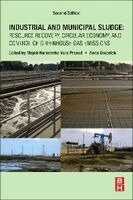
    Industrial and Municipal Sludge

    Resource Recovery, Circular Economy, and Control of Greenhouse Gas Emissions

    AvMajeti Narasimha Vara Prasad,Anna Grobelak

    Häftad, Engelska, 2026

    3 099 kr

    Beställningsvara. Skickas inom 11-20 vardagar. Fri frakt över 249 kr.

    Beskrivning

    Industrial and Municipal Sludge, Second Edition systematically addresses key aspects and pressing issues related to sludge management within the wastewater and sludge treatment industries, with the intent of aligning them more closely with global, sustainable development endeavors. This timely revision highlights technological advancements and current trends in cutting-edge sludge management methods and resource recovery strategies, providing valuable insights into innovative solutions that can also significantly reduce greenhouse gas emissions and support a circular economy. The volume also features a host of case studies from different regions and industry contexts that illustrate adaptability and scalability of sludge management techniques.

    The updated coverage doesn’t overlook the challenges that the field faces, such as high costs, equipment limitations, regulatory hurdles, health and safety concerns, and public acceptance. Ultimately, the book functions as a platform for multidisciplinary perspectives and best-practice approaches to drive viable change in industrial and municipal operations alike.

    • Discusses innovative sludge treatment technologies that improve resource recovery and reduce environmental impact in an effort to contribute to the circular economy
    • Emphasizes systems engineering principles and the importance of modernizing existing treatment frameworks to enhance operational efficiency while promoting effective, environmentally responsible practices
    • Analyzes GHG emissions from various biological treatment processes and the implementation of control measures to achieve sustainability goals
    • Endorses a shift toward renewable energy sources in wastewater treatment operations

    Produktinformation

    • Utgivningsdatum:2026-11-15
    • Mått:152 x 229 x undefined mm
    • Vikt:450 g
    • Format:Häftad
    • Språk:Engelska
    • Antal sidor:850
    • Upplaga:2
    • Förlag:Elsevier Science
    • ISBN:9780443444944

    Utforska kategorier

    • Miljövetenskap och miljöpolitik inom Naturvetenskap och teknik
    • Energiteknik inom Naturvetenskap och teknik
    • Miljöteknik inom Naturvetenskap och teknik

    Mer om författaren

    Dr. Prasad is Emeritus Professor, School of Life Sciences, University of Hyderabad (India). He has made outstanding contributions to the fields of bioremediation, bioresources, biomass energy sources, bioeconomy, and to the broad field of environmental biotechnology, all of which are his main areas of expertise. Dr. Prasad has served the Government of India’s Ministry of Environment, Forests and Climate Change as a member of various advisory committees on biodiversity conservation, ecosystem services, pollution control and abatement, environmental information systems and bioremediation of contaminated sites. He is an active visiting scientist for several international universities. Dr. hab. Anna Grobelak is a Professor at the Częstochowa University of Technology, specializing in environmental protection, biodegradation, microbiology, and environmental chemistry. Her research focuses on advanced wastewater treatment technologies, pharmaceutical removal, microplastic analysis, and the application of cold plasma in treatment processes. Prof. Grobelak collaborates with various research institutions worldwide, enabling knowledge exchange and the development of innovative environmental solutions for both the fields of biotechnology and sustainable waste management.

    Innehållsförteckning

    • Section A. Sludge: Sources and Characterization1. Sludge from wastewater treatment plants2. Sludge from tannery industries3. Vermistabilization and detoxification of sugar industry sludges by earthworms4. Earthworms converting domestic and food industry wastes into biofertilizer5. Rheological characterization of sludgeSection B. Sludge Management6. General considerations on industrial and municipal sludge disposal7. Sanitary and environmental aspects of sewage sludge management8. Sludge activation, conditioning, and engineering9. Sludge legislation: Comparison between different countries10. Biosurfactants for oil recovery from refinery sludge: magnetic nanoparticle-assisted purification11. Industrial sludge for ceramic products and its benefits for metal stabilization12. Detoxification of organic sludge from water-treatment plants by active forms of Ca and Si13. Sludge multifunctions in a phytobiome—Forest and plantation application including microbial aspects14. Co-composting of sewage sludge and wetland plant material from a constructed wetland treating domestic wastewater15. Co-processing of sewage sludge in cement kilnSection C. Contaminants in Sludge and Treatment Strategies16. Emerging technologies in sewage sludge treatment and disintegration17. Sludge dewatering: Processes for enhanced performance18. Emerging contaminants in sludge (endocrine disruptors, pesticides, and pharmaceutical residues, including illicit drugs/controlled substances, etc.)19. Carbonization of sewage sludge as an adsorbent for organic pollutants20. Stabilization of cadmium in industrial sludge—Generation of crystalline products21. Bioleaching for extracting heavy metals from electronic waste sludge22. Microplastics in sludgeSection D. Valorization of Sludge as a Resource23. Gasification of sewage sludge24. From waste to resource: Sorption properties of biological and industrial sludge25. Phosphorus extraction and sludge dissolution26. Municipal solid sludge for soil amendment in saline conditions27. Sludge valorization: A novel approach for treatment and resource recovery to achieve circular economy28. Thermal processes for sludge valorization: Non-combustion pathwaysSection E. Energy Recovery from Sludge29. Volatile fatty acid yield from sludge anaerobic fermentation through a biotechnological approach30. Biogas (methane production) and energy recovery from different sludges31. Biogas production by thermal hydrolysis and thermophilic anaerobic digestion of waste-activated sludge32. Microbial fuel cell application for sludge remediation and minimization