Naturvetenskaplig forskning
235 kr
295 kr
Skickas
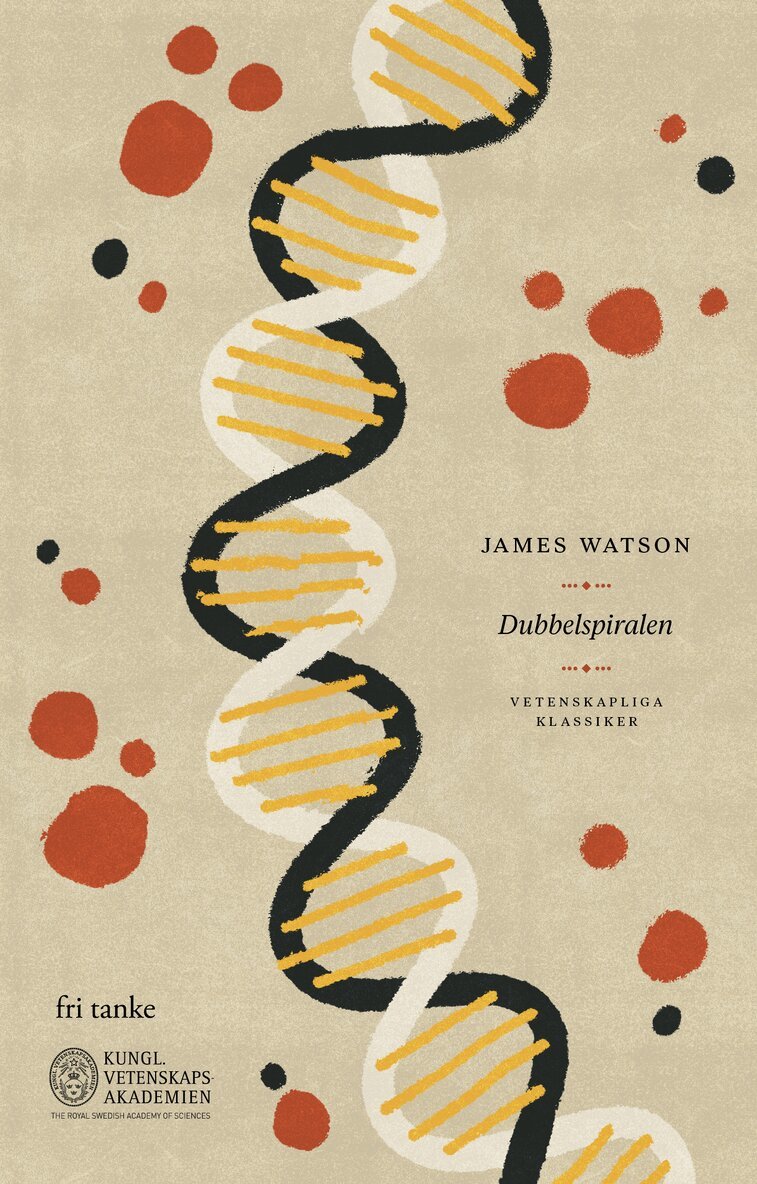
»… vi förstod båda att vi inte skulle vara i hamn förrän vi hade byggt en fullständig modell där samtliga stereokemiska bindningar var tillfredsställande. Dessutom kunde vetskapen om dess existens få så dramatiska följder att vi borde ligga lågt ett tag. Jag kände därför visst obehag när Francis på lunchen gled in på The Eagle för att låta alla inom höravstånd få veta att vi hade funnit livets hemlighet.«
När en ung James Watson träffar Francis Crick vid universitetet i Cambridge hösten 1951 är genombrottet som ska komma att revolutionera förståelsen av allt biologiskt liv bara ett par år bort – upptäckten av DNA-molekylens genetiska funktion och spiralformade struktur.
Dubbelspiralen är en av 1900-talets stora vetenskapliga berättelser. Med sin personliga banbrytande stil skildrar James Watson det forskningsarbete, de rivaliteter och vänskaper, som skulle leda fram till upptäckten av livets kod.
Vetenskapliga klassiker ges ut i samarbete med Kungl. Vetenskapsakademien.
436 kr
Skickas inom 5-8 vardagar
225 kr
Skickas inom 3-6 vardagar
189 kr
Skickas
Det är en alldeles speciell känsla. En kombination av nyfikenhet, förväntan – och ängslan.
Det vetenskapliga arbetet är fullt av känslor och bjuder på små och stora njutningar. Kemiprofessor Ulf Ellervik öppnar upp sitt labb och ger läsaren en inblick i den vetenskapliga processen – en bergochdalbana av farliga experiment, konsten att njuta av leda, fascination över nya upptäckter och stark förundran.
207 kr
Skickas inom 3-6 vardagar
19 kr
Läs direkt efter köp
Europa är en kontinent som har förändrats genom historien. Gränser har flyttats och nationer och imperier har uppstått och försvunnit. Få känner till att ett landområde stort som halva Sverige helt enkelt har utplånats från kartan, översvämmat av havet. Doggerland utgjorde en gång norra Europas bästa jaktmarker, ett rikt land för de folk som bodde här.
Då var Themsen en biflod till Rhen, och det gick att promenera mellan kontinenten och de brittiska öarna.
Men ett förändrat klimat gjorde landet obeboeligt, tills det till slut gick under i en våldsam och oväntad katastrof. Vad var det då för människor som bodde här, och hur hade de det?
DOGGERLAND – EN FÖRLORAD VÄRLD är en artikel som ursprungligen publicerades i Allt om Vetenskap 2010.
TOMAS LINDBLAD är journalist och skriver och gör radio om forskning och vetenskap. Hans artiklar finns framför allt i Allt om Vetenskap och programmen hörs i Vetenskapsradion i Sveriges Radio.
150 kr
Skickas inom 5-8 vardagar
297 kr
Skickas inom 3-6 vardagar
1 189 kr
Skickas inom 3-6 vardagar
295 kr
Skickas inom 3-6 vardagar
147 kr
Skickas inom 3-6 vardagar
201 kr
Skickas inom 5-8 vardagar
Not Even Wrong
The Failure of String Theory and the Continuing Challenge to Unify the Laws of Physics
171 kr
Skickas
416 kr
Skickas
182 kr
Skickas inom 5-8 vardagar
90 kr
Läs direkt efter köp
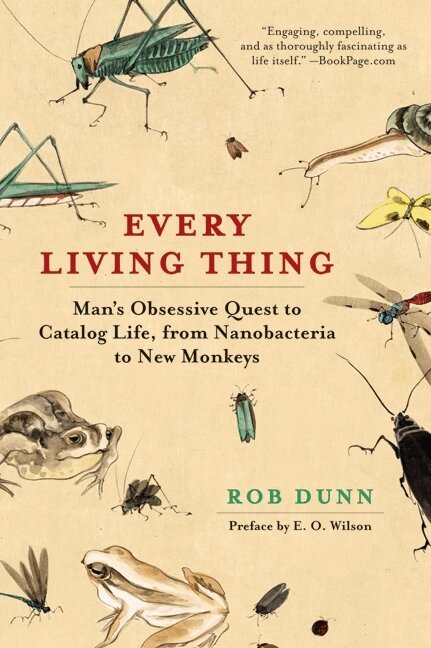
Biologists and laypeople alike have repeatedly claimed victory over life. A thousand years ago we thought we knew almost everything; a hundred years ago, too. But even today, Rob Dunn argues, discoveries we can''t yet imagine still await.
In a series of vivid portraits of single-minded scientists, Dunn traces the history of human discovery, from the establishment of classification in the eighteenth century to today''s attempts to find life in space. The narrative telescopes from a scientist''s attempt to find one single thing (a rare ant-emulating beetle species) to another scientist''s attempt to find everything in a small patch of jungle in Guanacaste, Costa Rica. With poetry and humor, Dunn reminds readers how tough and exhilarating it is to study the natural world, and why it matters.
99 kr
Läs direkt efter köp
The New York Times bestselling author of The Rational Optimist and Genome returns with a fascinating argument for evolution that definitively dispels a dangerous, widespread myth: that we can command and control our world.
Human society evolves. Change in technology, language, morality, and society is incremental, inexorable, gradual, and spontaneous. It follows a narrative, going from one stage to the next; it creeps rather than jumps; it has its own spontaneous momentum rather than being driven from outside; it has no goal or end in mind; and it largely happens by trial and error—a version of natural selection. Much of the human world is the result of human action but not of human design: it emerges from the interactions of millions, not from the plans of a few.
Drawing on fascinating evidence from science, economics, history, politics, and philosophy, Matt Ridley demolishes conventional assumptions that the great events and trends of our day are dictated by those on high, whether in government, business, academia, or organized religion. On the contrary, our most important achievements develop from the bottom up. Just as skeins of geese form Vs in the sky without meaning to and ter-mites build mud cathedrals without architects, so brains take shape without brain-makers, learning happens without teaching, and morality changes for no reason other than the prevailing fashion. Although we neglect, defy, and ignore them, bottom-up trends shape the world. The Industrial Revolution, cell phones, the rise of Asia, and the Internet were never planned; they happened. Languages emerged and evolved by a form of natural selection, as did common law. Torture, racism, slavery, and pedophilia—all once widely regarded as acceptable—are now seen as immoral despite the decline of religion in recent decades. In this wide-ranging and erudite book, Ridley brilliantly makes the case for evolution, rather than design, as the force that has shaped much of our culture, our technology, our minds, and that even now is shaping our future.
As compelling as it is controversial, as authoritative as it is ambitious, Ridley’s deeply thought-provoking book will change the way we think about the world and how it works.
86 kr
Läs direkt efter köp
Building on his national bestseller The Rational Optimist, Matt Ridley chronicles the history of innovation, and how we need to change our thinking on the subject.Innovation is the main event of the modern age, the reason we experience both dramatic improvements in our living standards and unsettling changes in our society. Forget short-term symptoms like Donald Trump and Brexit, it is innovation that will shape the twenty-first century. Yet innovation remains a mysterious process, poorly understood by policy makers and businessmen alike.
Matt Ridley argues that we need to see innovation as an incremental, bottom-up, fortuitous process that happens as a direct result of the human habit of exchange, rather than an orderly, top-down process developing according to a plan. Innovation is crucially different from invention, because it is the turning of inventions into things of practical and affordable use to people. It speeds up in some sectors and slows down in others. It is always a collective, collaborative phenomenon, involving trial and error, not a matter of lonely genius. It happens mainly in just a few parts of the world at any one time. It still cannot be modeled properly by economists, but it can easily be discouraged by politicians. Far from there being too much innovation, we may be on the brink of an innovation famine.
Ridley derives these and other lessons from the lively stories of scores of innovations, how they started and why they succeeded or failed. Some of the innovation stories he tells are about steam engines, jet engines, search engines, airships, coffee, potatoes, vaping, vaccines, cuisine, antibiotics, mosquito nets, turbines, propellers, fertilizer, zero, computers, dogs, farming, fire, genetic engineering, gene editing, container shipping, railways, cars, safety rules, wheeled suitcases, mobile phones, corrugated iron, powered flight, chlorinated water, toilets, vacuum cleaners, shale gas, the telegraph, radio, social media, block chain, the sharing economy, artificial intelligence, fake bomb detectors, phantom games consoles, fraudulent blood tests, hyperloop tubes, herbicides, copyright, and even life itself.
276 kr
Skickas inom 3-6 vardagar
The inside story of how Big Pharma’s relentless pursuit of ever-higher profits corrupts medical knowledge—misleading doctors, misdirecting American health care, and harming our health.
The United States spends an excess $1.5 trillion annually on health care compared to other wealthy countries—yet the amount of time that Americans live in good health ranks a lowly 68th in the world. At the heart of the problem is Big Pharma, which funds most clinical trials and therefore controls the research agenda, withholds the real data from those trials as corporate secrets, and shapes most of the information relied upon by health care professionals.
In this no-holds-barred exposé, Dr. John Abramson—one of the foremost experts on the drug industry’s deceptive tactics—combines patient stories with what he learned during many years of serving as an expert in national drug litigation to reveal the tangled web of financial interests at the heart of the dysfunction in our health-care system. For example, one of pharma’s best-kept secrets is that the peer reviewers charged with ensuring the accuracy and completeness of the clinical trial reports published in medical journals do not even have access to complete data and must rely on manufacturer-influenced summaries. Likewise for the experts who write the clinical practice guidelines that define our standards of care.
The result of years of research and privileged access to the inner workings of the U.S. medical-industrial complex, Sickening shines a light on the dark underbelly of American health care—and presents a path toward genuine reform.
1 389 kr
Läs direkt efter köp
1 690 kr
Läs direkt efter köp
604 kr
Skickas inom 10-15 vardagar
Research in Medical and Biological Sciences covers the wide range of topics that a researcher must be familiar with in order to become a successful biomedical scientist. Perfect for aspiring as well as practicing professionals in the medical and biological sciences, this publication discusses a broad range of topics that are common yet not traditionally considered part of formal curricula, including philosophy of science, ethics, statistics, and grant applications. The information presented in this book also facilitates communication across conventional disciplinary boundaries, in line with the increasingly multidisciplinary nature of modern research projects.
Provides a broad scientific perspective in basic, clinical and translational medical research, which is perfect for students with various professional backgrounds Contains easily accessible, concise material that makes learning about diverse methods achievable in today's fast-paced world Includes extensive examples, online resources such as further reading suggestions, and data files for statistical analyses Covers the breadth of topics, including research strategies, bibliographic tools and scientific communication, that a researcher must understand in order to be a successful scientist1 349 kr
Läs direkt efter köp
524 kr
Skickas inom 10-15 vardagar
Global Mobility of Research Scientists: The Economics of Who Goes Where and Why brings together information on how the localization and mobility of academic researchers contributes to the production of knowledge.
The text answers several questions, including "what characterizes nationally and internationally mobile researchers?" and "what are the individual and social implications of increased mobility of research scientists?"
Eight independent, but coordinated chapters address these and other questions, drawing on a set of newly developed databases covering 30 countries, including the US, the UK, France, Germany, Italy, Japan, Russia, and China, among others.
Combines theoretically sound and empirically fascinating results in one volume that has international and interdisciplinary appeal. Covers topics at the forefront of academic, business, and policy discussions Data used in the chapters available at a freely-accessible website2 148 kr
Läs direkt efter köp
3 108 kr
Läs direkt efter köp