• Fri frakt över 249 kr
  • •
  • Snabba leveranser
  • •
  • Billiga böcker
Kundservice

Du är på sajten för privatpersoner.

Företag, bibliotek eller offentlig verksamhet?

Du handlar på classic.bokus.com, där alla dina funktioner finns intakta.
Till classic.bokus.com
Bokus logotyp. Gå till startsidan.
  • Erbjudanden
  • Nyheter
  • Student
  • Topplistor
  • Barn & ungdom
  • Bokus Play
  • E-böcker
  • Pocketböcker
  • Spel & pussel

10% studentrabatt med kod TERM26

Sidfot

Mina sidor

    Hjälp

    • Kundservice
    • Vanliga frågor och svar
    • Frakt och leverans
    • Retur vid ångerrätt
    • Reklamera vara
    • Betalning
    • Köpvillkor
    • Allmänna villkor
    • Information om webbplatsens tillgänglighet

    Om Bokus

    • Om oss
    • Pressrum
    • För studenter
    • För företag
    • För bibliotek och offentlig verksamhet
    • För leverantörer
    • Hållbarhet

    Populärt

    • Aktuella erbjudanden
    • Presentkort
    • Studentlitteratur
    • Nya böcker
    • Topplistor
    • Signerade böcker
    • Engelska böcker

    Inspiration

    • Boktips
    • BookTok
    • Populära bokserier
    • Barnbokskaraktärer
    • Populära författare
    Logotyp för Bokus
    Följ oss på Facebook (extern länk)Följ oss på Instagram (extern länk)Följ oss på YouTube (extern länk)Följ oss på TikTok (extern länk)
    bokus @ CookiesAnpassa cookiesIntegritetspolicyKöpvillkor
    Till Citymail hemsida (extern länk)Till Budbee hemsida (extern länk)Till Postnord hemsida (extern länk)Till Schenker hemsida (extern länk)Till Early Bird hemsida (extern länk)Till Walleys hemsida (extern länk)
    1. Samhälle och politik
    2. Samhälle och kultur
    3. Kultur och medier
    4. Referensverk och tvärvetenskap
    • -10% student

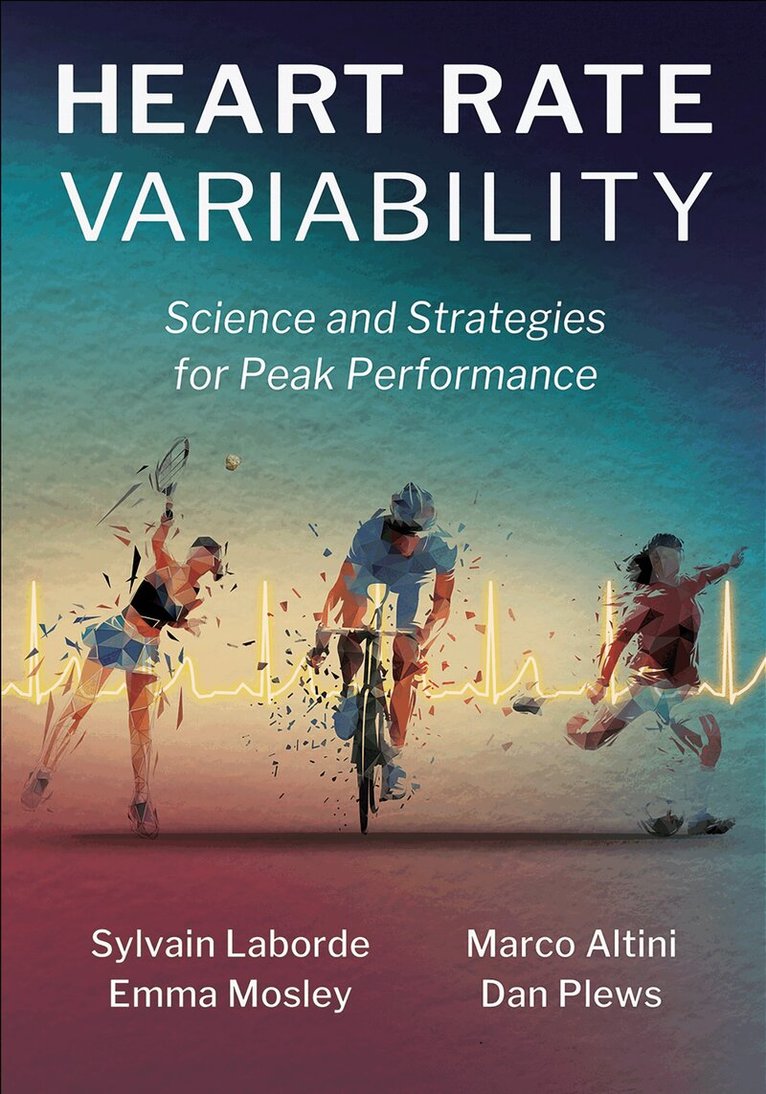
    Heart Rate Variability

    Science and Strategies for Peak Performance

    AvSylvain Laborde,Marco Altini

    Häftad, Engelska, 2026

    378 kr

    Skickas . Fri frakt över 249 kr.

    Beskrivning

    Understand heart rate variability and its role in athletic performance.Heart rate variability (HRV) is a valuable tool used to assess cardiac function, evaluate mental and emotional well-being, and—when used by athletes and coaches—optimize training based on each athlete's unique data.Written by a world-renowned author team, Heart Rate Variability: Science and Strategies for Peak Performance introduces the fundamentals of HRV and provides practical guidance on how to measure and interpret HRV data, train smarter, prevent injuries, manage stress, and improve overall health.With coverage spanning everything from factors affecting HRV to ways to enhance training, this book will help coaches, trainers, and athletes appreciate just how much performance can be influenced by this physiological measurement. Explanations of data collection, interpretation, and application to training are included, making it easy to take action based on what you learn. Physical monitoring isn't the only thing HRV data can be used for; the authors also describe how mental training can be used jointly with HRV measurements to enhance performance and manage psychological stress.Learn from the experts and then incorporate data into your training with a 30-day challenge centered around consistently measuring, interpreting, and improving your HRV. What is your heart telling you?Earn continuing education credits/units! A continuing education exam that uses this book is also available. It may be purchased separately or as part of a package that includes both the book and exam.

    Produktinformation

    • Utgivningsdatum:2026-05-22
    • Mått:253 x 24 x 173 mm
    • Vikt:900 g
    • Format:Häftad
    • Språk:Engelska
    • Antal sidor:368
    • Förlag:Human Kinetics Publishers
    • ISBN:9781718236097

    Ingår i kampanjer

    -10% student

    Utforska kategorier

    • Referensverk och tvärvetenskap inom Samhälle och politik
    • Naturvetenskaplig forskning inom Naturvetenskap och teknik
    • Idrottsträning och coachning inom Sport, fritid och hobby

    Mer om författaren

    Sylvain Laborde, PhD, is a renowned associate professor in sport psychology at the prestigious German Sport University Cologne, Europe's largest sports institution, where he founded the HRV–Performance Psychophysiology Lab (www.hrv-laborde.com). He holds two doctorates (in sport science and in psychology) and has dedicated the past 18 years to exploring HRV and the noninvasive stimulation of the vagus nerve in athletes.Regarded as a global authority on HRV and author of more than 150 peer-reviewed scientific research papers, Dr. Laborde has captivated audiences with his compelling insights and innovative ideas. As an award-winning speaker, he has shared his expertise in five languages (French, English, German, Spanish, and Italian) in numerous keynote addresses, talks, and workshops across over 20 countries, reaching Olympic committees, national coaches, and elite athletes alike. Dr. Laborde's groundbreaking Vagal Tank Theory, elaborated with his coauthor Emma Mosley, translates complex research findings into practical applications for everyday life. The applications of his work focus on noninvasive vagus nerve stimulation to improve performance and self-regulation abilities of athletes, using techniques such as slow-paced breathing and the diving reflex. With this approach, he has empowered countless individuals to harness the power of HRV for improved performance and well-being. His research is featured regularly on international TV, in the press, on the radio, and in podcasts.In this book, Dr. Laborde embarks on a new mission to provide athletes, coaches, and performance seekers with the first comprehensive guide to monitoring and enhancing HRV. This groundbreaking book is a testament to his relentless pursuit of knowledge and his unwavering commitment to improving lives through the science of performance optimization.Marco Altini, PhD, MSc, is a scientist and developer mainly working at the intersection of health, technology, and performance. He holds a doctorate (cum laude) in data science, a master's degree (cum laude) in computer science engineering, and a master's degree (cum laude) in human movement sciences, with a specialization in high-performance coaching.Dr. Altini is the founder of HRV4Training, a platform he developed in 2012 that is today trusted by more than 150,000 users, including Olympic medalists and professional teams. HRV4Training uses advanced signal processing and data analytics to measure HRV and quantify stress, helping athletes of all levels to better balance training and lifestyle stressors to improve performance.Dr. Altini's blog entries and articles on various online platforms (e.g., Medium, Substack) have reached more than one million readers. He has also published more than 50 scientific papers and patents at the intersection of technology, physiology, health, and performance. He developed numerous software solutions to track and improve heart rate variability, both independently (HRV4Training, HRV4Biofeedback) and for other organizations (Oura, Strava).Dr. Altini is a guest lecturer at Vrije Universiteit Amsterdam and an advisor to various companies working on the use of heart rate variability for applications targeting mental and physical health. He has been a guest in countless podcasts and interviews as a leading expert and trusted authority when it comes to the measurement and use of heart rate variability. As a recreational athlete, he loves to practice what he preaches, a journey that recently brought him to break the 3-hour barrier in the marathon.Emma Mosley, PhD, is a senior lecturer in sport and exercise psychology in the faculty of allied health and exercise sciences at Bournemouth University. Dr. Mosley holds the Accredited Sport and Exercise Scientist certification from the Chartered Association of Sport and Exercise Sciences (CASES) and the Chartered Scientist credential from the Science Council. She has a doctorate in HRV and performance under pressure and has studied HRV for over a decade.She is a leading researcher within HRV and, together with Sylvain Laborde, she has paved the way for robust HRV research within psychophysiology as well as sport and exercise psychology. Dr. Mosley has published milestone papers within this field, including a highly cited methodological paper on Vagal Tank Theory written with Sylvain Laborde, and a systematic review surrounding the use of HRV in sport and exercise psychology. Her research has evolved to explore the applied domain, and she has published multiple papers examining HRV interventions in elite athletic populations.Dr. Mosley has worked in elite sport (e.g., Formula 3) and with the International Biathlon Union on a funded HRV project. She has also worked within the corporate sector, delivering HRV-informed breathing sessions to high-performing teams. She is deeply passionate about making HRV accessible and understandable for all.Dan Plews, PhD, is an accomplished applied sport scientist, researcher, and coach with an exceptional record of success across endurance sports. Athletes with whom he has worked closely have collectively won more than 30 world championships and Olympic medals in rowing, kayaking, and triathlon.Dr. Plews is a recognized expert in the field of HRV, having completed his doctorate in applied HRV. His research focused on implementing and validating methods for using HRV to track training adaptation in elite athletes. His work has been published in over 70 peer-reviewed scientific articles and has received more than 5,500 citations.Throughout his career, Dr. Plews has held several senior high-performance roles, including head of physical performance at Emirates Team New Zealand during their 2021 America's Cup–winning campaign, lead physiologist for Rowing New Zealand at both the London and Rio Olympic Games, and lead performance physiologist for Women's Canoe Racing New Zealand. He continues to actively apply his research and expertise to support athletes in achieving their performance goals.Dan is also the founder of Endure IQ, a global endurance education and coaching company, and the cofounder of Endurox, a science-based hybrid training platform built specifically for Hyrox athletes.A passionate endurance coach, Dan has guided numerous Ironman athletes to performances under the 8-hour barrier, including coaching Chelsea Sodaro to victory at the 2022 Ironman World Championship. As an athlete himself, Dan set the Ironman World Championship amateur course record at Kona in 2018, finishing in 8:24, winning the overall amateur division, and placing 22nd overall. He was also the first amateur athlete in history to break the 8-hour Ironman barrier.More recently, Dan has turned his scientific focus toward the emerging sport of Hyrox, integrating evidence-based endurance and strength training methodologies to optimize performance in hybrid athletes. His ongoing research and personal involvement in Hyrox continue to drive innovation in training, performance, and recovery. He also currently holds the Hyrox world record for the men's 45-49 pro doubles division.Dr. Plews' achievements and continued dedication to sport science and exercise physiology serve as an inspiration to athletes and sports enthusiasts around the world.

    Innehållsförteckning

    • ForewordIntroduction. Why This Book? Starting the Journey With HRVWhat Are Our Stories With HRV?Why Is HRV Important?How Can This Book Help You?Final Thoughts to Kick-Start Your HRV Reading JourneyPart I. The Science Behind HRVChapter 1. Physiology FoundationsUnderstanding the Physiological Foundations of HRVWhat Is the Difference Between Heart Rate and HRV?The Physiology of HRVHRV IndicesVagally Mediated HRVCardiac Vagal Activity and Vagal Tank TheoryThe Implications of Vagal Tank TheoryMyths About HRV: Separating Fact From Fiction When Interpreting HRVInterpreting Indices of Non–Vagally Mediated HRVThe Role of Context in HRV InterpretationChapter 2. Global Factors That Influence HRVPopulation-Level Analyses: Understanding Individual DifferencesIndividual-Level Analyses: How Data Change Over TimeEnvironmental StressorsChapter 3. Impact of Sleep, Nutrition, and Hydration on HRVSleep and HRVNutrition and HRVHydration and HRVPart II. Measurement and Interpretation of HRVChapter 4. HRV Monitoring and Tracking ToolsCommon Methods and Devices for Measuring HRVHRV Versus Pulse Rate VariabilityKnow Your Application: ECG Versus Photoplethysmography Versus BallistocardiographyProtocols and Best Practices: How to Accurately Measure HRVWhen to Measure HRVBody Position: Should You Measure Lying Down, Sitting, or Standing? Frequency of HRV MeasurementsDuration of HRV MeasurementsChest Straps, Wristbands, Finger Sensors, and Phones: What Can You Use? The Impact of Breathing on Data CollectionArtifacts in HRV Data: Movement, Ectopic Beats, and ArrhythmiasLearn to Ask the Right QuestionsChapter 5. Interpreting HRV DataAcute Response to Training Stress and HRVUnderstanding Meaningful Changes in HRV Indices: The Normal RangeIdentifying Changes in HRV and What They Mean for Your Health and FitnessHeart Rate and HRV SaturationPhysiological Adaptations to TrainingPart III. Applications of HRV MonitoringChapter 6. Using HRV to Guide Individualized TrainingAutonomic Regulation and Trainability: What HRV Can Tell UsThe Beginnings of HRV-Guided TrainingState of the Art in HRV-Guided Training: The Big(ger) PictureThe Future of Individualized Training: A Combined Approach?Expected Outcomes of HRV-Guided TrainingBeyond Baseline AssessmentsChapter 7. Applying HRV in Team SettingsDevices for Monitoring HRV in Team SportsThe Basics of HRV in Team SportsChallenges of Monitoring HRV in Team SportsChapter 8. Injury Prevention and Acute RecoveryUsing HRV Monitoring to Detect Early Signs of Overtraining and InjuryHRV-Guided Training for Injury PreventionHRV-Guided Training for Injury RehabilitationHRV for the Management of Brain Injuries and ConcussionsChapter 9. Health, Disease Prevention, and LongevityThe Role of Autonomic Function in Health and DiseaseHRV and Fundamental Health MechanismsThe Role of HRV in Disease Prevention and ManagementImproving Health Outcomes With HRV MonitoringPart IV. The Brain's Impact on HRVChapter 10. HRV and Cognitive FunctionHRV, Mental Performance, and FunctionBrain Structure and HRVThe Prefrontal Cortex, Executive Function, and HRVMeasuring HRV for Cognitive PerformancePhysical Activity and HRVHRV and Mental FatigueCollecting HRV Data to Manage Mental Fatigue and Improve Cognitive FunctioningStrategies for Overcoming Mental Fatigue and Improving Executive PerformanceChapter 11. Managing Psychological StressUnderstanding Psychological StressStrategies for Using HRV to Manage Psychological StressBurnout and HRVChallenges and Limitations of Monitoring HRV to Manage Psychological StressChapter 12. HRV and Mental TrainingPsychological Skills: The FoundationsBreathing TechniquesMind–Body RelaxationThe Low HRV AutopilotInspirational TechniquesSelf-ReflectionConnection Matters: The Power of Social Support for HRVPart V. Maximizing Daily HRV Monitoring for Athletic PerformanceChapter 13. Your Daily HRV RoutineThe Ease of Capturing HRV DataWhat Could Your HRV Day Look Like?HRV Analysis Before and After ExerciseWhat About Continuous HRV Monitoring?Chapter 14. A 30-Day HRV Training PlanWhy Complete an HRV Challenge?Your HRV-Supporting Morning RoutineYour HRV-Supporting Evening RoutineBuilding Blocks for HRV Awareness and ImprovementThe 30-Day HRV ChallengeWhat to Do After the 30-Day HRV ChallengeEpilogue. Your HRV Journey Is Just StartingSummary of Key TakeawaysPersonal Growth and Continuous LearningStart Simple and Build a Solid FoundationHRV for Athletic Training and PerformanceInterpreting Data and Making Training DecisionsOverview of HRV Applications Across SportsSharing Your HRV Journey