• Fri frakt över 249 kr
  • •
  • Snabba leveranser
  • •
  • Billiga böcker
Kundservice

Du är på sajten för privatpersoner.

Företag, bibliotek eller offentlig verksamhet?

Du handlar på classic.bokus.com, där alla dina funktioner finns intakta.
Till classic.bokus.com
Bokus logotyp. Gå till startsidan.
  • Erbjudanden
  • Nyheter
  • Student
  • Topplistor
  • Barn & ungdom
  • Bokus Play
  • E-böcker
  • Pocketböcker
  • Spel & pussel

10% studentrabatt med kod TERM26

Sidfot

Mina sidor

    Hjälp

    • Kundservice
    • Vanliga frågor och svar
    • Frakt och leverans
    • Retur vid ångerrätt
    • Reklamera vara
    • Betalning
    • Köpvillkor
    • Allmänna villkor
    • Information om webbplatsens tillgänglighet

    Om Bokus

    • Om oss
    • Pressrum
    • För studenter
    • För företag
    • För bibliotek och offentlig verksamhet
    • För leverantörer
    • Hållbarhet

    Populärt

    • Aktuella erbjudanden
    • Presentkort
    • Studentlitteratur
    • Nya böcker
    • Topplistor
    • Signerade böcker
    • Engelska böcker

    Inspiration

    • Boktips
    • BookTok
    • Populära bokserier
    • Barnbokskaraktärer
    • Populära författare
    Logotyp för Bokus
    Följ oss på Facebook (extern länk)Följ oss på Instagram (extern länk)Följ oss på YouTube (extern länk)Följ oss på TikTok (extern länk)
    bokus @ CookiesAnpassa cookiesIntegritetspolicyKöpvillkor
    Till Citymail hemsida (extern länk)Till Budbee hemsida (extern länk)Till Postnord hemsida (extern länk)Till Schenker hemsida (extern länk)Till Early Bird hemsida (extern länk)Till Walleys hemsida (extern länk)
    1. Naturvetenskap och teknik
    2. Matematik och naturvetenskap
    3. Biologi
    4. Biovetenskap

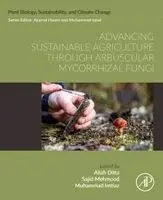
    Advancing Sustainable Agriculture Through Arbuscular Mycorrhizal Fungi

    AvAllah Ditta,Sajid Mehmood

    Häftad, Engelska, 2026

    Del i serien Plant Biology, Sustainability, and Climate Change

    1 970 kr

    Kommande

    Beskrivning

    Advancing Sustainable Agriculture Through Arbuscular Mycorrhizal Fungi provides a comprehensive view of AMF-focused approaches that support biodiversity, ecosystem services, and soil health. The book addresses the topic from the basis of symbiosis to the latest research and future directions of AMF use in agriculture. It provides a thorough overview of the role that AM fungi play in promoting agricultural sustainability and synthesizes current knowledge on the biology, ecology, and applications of AM fungi in sustainable agriculture, highlighting best practices for promoting AM fungi in agricultural ecosystems, such as crop selection, soil management, and fertilizer use. In addition, the book identifies research gaps and priorities for the advancement of the understanding of AM fungi in sustainable agriculture. Among the major issues confronting agriculture are soil erosion, water shortages, climate change, and dwindling biodiversity. In response to these issues, the need for sustainable farming methods that support ecosystem services, biodiversity, and soil health is rising. As the soil microbiome is largely composed of arbuscular mycorrhizal (AM) fungi, which are essential for preserving soil health and encouraging plant development, this book is a welcomed resource.

    • Presents the latest developments in the field of AM fungi
    • Includes both soil and crop-focused perspectives
    • Provides insights on the impacts of policy and practice on environmental sustainability and sustainable agriculture

    Produktinformation

    • Utgivningsdatum:2026-09-14
    • Mått:191 x 235 x undefined mm
    • Vikt:450 g
    • Format:Häftad
    • Språk:Engelska
    • Serie:Plant Biology, Sustainability, and Climate Change
    • Antal sidor:450
    • Förlag:Elsevier Science
    • ISBN:9780443451300

    Utforska kategorier

    • Biovetenskap inom Naturvetenskap och teknik
    • Agronomi och lantbruk inom Naturvetenskap och teknik
    • Lantbruksteknik inom Naturvetenskap och teknik

    Mer om författaren

    Allah Ditta is an Assistant Professor at Department of Environmental Sciences, Shaheed Benazir Bhutto University Sheringal, Dir upper, Khyber Pakhtunkhwa, Pakistan. He earned his BSc (Hons) MSc (Hons) from University of Agriculture Faisalabad, Pakistan and received his Ph.D. from Institute of Soil and Environmental Sciences, University of Agriculture Faisalabad, Pakistan. He has carried out research projects in the areas of Eco-restoration by using integrated organic, inorganic and microbial strategies. He has also served as Assistant Professor at Department of Environmental Sciences, PMAS, Arid Agriculture University Rawalpindi, Pakistan. His major research interests encompass broad, interdisciplinary field of plant production, with a focus on eco-restoration under abiotic stresses. The breadth of his research spans from degraded land ecological amelioration, using integrated and sustainable approaches. Dr. Ditta has published more than 85 research and review articles (Impact factor 210.43) in internationally well-recognized journals along with thirteen book chapters. Dr. Sajid Mehmood completed his BSc (Hons.) in Agriculture from Arid Agricultural University of Rawalpindi, Pakistan, and his MSc (Hons.) in Soil Science and graduated in 2014. In 2015, he moved to Wuhan, China and finished his Ph.D. at the College of Resources and Environment, Huazhong Agricultural University, examining the different types of risk, management strategies and efficiency at crop level using biochar, slag and ferrous manganese ore. He is currently a postdoctoral fellow at Hainan University in the Department of Ecology and Environment. He has research experience on as-is and modified (magnetic and acidic) biochars. Dr. Sajid worked as a research associate in a project of National Natural Science Foundation of China. Dr. Sajid has been on the Editorial board and the panel of reviewers of several reputed journals of Elsevier, Taylor & Francis, Springer Nature, RSC, Oxford University Press, The Royal Society, CSIRO, PLOS and John Wiley & Sons. Dr. Muhammad Imtiaz is a Senior Scientist at Soil and Environmental Biotechnology Division, National Institute for Biotechnology and Genetic Engineering, Faisalabad, Pakistan, and also as Associate Professor at School of Environmental Science and Engineering, Guangzhou University, Guangzhou (Guangdong), P.R. China focusing on the fate of heavy metals stress in the soil environment, and in plants as well as on their remediation approached for the sustainable agriculture. Dr. Muhammad Imtiaz has research and teaching experience and has published research in various well reputed scientific impact factor journals. He has participated in many national and international conferences and seminars, and presented his research there. Dr. Muhammad Imtiaz has been working as Section Editor of "Journal of Environment and Agriculture (JEA) since 2017.

    Innehållsförteckning

    • 1. Arbuscular mycorrhizal fungi: Understanding the Basis of Symbiosis2. Taxonomy, ecology, and evolution of arbuscular mycorrhizal fungi: A key component of soil microbiome3. Arbuscular mycorrhizal fungi: Plant nutrition and health for sustainable agriculture4. Arbuscular mycorrhizal fungi: Soil fertility through enhancement of nutrient availability5. Arbuscular mycorrhizal fungi and major nutrient cycling6. Arbuscular mycorrhizal fungi in soil microbiome and ecosystem functioning7. Arbuscular mycorrhizal fungi and carbon sequestration8. Role of arbuscular mycorrhizal fungi in improving soil structure and water holding capacity9. Role of arbuscular mycorrhizal fungi in remediation of soil pollutant10. Impact of arbuscular mycorrhizal fungi on soil microbial communities11. Arbuscular mycorrhizal fungi as plant growth enhancers: mechanisms and applications12. Arbuscular mycorrhizal fungi and drought tolerance in plants13. Arbuscular mycorrhizal fungi and salinity stress tolerance in plants14. Arbuscular mycorrhizal fungi and temperature stress tolerance in plants15. Arbuscular mycorrhizal fungi and water relations in plants16. Arbuscular mycorrhizal fungi and biotic stress tolerance in plants17. The complex network of signals and responses during interactions between plants and arbuscular mycorrhizal fungi18. Arbuscular mycorrhizal fungi and plant secondary metabolite production19. Inoculum Production, Formulation, and Quality Control of Arbuscular mycorrhizal fungi20. Arbuscular mycorrhizal fungi as biofertilizers for sustainable agriculture21. Enhancing crop production through arbuscular mycorrhizal fungi22. Arbuscular mycorrhizal fungi and organic farming23. Arbuscular mycorrhizal fungi and urban agriculture24. Arbuscular mycorrhizal fungi and rehabilitation in degraded lands25. Arbuscular mycorrhizal fungi and climate-smart agriculture26. Designing novel symbioses for agricultural applications: Perspectives from synthetic biology27. New frontiers for sustainable agriculture through nanotechnology and arbuscular mycorrhizal fungi28. Perceptions, knowledge, and practices among farmers regarding social impacts of mycorrhizal technology adoption29. Economic analysis of arbuscular mycorrhizal fungi in crop production30. Arbuscular mycorrhizal fungi in agriculture: Policy and regulatory frameworks31. Case studies on agricultural applications of arbuscular mycorrhizal fungi in the field: Pros and cons32. Endophytic fungi and sustainable agricultural production33. Ectomycorrhizal fungi and sustainable agriculture34. Genetic association and mycorrhiza35. Role of biostimulation and biocontrol of mycorrhizal symbiosis36. Challenges, opportunities, and future directions for arbuscular mycorrhizal fungi research and development