

Edible Electronics
Principles, Fundamentals, and Applications in Smart Food Packaging and Biomedical Innovations
AvArun Kumar Gupta,Milad Tavassoli
Häftad, Engelska, 2027
1 792 kr
Kommande
Beskrivning
Edible Electronics: Principles, Fundamentals, and Applications in Smart Food Packaging and Biomedical Innovations addresses the growing global demand for sustainable technologies and environmentally responsible solutions. Conventional electronic devices often rely on toxic, non-biodegradable materials that contribute significantly to electronic waste, posing environmental and health risks, particularly in developing regions and areas with limited waste management systems. By introducing the concept of edible electronics and emphasizing the use of biocompatible and biodegradable materials, this book highlights innovative approaches to reducing electronic waste and mitigating the effects of environmental degradation. It advocates the adoption of sustainable technological practices that can support the needs of an expanding global population while promoting both human and environmental well-being.
The book provides a comprehensive exploration of edible electronic materials, including conductors, dielectrics, and semiconductors, and examines their integration into functional electronic systems. It discusses the development of sensors for both in-body and external applications, along with energy storage and supply systems such as batteries and supercapacitors. In addition, the text covers advanced communication methods, including radio-frequency, intra-body, and optical technologies, demonstrating the broad potential of edible electronics across food packaging, healthcare, and biomedical applications.
A detailed overview of fabrication techniques is also presented, including deposition, filming, patterning, printing, and carbonization processes. These methods are examined with an emphasis on ensuring the safety, performance, and reliability of edible electronic systems. Furthermore, the book explores regulatory considerations, safety standards, and environmental impacts associated with the development and deployment of such technologies.
The book provides a comprehensive exploration of edible electronic materials, including conductors, dielectrics, and semiconductors, and examines their integration into functional electronic systems. It discusses the development of sensors for both in-body and external applications, along with energy storage and supply systems such as batteries and supercapacitors. In addition, the text covers advanced communication methods, including radio-frequency, intra-body, and optical technologies, demonstrating the broad potential of edible electronics across food packaging, healthcare, and biomedical applications.
A detailed overview of fabrication techniques is also presented, including deposition, filming, patterning, printing, and carbonization processes. These methods are examined with an emphasis on ensuring the safety, performance, and reliability of edible electronic systems. Furthermore, the book explores regulatory considerations, safety standards, and environmental impacts associated with the development and deployment of such technologies.
- Comprehensive coverage of edible conductors, dielectrics, and semiconductors, and functional materials, including their properties, sources, and applications
- Practical guidance on fabrication and integration strategies such as deposition, film formation, patterning, printing, and carbonization
- Detailed discussion of regulatory, safety, environmental, and sustainability considerations for applications in smart food packaging, food quality monitoring, and other emerging fields
- Sustainable alternatives to conventional electronics through the development of biodegradable, biocompatible, and food compatible materials that enable transient electronic system
Produktinformation
Utforska kategorier
Mer om författaren
Innehållsförteckning
Hoppa över listan







Mer från samma författare
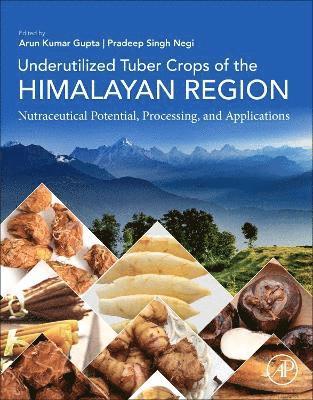
Underutilized Tuber Crops of the Himalayan Region
Arun Kumar Gupta, Pradeep Singh Negi
Häftad, 2026
1 740 kr
Underutilized Tuber Crops of the Himalayan Region
Pradeep Singh Negi, Arun Kumar Gupta
E-bok
20262 200 kr
Phytoadaptogenic Properties of Medicinal Plants
Meenakshi Garg, Arun Kumar Gupta, Neha Singh
Inbunden, 2025
1 795 kr
Phytoadaptogenic Properties of Medicinal Plants
Neha Singh, Arun Kumar Gupta, Meenakshi Garg
E-bok
20251 022 kr
Phytoadaptogenic Properties of Medicinal Plants
Neha Singh, Arun Kumar Gupta, Meenakshi Garg
E-bok
20251 019 kr
Wavelet Methods for Solving Partial Differential Equations and Fractional Differential Equations
Santanu Saha Ray, Arun Kumar Gupta
Inbunden, 2018
2 696 kr
Wavelet Methods for Solving Partial Differential Equations and Fractional Differential Equations
Arun Kumar Gupta, Santanu Saha Ray
E-bok
20182 998 kr
Wavelet Methods for Solving Partial Differential Equations and Fractional Differential Equations
Arun Kumar Gupta, Santanu Saha Ray
E-bok
20182 998 kr
Hoppa över listan




Du kanske också är intresserad av

révolution des robots sur le campus
Gourav Kalra, Arun Kumar Gupta, Bikram Jit Singh
Häftad, 2025
951 kr
Wavelet Methods for Solving Partial Differential Equations and Fractional Differential Equations
Santanu Saha Ray, Arun Kumar Gupta
Inbunden, 2018
2 696 kr
Comprehensive Textbook of Diagnostic Radiology
Arun Kumar Gupta, Anju Garg, Manavjit Singh Sandhu
Inbunden, 2021
8 227 kr
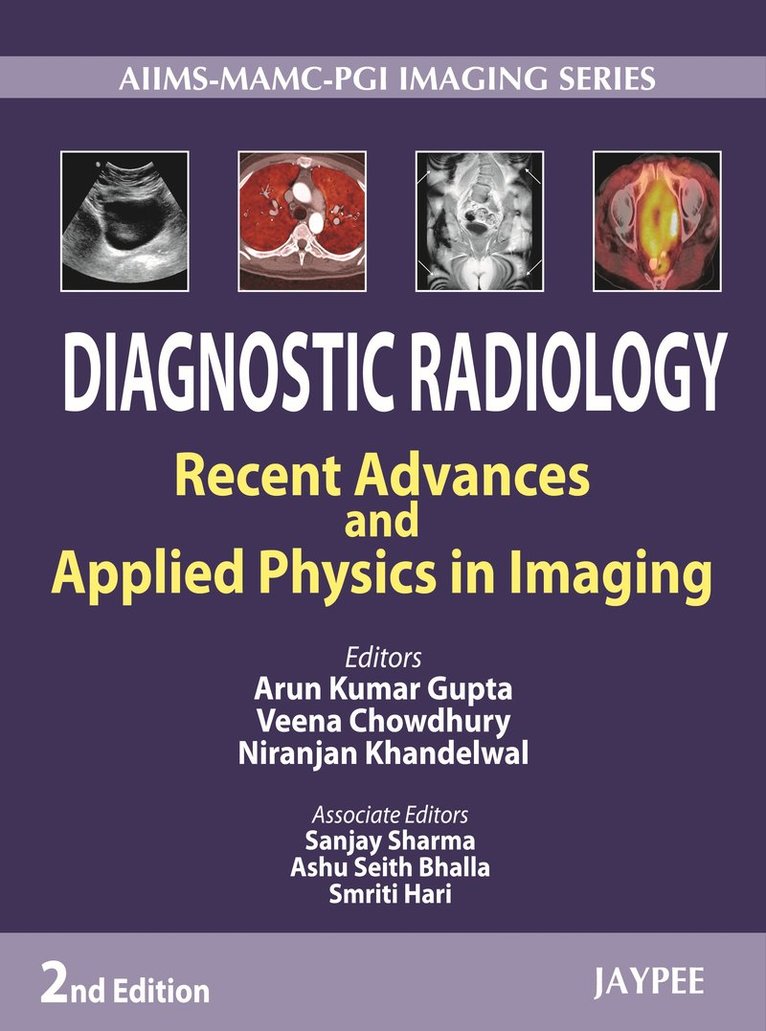
Diagnostic Radiology: Recent Advances and Applied Physics in Imaging
Arun Kumar Gupta, Veena Chowdhury, Niranjan Khandelwal
Inbunden, 2013
968 kr
Diagnostic Radiology: Pediatric Imaging
Arun Kumar Gupta, Anju Garg, Manavjit Singh Sandhu
Häftad, 2020
2 100 kr
Underutilized Tuber Crops of the Himalayan Region
Pradeep Singh Negi, Arun Kumar Gupta
E-bok
20262 200 kr