• Fri frakt över 249 kr
  • •
  • Snabba leveranser
  • •
  • Billiga böcker
Kundservice

Du är på sajten för privatpersoner.

Företag, bibliotek eller offentlig verksamhet?

Du handlar på classic.bokus.com, där alla dina funktioner finns intakta.
Till classic.bokus.com
Bokus logotyp. Gå till startsidan.
  • Erbjudanden
  • Nyheter
  • Student
  • Topplistor
  • Barn & ungdom
  • Bokus Play
  • E-böcker
  • Pocketböcker
  • Spel & pussel

10% rabatt på allt med kod: NYSTART10 →

Sidfot

Mina sidor

    Hjälp

    • Kundservice
    • Vanliga frågor och svar
    • Frakt och leverans
    • Retur vid ångerrätt
    • Reklamera vara
    • Betalning
    • Köpvillkor
    • Allmänna villkor
    • Information om webbplatsens tillgänglighet

    Om Bokus

    • Om oss
    • Pressrum
    • För studenter
    • För företag
    • För bibliotek och offentlig verksamhet
    • För leverantörer
    • Hållbarhet

    Populärt

    • Aktuella erbjudanden
    • Presentkort
    • Studentlitteratur
    • Nya böcker
    • Topplistor
    • Signerade böcker
    • Engelska böcker

    Inspiration

    • Boktips
    • BookTok
    • Populära bokserier
    • Barnbokskaraktärer
    • Populära författare
    Logotyp för Bokus
    Följ oss på Facebook (extern länk)Följ oss på Instagram (extern länk)Följ oss på YouTube (extern länk)Följ oss på TikTok (extern länk)
    bokus @ CookiesAnpassa cookiesIntegritetspolicyKöpvillkor
    Till Citymail hemsida (extern länk)Till Budbee hemsida (extern länk)Till Postnord hemsida (extern länk)Till Schenker hemsida (extern länk)Till Early Bird hemsida (extern länk)Till Walleys hemsida (extern länk)
    1. Naturvetenskap och teknik
    2. Teknik och industri
    3. Transportteknik
    4. Flyg- och rymdteknik

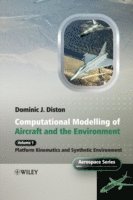
    Computational Modelling and Simulation of Aircraft and the Environment, Volume 1

    Platform Kinematics and Synthetic Environment

    AvDominic J. Diston,Ian Moir

    Inbunden, Engelska, 2009

    Del 8 i serien Aerospace Series

    1 359 kr

    Beställningsvara. Skickas inom 11-20 vardagar. Fri frakt över 249 kr.

    Fler format och utgåvor

    E-bok

    1 593 kr

    Beskrivning

    This first volume of Computational Modelling of Aircraft and the Environment provides a comprehensive guide to the derivation of computational models from basic physical & mathematical principles, giving the reader sufficient information to be able to represent the basic architecture of the synthetic environment. Highly relevant to practitioners, it takes into account the multi-disciplinary nature of the aerospace environment and the integrated nature of the models needed to represent it. Coupled with the forthcoming Volume 2: Aircraft Models and Flight Dynamics it represents a complete reference to the modelling and simulation of aircraft and the environment. All major principles with this book are demonstrated using MATLAB and the detailed mathematics is developed progressively and fully within the context of each individual topic area, thereby rendering the comprehensive body of material digestible as an introductory level text. The author has drawn from his experience as a modelling and simulation specialist with BAE SYSTEMS along with his more recent academic career to create a resource that will appeal to and benefit senior/graduate students and industry practitioners alike.

    Produktinformation

    • Utgivningsdatum:2009-04-17
    • Mått:173 x 252 x 25 mm
    • Vikt:798 g
    • Format:Inbunden
    • Språk:Engelska
    • Serie:Aerospace Series
    • Antal sidor:382
    • Förlag:John Wiley & Sons Inc
    • ISBN:9780470018408

    Utforska kategorier

    • Flyg- och rymdteknik inom Naturvetenskap och teknik

    Mer om författaren

    Dr Dominic Diston until recently was JSF UK Modelling and Simulation Co-ordinator at BAE Systems, UK. In January 2005 he took up a teaching post at Manchester University.

    Recensioner i media

    "Overall this is an excellent book which leads the reader though a clear description of the subject and is easily navigated so that it also makes a good reference. I would not hesitate to recommend this book to novice and experienced practitioners of Earth modelling, inertial navigation, GPS systems and the like." (The Aeronautical Journal, May 2010)

    Innehållsförteckning

    • Preface. Acknowledgements.List of Abbreviations.How To Use This Book.Series Preface.Chapter 1: Introduction.1.1 Computational Modelling.1.2 Modelling and Simulation (M&S).1.3 Development Processes.1.4 Models.1.5 Meta-models.1.6 Aerospace Applications.1.7 Integration and Interoperability.1.8 The End of the Beginning.Chapter 2: Platform Kinematics.2.1 Axis Systems.2.2 Changing Position and Orientation.2.3 Rotating Axis Systems.2.4 Quaternions.2.5 Line of Sight.Chapter 3: Geospatial Reference Model.3.1 Spherical Earth.3.2 Spherical Trigonometry.3.3 Great Circle Navigation.3.4 Rhumb Line Navigation.3.5 Reference Ellipsoids.3.6 Coordinate Systems.3.7 Navigation on an Ellipsoidal Earth.3.8 Mapping.3.9 General Principles of Map Projection.3.10 Mercator Projection .3.11 Transverse Mercator Projection.3.12 Conformal Latitude.3.13 Polar Stereographic Projection.3.14 Three-Dimensional Mapping.3.15 Actual Latitudes, Longitudes and Altitudes.Chapter 4: Positional Astronomy.4.1 Earth and Sun.4.2 Observational Reference Frames.4.3 Measurement of Time.4.4 Calendars and the J2000 Reference Epoch.4.5 Chronological Scale.4.6 Astrometric Reference Frames.4.7 Orbital Mechanics.4.8 Solar System Orbit Models.4.9 GPS Orbit Models.4.10 Night Sky.Chapter 5: Geopotential Fields.5.1 Potential Fields.5.2 Gravitation.5.3 Geomagnetism.5.4 Geopotential Computation.5.5 Final Comment on Geopotential Models.Chapter 6: Atmosphere.6.1 Overview.6.2 Standard Atmosphere Models.6.3 ISA Constants and Relationships.6.4 Geopotential Altitude.6.5 Vertical Structure of the Atmosphere.6.6 Pressure Altitude.6.7 Reference Atmospheres.6.8 Seasonal Variation.6.9 Climatic Regions.6.10 Air Density.6.11 Water Vapour.6.12 Weather Systems.Appendix A: Introduction to MATLAB.A. 1 MATLAB.A. 2 The MATLAB Product Family.A. 3 Getting Started.A. 4 Getting Help.A. 5 Where?A. 6 Numbers: Variables and Literals.A. 7 Arithmetic.A. 8 Logic.A. 9 M-Files and Functions.A.10 Built-in Functions.A.11 Constants.A.12 Creating Graphs.A.13 Summary of Appendix A.Appendix B: Data and Function.B.1 Types of Data.B.2 Data Type Descriptions.B.2.1 ‘double’.B.2.2 ‘logical’.B.2.3 ‘char’.B.2.4 ‘cell’.B.2.5 ‘struct’.B.2.6 ‘function_handle’.B.3 Program Structure.B.3.1 Syntax.B.3.2 Conditional Execution.B.3.3 Iterative Execution.B.3.4 Exception Handling.B.3.5 Omissions.B.4 User-defined Functions.B.4.1 Interfacing.B.4.2 Generic Functions.B.4.3 Recursive Functions.B.4.4 Private Functions.B.5 User-defined Classes.B.6 Practical Implementation.B.6.1 Naming Convention.B.6.2 Program Architecture.B.6.3 Precedence.B.6.4 Preferences.B.7 Summary of Appendix BAppendix C: Organisations.C.1 Specialist Agencies of the United Nations.C.2 International Organisations.C.3 US Government Organisations.C.4 UK Government Organisations.C.5 European Organisations.C.6 Open Projects and Consortia.Bibliography.Index.