• Fri frakt över 249 kr
  • •
  • Snabba leveranser
  • •
  • Billiga böcker
Kundservice

Du är på sajten för privatpersoner.

Företag, bibliotek eller offentlig verksamhet?

Du handlar på classic.bokus.com, där alla dina funktioner finns intakta.
Till classic.bokus.com
Bokus logotyp. Gå till startsidan.
  • Erbjudanden
  • Nyheter
  • Student
  • Topplistor
  • Barn & ungdom
  • Bokus Play
  • E-böcker
  • Pocketböcker
  • Spel & pussel

10% rabatt på allt med kod NYSTART10 →

Sidfot

Mina sidor

    Hjälp

    • Kundservice
    • Vanliga frågor och svar
    • Frakt och leverans
    • Retur vid ångerrätt
    • Reklamera vara
    • Betalning
    • Köpvillkor
    • Allmänna villkor
    • Information om webbplatsens tillgänglighet

    Om Bokus

    • Om oss
    • Pressrum
    • För studenter
    • För företag
    • För bibliotek och offentlig verksamhet
    • För leverantörer
    • Hållbarhet

    Populärt

    • Aktuella erbjudanden
    • Presentkort
    • Studentlitteratur
    • Nya böcker
    • Topplistor
    • Signerade böcker
    • Engelska böcker

    Inspiration

    • Boktips
    • BookTok
    • Populära bokserier
    • Barnbokskaraktärer
    • Populära författare
    Logotyp för Bokus
    Följ oss på Facebook (extern länk)Följ oss på Instagram (extern länk)Följ oss på YouTube (extern länk)Följ oss på TikTok (extern länk)
    bokus @ CookiesAnpassa cookiesIntegritetspolicyKöpvillkor
    Till Citymail hemsida (extern länk)Till Budbee hemsida (extern länk)Till Postnord hemsida (extern länk)Till Schenker hemsida (extern länk)Till Early Bird hemsida (extern länk)Till Walleys hemsida (extern länk)
    1. Naturvetenskap och teknik
    2. Teknik och industri
    3. Transportteknik
    4. Flyg- och rymdteknik

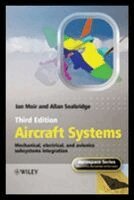
    Aircraft Systems

    Mechanical, Electrical, and Avionics Subsystems Integration

    AvIan Moir,Allan Seabridge

    Inbunden, Engelska, 2008

    Del i serien Aerospace Series

    1 389 kr

    Beställningsvara. Skickas inom 5-8 vardagar. Fri frakt över 249 kr.

    Beskrivning

    This third edition of Aircraft Systems represents a timely update of the Aerospace Series’ successful and widely acclaimed flagship title. Moir and Seabridge present an in-depth study of the general systems of an aircraft – electronics, hydraulics, pneumatics, emergency systems and flight control to name but a few - that transform an aircraft shell into a living, functioning and communicating flying machine. Advances in systems technology continue to alloy systems and avionics, with aircraft support and flight systems increasingly controlled and monitored by electronics; the authors handle the complexities of these overlaps and interactions in a straightforward and accessible manner that also enhances synergy with the book’s two sister volumes, Civil Avionics Systems and Military Avionics Systems. Aircraft Systems, 3rd Edition is thoroughly revised and expanded from the last edition in 2001, reflecting the significant technological and procedural changes that have occurred in the interim – new aircraft types, increased electronic implementation, developing   markets, increased environmental pressures and the emergence of UAVs. Every chapter is updated, and the latest technologies depicted. It offers an essential reference tool for aerospace industry researchers and practitioners such as aircraft designers, fuel specialists, engine specialists, and ground crew maintenance providers, as well as a textbook for senior undergraduate and postgraduate students in systems engineering, aerospace and engineering avionics.

    Produktinformation

    • Utgivningsdatum:2008-04-04
    • Mått:174 x 247 x 35 mm
    • Vikt:1 075 g
    • Format:Inbunden
    • Språk:Engelska
    • Serie:Aerospace Series
    • Antal sidor:560
    • Upplaga:3
    • Förlag:John Wiley & Sons Inc
    • ISBN:9780470059968

    Utforska kategorier

    • Flyg- och rymdteknik inom Naturvetenskap och teknik

    Mer om författaren

    Lan Moir After 20 years in the royal Air Force as an engineering officer, Ian went on to Smiths Industries in the UK where he was involved in a number of advanced projects. Since retiring from Smiths he is now in demand as a highly respected consultant. Ian has a brad and detailed experience working in aircraft avionics systems in both military and civil aircraft. From the RAF Tornado and Apache helicopter to the Boeing 777, Ian's work has kept him at the forefront of new system developments and integrated systems in the areas of more-electric technology and systems implementations. He has a special interest in fostering training and education in aerospace engineering. Allan Seabridge was until recently the Chief Flight Systems Engineer at BAE Systems at Warton in Lancashire in the UK. In over 30 years in the aerospace industry his work has latterly included the avionics systems on the Nimrod MRA 4 and Lockheed Martin Lightning II (Joint Strike Fighter) as well as a the development of a range of flight and avionics systems on a wide range of fast jets, training aircraft and ground and maritime surveillance projects. Spending much of his time between Europe and the US, Allan is fully aware of systems developments worldwide. he is also keen to encourage a further understanding of integrated engineering systems. An interest in engineering education continues with the design and delivery of systems and engineering courses at a number of UK universities at undergraduate and postgraduate level.

    Recensioner i media

    "The book provides excellent coverage of the complete range of aircraft systems and is thus aimed at the professional aerospace design engineer who may have in-depth knowledge of a specialised area but who would really benefit from a broader appreciation of the workings and constraints applicable to all other aircraft systems." (Aerospace Professional, January 2009)

    Innehållsförteckning

    • Foreword xviiSeries Preface xixAbout the Authors xxiAcknowledgements xxiiiList of Abbreviations xxvIntroduction xxxvSystems Integration xxxviSystems Interaction xxxix1 Flight Control Systems 11.1 Introduction 11.2 Principles of Flight Control 31.3 Flight Control Surfaces 41.4 Primary Flight Control 51.5 Secondary Flight Control 51.6 Commercial Aircraft 71.7 Flight Control Linkage Systems 91.8 High Lift Control Systems 131.9 Trim and Feel 151.10 Flight Control Actuation 181.11 Civil System Implementations 341.12 Fly-By-Wire Control Laws 401.13 A380 Flight Control Actuation 411.14 Boeing 777 Implementation 441.15 Interrelationship of Flight Control, Guidance and Flight Management 482 Engine Control Systems 512.1 Introduction 512.2 Engine Technology and Principles of Operation 532.3 The Control Problem 552.4 Example Systems 622.5 Design Criteria 712.6 Engine Starting 732.7 Engine Indications 782.8 Engine Oil Systems 812.9 Engine Offtakes 812.10 Reverse Thrust 832.11 Engine Control on Modern Civil Aircraft 843 Fuel Systems 873.1 Introduction 873.2 Characteristics of Fuel Systems 893.3 Description of Fuel System Components 903.4 Fuel Quantity Measurement 943.5 Fuel System Operating Modes 1053.6 Integrated Civil Aircraft Systems 1163.7 Fuel Tank Safety 1283.8 Polar Operations – Cold Fuel Management 1334 Hydraulic Systems 1374.1 Introduction 1374.2 Hydraulic Circuit Design 1384.3 Hydraulic Actuation 1424.4 Hydraulic Fluid 1444.5 Fluid Pressure 1454.6 Fluid Temperature 1454.7 Fluid Flow Rate 1464.8 Hydraulic Piping 1464.9 Hydraulic Pumps 1474.10 Fluid Conditioning 1514.11 Hydraulic Reservoir 1524.12 Warnings and Status 1524.13 Emergency Power Sources 1534.14 Proof of Design 1544.15 Aircraft System Applications 1554.16 Civil Transport Comparison 1634.17 Landing Gear Systems 1675 Electrical Systems 1815.1 Introduction 1815.2 Aircraft Electrical System 1845.3 Power Generation 1855.4 Primary Power Distribution 1995.5 Power Conversion and Energy Storage 2015.6 Secondary Power Distribution 2035.7 Typical Aircraft DC System 2075.8 Typical Civil Transport Electrical System 2085.9 Electrical Loads 2105.10 Emergency Power Generation 2145.11 Recent Systems Developments 2185.12 Recent Electrical System Developments 2285.13 Electrical Systems Displays 2376 Pneumatic Systems 2396.1 Introduction 2396.2 Use of Bleed Air 2406.3 Engine Bleed Air Control 2446.4 Bleed Air System Indications 2476.5 Bleed Air System Users 2476.6 Pitot Static Systems 2527 Environmental Control Systems 2597.1 Introduction 2597.2 The Need for a Controlled Environment 2607.3 The International Standard Atmosphere (ISA) 2637.4 Environmental Control System Design 2667.5 Cooling Systems 2717.6 Humidity Control 2787.7 The Inefficiency of Present Systems 2797.8 Air Distribution Systems 2797.9 Cabin Noise 2847.10 Cabin Pressurisation 2847.11 Hypoxia 2877.12 Molecular Sieve Oxygen Concentrators 2887.13 g Tolerance 2917.14 Rain Dispersal 2927.15 Anti-Misting and De-Misting 2937.16 Aircraft Icing 2938 Emergency Systems 2978.1 Introduction 2978.2 Warning Systems 2988.3 Fire Detection and Suppression 3018.4 Emergency Power Sources 3058.5 Explosion Suppression 3078.6 Emergency Oxygen 3088.7 Passenger Evacuation 3088.8 Crew Escape 3108.9 Computer-Controlled Seats 3128.10 Ejection System Timing 3138.11 High Speed Escape 3148.12 Crash Recorder 3148.13 Crash Switch 3158.14 Emergency Landing 3158.15 Emergency System Testing 3179 Rotary Wing Systems 3199.1 Introduction 3199.2 Special Requirements of Helicopters 3209.3 Principles of Helicopter Flight 3219.4 Helicopter Flight Control 3249.5 Primary Flight Control Actuation 3259.6 Key Helicopter Systems 3339.7 Helicopter Auto-Flight Control 3439.8 Active Control Technology 3499.9 Advanced Battlefield Helicopter 3509.10 Tilt Rotor Systems 35710 Advanced Systems 37110.1 Introduction 37110.2 Stealth 37410.3 Integrated Flight and Propulsion Control (IFPC) 37510.4 Vehicle Management System 37710.5 More-Electric Aircraft 38110.6 More-Electric Actuation 38810.7 More-Electric Engine 38910.8 Impact of Stealth Design 39310.9 Technology Developments/Demonstrators 40211 System Design and Development 40711.1 Introduction 40711.2 System Design 40811.3 Major Safety Processes 41111.4 Requirements Capture 41511.5 Fault Tree Analysis (FTA) 41811.6 Dependency Diagram 42011.7 Failure Modes and Effects Analysis (FMEA) 42211.8 Component Reliability 42311.9 Dispatch Reliability 42411.10 Markov Analysis 42511.11 Development Processes 42711.12 Extended Operations (ETOPS) 43812 Avionics Technology 44112.1 Introduction 44112.2 The Nature of Microelectronic Devices 44312.3 Data Bus Integration of Aircraft Systems 46012.4 Fibre Optic Buses 46912.5 Avionics Packaging Standards 47012.6 Typical LRU Architecture 47112.7 Integrated Modular Avionics 47313 Environmental Conditions 47713.1 Introduction 47713.2 Environmental Factors 47913.3 Testing and Validation Process 493Index 499