• Fri frakt över 249 kr
  • •
  • Snabba leveranser
  • •
  • Billiga böcker
Kundservice

Du är på sajten för privatpersoner.

Företag, bibliotek eller offentlig verksamhet?

Du handlar på classic.bokus.com, där alla dina funktioner finns intakta.
Till classic.bokus.com
Bokus logotyp. Gå till startsidan.
  • Erbjudanden
  • Nyheter
  • Student
  • Topplistor
  • Barn & ungdom
  • Bokus Play
  • E-böcker
  • Pocketböcker
  • Spel & pussel

10% studentrabatt med kod TERM26

Sidfot

Mina sidor

    Hjälp

    • Kundservice
    • Vanliga frågor och svar
    • Frakt och leverans
    • Retur vid ångerrätt
    • Reklamera vara
    • Betalning
    • Köpvillkor
    • Allmänna villkor
    • Information om webbplatsens tillgänglighet

    Om Bokus

    • Om oss
    • Pressrum
    • För studenter
    • För företag
    • För bibliotek och offentlig verksamhet
    • För leverantörer
    • Hållbarhet

    Populärt

    • Aktuella erbjudanden
    • Presentkort
    • Studentlitteratur
    • Nya böcker
    • Topplistor
    • Signerade böcker
    • Engelska böcker

    Inspiration

    • Boktips
    • BookTok
    • Populära bokserier
    • Barnbokskaraktärer
    • Populära författare
    Logotyp för Bokus
    Följ oss på Facebook (extern länk)Följ oss på Instagram (extern länk)Följ oss på YouTube (extern länk)Följ oss på TikTok (extern länk)
    bokus @ CookiesAnpassa cookiesIntegritetspolicyKöpvillkor
    Till Citymail hemsida (extern länk)Till Budbee hemsida (extern länk)Till Postnord hemsida (extern länk)Till Schenker hemsida (extern länk)Till Early Bird hemsida (extern länk)Till Walleys hemsida (extern länk)
    1. Medicin
    2. Andra medicinska specialiteter
    3. Klinisk psykologi
    4. Psykoterapi som behandlingsmetod

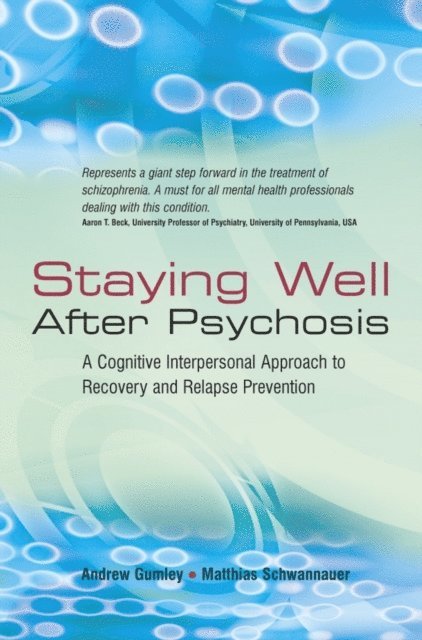
    Staying Well After Psychosis

    A Cognitive Interpersonal Approach to Recovery and Relapse Prevention

    AvAndrew Gumley,Matthias Schwannauer

    Häftad, Engelska, 2006

    655 kr

    Beställningsvara. Skickas inom 5-8 vardagar. Fri frakt över 249 kr.

    Fler format och utgåvor

    Inbunden

    1 849 kr

    Beskrivning

    Staying Well After Psychosis Staying Well After Psychosis is extremely readable, based on solid research evidence and packed full of clinical insights and strategies that will satisfy any clinician seeking innovative approaches to the promotion of recovery from psychosis.Anthony P. Morrison, Professor of Clinical Psychology, University of Manchester, UK Over the past decade our understanding of the experience of psychosis has changed dramatically. As part of this change, a range of psychological models of psychosis and associated interventions have developed. Staying Well After Psychosis presents an individually based psychological intervention targeting emotional recovery and relapse prevention. This approach considers the cognitive, interpersonal and developmental aspects involved in recovery and vulnerability to the recurrence of psychosis. Andrew Gumley and Matthias Schwannauer provide a framework for recovery and staying well that focuses on emotional and interpersonal adaptation to psychosis. This practical manual covers, in detail, all aspects of the therapeutic process of Cognitive Interpersonal Therapy, including: Taking a developmental perspective on help seeking and affect regulation.Supporting self-reorganisation and adaptation after acute psychosis.Understanding and treating traumatic reactions to psychosis.Working with feelings of humiliation, entrapment, loss and fear of recurrence.Working with cognitive interpersonal schemata.Developing coping in an interpersonal context.Clinical psychologists, psychiatrists and mental health professionals will find this innovative treatment manual to be a valuable resource in their work with adults and adolescents. This book will also be of interest to lecturers and students of clinical psychology and mental health.

    Produktinformation

    • Utgivningsdatum:2006-01-27
    • Mått:152 x 229 x 18 mm
    • Vikt:458 g
    • Format:Häftad
    • Språk:Engelska
    • Antal sidor:320
    • Förlag:John Wiley & Sons Inc
    • ISBN:9780470021859

    Utforska kategorier

    • Psykoterapi som behandlingsmetod inom Medicin

    Mer om författaren

    Andrew Gumley is Senior Lecturer in Clinical Psychology on the University of Glasgow Doctorate in clinical Psychology training Programme, a practising clinician as Honorary Consultant Clinical Psychologist in ESTEEM, North Glasgow Early Intervention Service, a trainer in cognitive behavioural psychotherapy at the Glasgow Institute for Psychosocial Interventions (GIPSI) and external consultant to the State Hospital at Carstairs Psychosocial Interventions Programme. His research interests include the evaluation of cognitive behavioural therapies for individuals who are considered to have seer and enduring mental health problems. In recent years, he has contributed to a number of randomised controlled trials of cognitive therapy involving individuals who have had or are recovering from distressing psychotic experiences, and individuals who have been diagnosed with borderline and antisocial personality disorders. His primary clinical and research interests focus on developing a psychological understanding of individual vulnerability and transition to he recurrence of psychosis. In this context Andrew is particularly interested in how the interplay between the experiences of psychosis and cognitive and interpersonal factors may prevent detection of at-risk mental states for relapse, contribute to affect dysregulation during relapse, or result in persistent and distressing emotional states such as fear of recurrence. These clinical and research interests are directed towards the development, refinement and evaluation of psychological therapies for recovery and staying well after psychosis.Matthias Schwannauer is Lecturer and Research Supervisor in  Child and Adolescent Clinical Psychology on the University of Edinburgh Clinical Psychology Training Course, Research Co-ordinator in the Young People's Unit in Edinburgh and Practising clinician as consultant clinical Psychologist in an adolescent onset psychosis service in Lothian. His current clinical and research interest include the relationship between interpersonal and cognitive factors in developmental models of server and enduring disorder groups. He is particularly interested in the developmental onset of sever mental health problems with regard to psychological factors of vulnerability and resilience to psychiatric disorders. In the past few years Matthias has investigated developmental models of interpersonal and cognitive aspects of emotion regulation in a number of populations, such as depression in a highly vulnerable group of single, young homeless adolescents with an early onset psychosis and individuals suffering from bipolar disorder. He is interested in the advancement of a developmental psychopathology model of affect regulation in a range of populations with severe and recurring psychological difficulties.

    Recensioner i media

    "...extends our understanding of psychosis…extremely helpful for therapists working with psychotic patients who are at risk of relapse." (Behaviour and Cognitive Psychotherapy, May 2007)

    Innehållsförteckning

    • About the Authors ixPreface xiForeword by Max Birchwood  xvAcknowledgements xviiPART I THEORETICAL OVERVIEW 11 Current Perspectives on Relapse, Relapse Detection and Prevention 3Introduction 3Psychological Therapies and Relapse Prevention 4Affect, Meaning and Relapse 18A Cognitive Behavioural Model of Early Signs and Relapse 23Antipsychotic Medication and Relapse 27Implications for Staying Well after Psychosis 322 Attachment Theory, Self-regulation and Psychosis 34Introduction 34Patterns of Attachment 36Attachment Theory and Later Psychopathology 38Stability of Attachment Organisation 42Attachment Organisation and Psychosis 433 Psychological Factors in Vulnerability and Transition to Relapse 47Introduction 47The Interpersonal Context 48The Wider Social Context of Psychosis 54Significant Life Events 56Trauma 57Interpersonal Coping 59Appraisals of Psychosis and Emotional Distress 62Conclusions 63PART II OVERVIEW OF STRUCTURE, STYLE AND ORGANISATION OF THERAPY 654 Overview of Principles and Procedures 67Introduction 67Primary and Secondary Outcomes 67Assessment 68Structure of Therapy 73Style of Therapy 75Basic Elements of the Therapeutic Stance 79General Outline of Therapy Sessions 79Service Model 845 Strategies for Engagement and Formulation 86Introduction 86Attachment Organisation, Recovery and Distress 86Validation 91The Evolution of Therapeutic Discourse 95Case Formulation 97Case Formulation in SWAP 99Conclusions 102PART III SPECIFIC COGNITIVE AND INTERPERSONAL STRATEGIES FOR RECOVERY AND RELAPSE PREVENTION AFTER PSYCHOSIS 1036 Reorganisation of the Self in Recovery: Working with Humiliation, Entrapment and Loss 105Introduction 105Life Events and their Dimensions 106Bowlby on Loss 109Clinical Interventions and Techniques 111Conclusions 1227 Working with Interpersonal Distrust: Developing a Conceptualisation of the Paranoid Mind 124Introduction 124Paranoia as an Interpersonal Threat Response 124The Paranoid Mind is Strategically Deployed 126Attachment and Paranoia 126Problems with the Term ‘Paranoia’ 128Working with the Personal Distress of the Paranoid Mind 129Awareness of the Paranoid Mind 132Development of an Accepting Rationale for Paranoia as a Response 133Benefits and Costs of the Paranoid Mind 135Development of Alternative Interpersonal Strategies 137Conclusions 1388 Working with Traumatic Reactions to Psychotic Experiences 140Introduction 140Psychosis as a Traumatic Event 141Trauma Theory 144Assimilation and Accommodation 147Exploring Traumatic Reactions 150Explaining Traumatic Reactions 152Exploring Meaning within Traumatic Memories and Imagery 154Contrasting Experiences of Psychosis and PTSD 158Conclusions 1609 Interpersonal Strategies 161Introduction 161The Social Environment 161Interpersonal Environments as a Basis for Psychological Intervention 165The Role of Interpersonal Anxieties and Social Withdrawal 167Areas of Interpersonal Difficulties 173Working with Interpersonal Sensitivity 177Conclusions 18110 Working with Underlying Schemata and Core Beliefs 182Introduction 182Early Parental Loss and Psychopathology 182Childhood Abuse and Neglect 183Psychological Sequelae of Childhood Abuse and Neglect 183Unresolved Attachment Status 185Early Childhood Trauma and Psychosis 186Trauma, Dissociation and Schizotypy 187Schemata and Internal Working Models 189Identifying Schemata 192Schemata and Behaviour Relationships 193Core Belief Change Strategies in Cognitive Therapy 195Working with Underdeveloped Strategies 196Conclusions 20111 Awareness, Intrusiveness and Fear of Relapse 202Introduction 202Phenomenology of Relapse 202Subjective Experiences and Psychosis 203Appraisals and Relapse 205Awareness, Intrusiveness and Fear 206Cognitive Behavioural Therapy (CBT) and Relapse Prevention 209Exploring Experiences of Relapse 210Explaining Beliefs 212Early Signs Monitoring 213The Initial Interview for Targeted CBT 214Testing the Formulation 215Decatastrophising Relapse 215Contracting Intervention 216Subsequent Sessions 216Introducing Flexibility into Beliefs 218Transforming Beliefs 219Testing Transformed Beliefs 221Conclusions 22212 Conclusion 224Introduction 224Overview of the Treatment Manual 224Therapist Training 229Therapeutic Context 229Appendix I Fear of Recurrence Scale (FoRSe) Questionnaire 231Appendix II Diagrammatical Formulation of Early Signs 233Bibliography 235Index 283