• Fri frakt över 249 kr
  • •
  • Snabba leveranser
  • •
  • Billiga böcker
Kundservice

Du är på sajten för privatpersoner.

Företag, bibliotek eller offentlig verksamhet?

Du handlar på classic.bokus.com, där alla dina funktioner finns intakta.
Till classic.bokus.com
Bokus logotyp. Gå till startsidan.
  • Erbjudanden
  • Nyheter
  • Student
  • Topplistor
  • Barn & ungdom
  • Bokus Play
  • E-böcker
  • Pocketböcker
  • Spel & pussel

10% rabatt på allt med kod NYSTART10 →

Sidfot

Mina sidor

    Hjälp

    • Kundservice
    • Vanliga frågor och svar
    • Frakt och leverans
    • Retur vid ångerrätt
    • Reklamera vara
    • Betalning
    • Köpvillkor
    • Allmänna villkor
    • Information om webbplatsens tillgänglighet

    Om Bokus

    • Om oss
    • Pressrum
    • För studenter
    • För företag
    • För bibliotek och offentlig verksamhet
    • För leverantörer
    • Hållbarhet

    Populärt

    • Aktuella erbjudanden
    • Presentkort
    • Studentlitteratur
    • Nya böcker
    • Topplistor
    • Signerade böcker
    • Engelska böcker

    Inspiration

    • Boktips
    • BookTok
    • Populära bokserier
    • Barnbokskaraktärer
    • Populära författare
    Logotyp för Bokus
    Följ oss på Facebook (extern länk)Följ oss på Instagram (extern länk)Följ oss på YouTube (extern länk)Följ oss på TikTok (extern länk)
    bokus @ CookiesAnpassa cookiesIntegritetspolicyKöpvillkor
    Till Citymail hemsida (extern länk)Till Budbee hemsida (extern länk)Till Postnord hemsida (extern länk)Till Schenker hemsida (extern länk)Till Early Bird hemsida (extern länk)Till Walleys hemsida (extern länk)
    1. Naturvetenskap och teknik
    2. Teknik och industri
    3. Teknik: allmänt

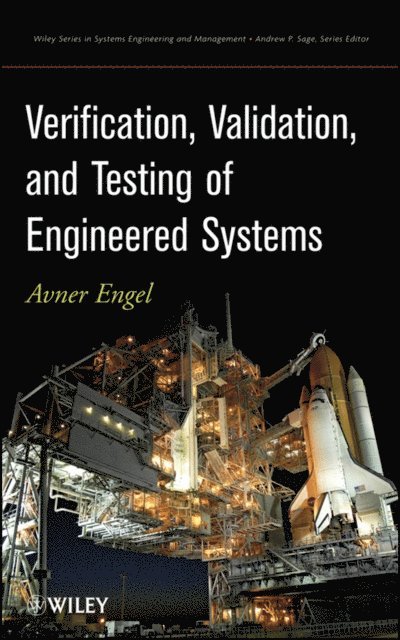
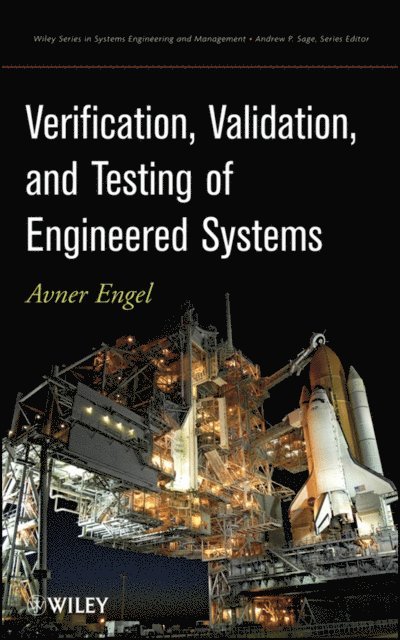
    Verification, Validation, and Testing of Engineered Systems

    AvAvner Engel

    Inbunden, Engelska, 2010

    Del 73 i serien Wiley Series in Systems Engineering and Management

    2 053 kr

    Beställningsvara. Skickas inom 5-8 vardagar. Fri frakt över 249 kr.

    Fler format och utgåvor

    E-bok

    2 382 kr

    E-bok

    2 389 kr

    Beskrivning

    Systems' Verification Validation and Testing (VVT) are carried out throughout systems' lifetimes. Notably, quality-cost expended on performing VVT activities and correcting system defects consumes about half of the overall engineering cost. Verification, Validation and Testing of Engineered Systems provides a comprehensive compendium of VVT activities and corresponding VVT methods for implementation throughout the entire lifecycle of an engineered system. In addition, the book strives to alleviate the fundamental testing conundrum, namely: What should be tested? How should one test? When should one test? And, when should one stop testing? In other words, how should one select a VVT strategy and how it be optimized?The book is organized in three parts: The first part provides introductory material about systems and VVT concepts. This part presents a comprehensive explanation of the role of VVT in the process of engineered systems (Chapter-1). The second part describes 40 systems' development VVT activities (Chapter-2) and 27 systems' post-development activities (Chapter-3). Corresponding to these activities, this part also describes 17 non-testing systems' VVT methods (Chapter-4) and 33 testing systems' methods (Chapter-5). The third part of the book describes ways to model systems' quality cost, time and risk (Chapter-6), as well as ways to acquire quality data and optimize the VVT strategy in the face of funding, time and other resource limitations as well as different business objectives (Chapter-7). Finally, this part describes the methodology used to validate the quality model along with a case study describing a system's quality improvements (Chapter-8).Fundamentally, this book is written with two categories of audience in mind. The first category is composed of VVT practitioners, including Systems, Test, Production and Maintenance engineers as well as first and second line managers. The second category is composed of students and faculties of Systems, Electrical, Aerospace, Mechanical and Industrial Engineering schools. This book may be fully covered in two to three graduate level semesters; although parts of the book may be covered in one semester. University instructors will most likely use the book to provide engineering students with knowledge about VVT, as well as to give students an introduction to formal modeling and optimization of VVT strategy.

    Produktinformation

    • Utgivningsdatum:2010-07-02
    • Mått:163 x 239 x 43 mm
    • Vikt:1 157 g
    • Format:Inbunden
    • Språk:Engelska
    • Serie:Wiley Series in Systems Engineering and Management
    • Antal sidor:720
    • Förlag:John Wiley & Sons Inc
    • ISBN:9780470527511

    Utforska kategorier

    • Teknik: allmänt inom Naturvetenskap och teknik

    Mer om författaren

    Dr. Avner Engel holds a PhD from the Industrial Engineering Department of Tel-Aviv University. For the past twenty years, he has worked for Israel Aerospace Industries, where he has managed large software projects. Dr. Engel was involved with several research projects funded by the European Commission. He is currently teaching systems engineering courses at the Holon Institute of Technology in Holon, Israel.

    Innehållsförteckning

    • Preface xviiPart I Introduction 11. Introduction 31.1 Opening 31.1.1 Background 41.1.2 Purpose 51.1.3 Intended audience 51.1.4 Book structure and contents 61.1.5 Scope of application 81.1.6 Terminology and notation 91.2 VVT Systems and Process 91.2.1 Introduction—VVT systems and process 91.2.2 Engineered systems 101.2.3 VVT concepts and definition 121.2.4 The fundamental VVT dilemma 191.2.5 Modeling systems and VVT lifecycle 201.2.6 Modeling VVT and risks as cost and time drivers 241.3 Canonical Systems VVT Paradigm 321.3.1 Introduction—Canonical systems VVT paradigm 321.3.2 Phases of the system lifecycle 341.3.3 Views of the system 371.3.4 VVT aspects of the system 391.4 Methodology Application 391.4.1 Introduction 391.4.2 VVT methodology overview 401.4.3 VVT tailoring 431.4.4 VVT documents 501.5 References 56Part II VVT Activities and Methods 612. System VVT Activities: Development 632.1 Structure of Chapter 632.1.1 Systems development lifecycle phases and VVT activities 632.1.2 VVT activity aspects 642.1.3 VVT activity format 652.2 VVT Activities during Definition 652.2.1 Generate Requirements Verification Matrix (RVM) 652.2.2 Generate VVT Management Plan (VVT-MP) 672.2.3 Assess the Request For Proposal (RFP) document 692.2.4 Assess System Requirements Specification (SysRS) 712.2.5 Assess project Risk Management Plan (RMP) 722.2.6 Assess System Safety Program Plan (SSPP) 742.2.7 Participate in System Requirements Review (SysRR) 772.2.8 Participate in System Engineering Management Plan (SEMP) review 772.2.9 Conduct engineering peer review of the VVT-MP document 792.3 VVT Activities during Design 802.3.1 Optimize the VVT strategy 802.3.2 Assess System/Subsystem Design Description (SSDD) 832.3.3 Validate system design by means of virtual prototype 852.3.4 Validate system design tools 862.3.5 Assess system design for meeting future lifecycle needs 872.3.6 Participate in the System Design Review (SysDR) 902.4 VVT Activities during Implementation 912.4.1 Preparing the test cycle for subsystems and components 912.4.2 Assess suppliers’ subsystems test documents 962.4.3 Perform Acceptance Test Procedure—Subsystems/ Enabling products 972.4.4 Assess system performance by way of simulation 1002.4.5 Verify design versus implementation consistency 1022.4.6 Participate in Acceptance Test Review—Subsystems/ Enabling products 1032.5 VVT Activities during Integration 1042.5.1 Develop System Integration Laboratory (SIL) 1042.5.2 Generate System Integration Test Plan (SysITP) 1062.5.3 Generate System Integration Test Description (SysITD) 1082.5.4 Validate supplied subsystems in a stand-alone configuration 1112.5.5 Perform components, subsystem, enabling products integration tests 1122.5.6 Generate System Integration Test Report (SysITR) 1142.5.7 Assess effectiveness of the system Built In Test (BIT) 1162.5.8 Conduct engineering peer review of the SysITR 1202.6 VVT Activities during Qualification 1202.6.1 Generate a qualification/acceptance System Test Plan (SysTP) 1212.6.2 Create qualification/acceptance System Test Description (SysTD) 1232.6.3 Perform virtual system testing by means of simulation 1252.6.4 Perform qualification testing/Acceptance Test Procedure (ATP)—System 1262.6.5 Generate qualification/acceptance System Test Report (SysTR) 1292.6.6 Assess system testability, maintainability and availability 1312.6.7 Perform environmental system testing 1372.6.8 Perform system Certification and Accreditation (C&A) 1402.6.9 Conduct Test Readiness Review (TRR) 1442.6.10 Conduct engineering peer review of development enabling products 1462.6.11 Conduct engineering peer review of program and project safety 1482.7 References 1493. Systems VVT Activities: Post-Development 1533.1 Structure of Chapter 1533.2 VVT Activities during Production 1543.2.1 Participate in Functional Configuration Audit (FCA) 1543.2.2 Participate in Physical Configuration Audit (PCA) 1573.2.3 Plan system production VVT process 1593.2.4 Generate a First Article Inspection (FAI) procedure 1613.2.5 Validate the production-line test equipment 1653.2.6 Verify quality of incoming components and subsystems 1653.2.7 Perform First Article Inspection (FAI) 1663.2.8 Validate pre-production process 1673.2.9 Validate ongoing-production process 1683.2.10 Perform manufacturing quality control 1703.2.11 Verify the production operations strategy 1723.2.12 Verify marketing and production forecasting 1743.2.13 Verify aggregate production planning 1763.2.14 Verify inventory control operation 1773.2.15 Verify supply chain management 1803.2.16 Verify production control systems 1813.2.17 Verify production scheduling 1833.2.18 Participate in Production Readiness Review (PRR) 1843.3 VVT Activities during Use/Maintenance 1863.3.1 Develop VVT plan for system maintenance 1873.3.2 Verify the Integrated Logistics Support Plan (ILSP) 1913.3.3 Perform ongoing system maintenance testing 2003.3.4 Conduct engineering peer review on system maintenance process 2043.4 VVT Activities during Disposal 2083.4.1 Develop VVT plan for system disposal 2093.4.2 Assess the system disposal plan 2123.4.3 Assess system disposal strategies by means of simulation 2143.4.4 Assess on-going system disposal process 2153.4.5 Conduct engineering peer review to assess system disposal processes 2193.5 References 2214. System VVT Methods: Non-Testing 2234.1 Introduction 2234.2 Prepare VVT Products 2234.2.1 Requirements Verification Matrix (RVM) 2234.2.2 System Integration Laboratory (SIL) 2264.2.3 Hierarchical VVT optimization 2304.2.4 Defect management and tracking 2344.2.5 Classification Tree Method 2394.2.6 Design of Experiments (DOE) 2434.3 Perform VVT Activities 2564.3.1 VVT process planning 2564.3.2 Compare images and documents 2624.3.3 Requirements testability and quality 2654.3.4 System test simulation 2724.3.5 Failure mode effect analysis 2804.3.6 Anticipatory Failure Determination 2864.3.7 Model-based testing 2934.3.8 Robust design analysis 3024.4 Participate in Reviews 3124.4.1 Expert team reviews 3124.4.2 Formal technical reviews 3264.4.3 Group evaluation and decision 3314.5 References 3465. Systems VVT Methods: Testing 3515.1 Introduction 3515.2 White Box Testing 3565.2.1 Component and code coverage testing 3565.2.2 Interface testing 3605.3 Black Box—Basic Testing 3655.3.1 Boundary value testing 3655.3.2 Decision table testing 3675.3.3 Finite State Machine testing 3685.3.4 Human-system interface testing (HSI) 3735.4 Black Box—High-Volume Testing 3785.4.1 Automatic random testing 3785.4.2 Performance testing 3815.4.3 Recovery testing 3855.4.4 Stress testing 3865.5 Black Box—Special Testing 3885.5.1 Usability testing 3885.5.2 Security vulnerability testing 3935.5.3 Reliability testing 4025.5.4 Search-based testing 4105.5.5 Mutation testing 4185.6 Black Box—Environment Testing 4225.6.1 Environmental Stress Screening (ESS) testing 4225.6.2 EMI/EMC testing 4245.6.3 Destructive testing 4265.6.4 Reactive testing 4315.6.5 Temporal testing 4365.7 Black Box—Phase Testing 4435.7.1 Sanity testing 4445.7.2 Exploratory testing 4455.7.3 Regression testing 4475.7.4 Component and subsystem testing 4525.7.5 Integration testing 4555.7.6 Qualification testing 4615.7.7 Acceptance testing 4635.7.8 Certification and accreditation testing 4665.7.9 First Article Inspection (FAI) 4735.7.10 Production testing 4775.7.11 Installation testing 4815.7.12 Maintenance testing 4845.7.13 Disposal testing 4875.8 References 488Part III Modeling and Optimizing VVT Process 4956. Modeling Quality Cost, Time and Risk 4976.1 Purpose and Basic Concepts 4976.1.1 Historical models for cost of quality 4986.1.2 Quantitative models for cost/time of quality 4996.2 VVT Cost and Risk Modeling 5006.2.1 Canonical VVT cost modeling 5006.2.2 Modeling VVT strategy as a decision problem 5026.2.3 Modeling appraisal risk cost 5056.2.4 Modeling impact risk cost 5116.2.5 Modeling total quality cost 5166.2.6 VVT cost and risk example 5176.3 VVT Time and Risk Modeling 5216.3.1 System/VVT network 5216.3.2 Modeling time of system/VVT lifecycle 5246.3.3 Time and risk example 5286.4 Fuzzy VVT Cost Modeling 5306.4.1 Introduction 5306.4.2 General fuzzy logic modeling 5306.4.3 Fuzzy modeling of the VVT process 5326.4.4 Fuzzy VVT cost and risk estimation example 5416.4.5 Fuzzy logic versus probabilistic modeling 5446.5 References 5487. Obtaining Quality Data and Optimizing VVT Strategy 5507.1 Systems’ Quality Costs in the Literature 5507.2 Obtaining System Quality Data 5547.2.1 Quality data acquisition 5547.2.2 Quality data aggregation 5557.3 IAI/Lahav Quality Data—An Illustration 5577.3.1 IAI/Lahav pilot project 5577.3.2 Obtaining raw system and quality data 5597.3.3 Anchor system and quality data 5607.3.4 Generating the VVT model database 5617.4 The VVT-Tool 5627.4.1 Background 5627.4.2 Tool availability 5637.5 VVT Cost, Time and Risk Optimization 5647.5.1 Optimizing the VVT process 5657.5.2 Loss function optimization—VVT cost 5697.5.3 Weight optimization—VVT cost 5767.5.4 Goal optimization—VVT cost 5807.5.5 Genetic algorithm optimization—VVT time 5847.5.6 Genetic multi-domain optimization—VVT cost and time 5967.6 References 6008. Methodology Validation and Examples 6048.1 Methodology Validation Using a Pilot Project 6048.1.1 VVT cost model validation 6058.1.2 VVT time model validation 6108.1.3 Fuzzy VVT cost model validation 6178.2 Optimizing the VVT Strategy 6188.2.1 Analytical optimization of cost 6198.2.2 Cost distribution by phase 6268.2.3 Weight optimization of cost 6278.2.4 Goal optimization of cost 6318.2.5 MPGA optimization for time 6358.2.6 SSGA optimization of cost and time 6378.3 Identifying and Avoiding Significant Risks 6398.3.1 Avoiding critical risks 6408.3.2 Conjecture on future risk scenarios 6428.4 Improving System Quality Process 644Appendix A SysTest Project 646A.1 About SysTest 646A.2 SysTest Key Products 648A.3 SysTest Pilot Projects 649A.4 SysTest Team 653A.5 EC Evaluation of SysTest Project 655References 656Appendix B Proposed Guide: System Verification, Validation and Testing Master Plan 657B.1 Background 657B.2 Creating the VVT-MP 658B.3 Chapter 1: System Description 659B.3. 1 Project applicable documents 659B.3. 2 Mission description 659B.. 3 System description 659B.3. 4 Critical technical parameters 660B.4 Chapter 2: Integrated VVT Program Summary 660B.4. 1 Integrated VVT program schedule 660B.4. 2 VVT program management 661B.5 Chapter 3: System VVT 662B.5. 1 VVT strategy 662B.5. 2 Planning VVT activities 665B.5. 3 VVT limitations 668B.6 Chapter 4: VVT Resource Summary 669B.6. 1 Test articles 669B.6. 2 Test sites and instrumentation 669B.6. 3 Test support requisition 669B.6. 4 Expendables for testing 669B.6. 5 Operational force test support 670B.. 6 Simulations, models and test beds 670B.6. 7 Manpower/personnel needs and training 670B.6. 8 Budget summary 670Appendix C List of Acronyms 671Index 679