• Fri frakt över 249 kr
  • •
  • Snabba leveranser
  • •
  • Billiga böcker
Kundservice

Du är på sajten för privatpersoner.

Företag, bibliotek eller offentlig verksamhet?

Du handlar på classic.bokus.com, där alla dina funktioner finns intakta.
Till classic.bokus.com
Bokus logotyp. Gå till startsidan.
  • Erbjudanden
  • Nyheter
  • Student
  • Topplistor
  • Barn & ungdom
  • Bokus Play
  • E-böcker
  • Pocketböcker
  • Spel & pussel

10% rabatt på allt med kod: NYSTART10 →

Sidfot

Mina sidor

    Hjälp

    • Kundservice
    • Vanliga frågor och svar
    • Frakt och leverans
    • Retur vid ångerrätt
    • Reklamera vara
    • Betalning
    • Köpvillkor
    • Allmänna villkor
    • Information om webbplatsens tillgänglighet

    Om Bokus

    • Om oss
    • Pressrum
    • För studenter
    • För företag
    • För bibliotek och offentlig verksamhet
    • För leverantörer
    • Hållbarhet

    Populärt

    • Aktuella erbjudanden
    • Presentkort
    • Studentlitteratur
    • Nya böcker
    • Topplistor
    • Signerade böcker
    • Engelska böcker

    Inspiration

    • Boktips
    • BookTok
    • Populära bokserier
    • Barnbokskaraktärer
    • Populära författare
    Logotyp för Bokus
    Följ oss på Facebook (extern länk)Följ oss på Instagram (extern länk)Följ oss på YouTube (extern länk)Följ oss på TikTok (extern länk)
    bokus @ CookiesAnpassa cookiesIntegritetspolicyKöpvillkor
    Till Citymail hemsida (extern länk)Till Budbee hemsida (extern länk)Till Postnord hemsida (extern länk)Till Schenker hemsida (extern länk)Till Early Bird hemsida (extern länk)Till Walleys hemsida (extern länk)
    1. Djur och Natur
    2. Naturböcker
    3. Växtböcker

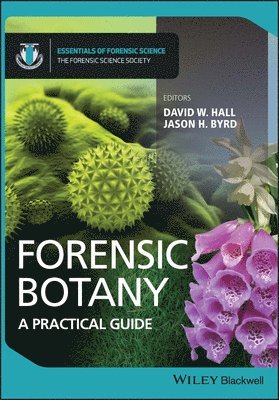
    Forensic Botany

    A Practical Guide

    AvDavid W. Hall,Jason Byrd

    Häftad, Engelska, 2012

    Del i serien Essentials of Forensic Science

    1 056 kr

    Beställningsvara. Skickas inom 3-6 vardagar. Fri frakt över 249 kr.

    Fler format och utgåvor

    Inbunden

    1 608 kr

    Beskrivning

    FORENSIC BOTANYA PRACTICAL GUIDE Forensic Botany: A Practical Guide is an accessible introduction to the way in which botanical evidence is identified, collected and analysed in criminal cases. This form of evidence is becoming increasingly important in forensic investigation. This book is intended to show how useful simple collection methods and standard plant analysis can be in the course of such investigations. It is written in a clear and accessible manner to enhance the understanding of the subject for the non-specialist. Clearly structured throughout, this book combines well known collection techniques in a field oriented format that can be used for casework. Various methods that allow easy collection, transportation, and preservation of evidence are detailed throughout the book. This book is written for those who have no formal background working with plants. It can be used as a practical guide for students taking forensic science courses, law enforcement training, legal courses, and as a template for plant collection at any scene where plants occur and where rules or laws are involved. Veterinarians, various environmental agencies and anthropologists are examples of disciplines that are more recently in need of plant evidence. The format of the book is designed to present the reader with all the information needed to conduct a botanical analysis of a crime scene; to highlight the forensic significance of the botanical evidence that may be present; how to collect that evidence in the correct manner and preserve and store that evidence appropriately- also shows how to conduct a laboratory analysis of the plants. An accessible practical guide to the collection, analysis and presentation of botanical evidence within forensic investigation.Aimed at the non-specialist looking for an introduction to the field.Written in a clear and logical manner; what is it? Where can you find help? How can you use plant evidence? Why is this kind of plant important? Where to look for evidence; evidence collection made easy; evidence preservation; evidence transportation; chain of custody.Includes evidence collection data sheet and a laboratory analysis data sheet for use in the field.Includes key chapters on microscopy analysis of plant evidence and on DNA collection, use and relative costs.Numerous relevant case studies included to show forensic botany in practice and how to present botanical evidence in court.

    Produktinformation

    • Utgivningsdatum:2012-06-01
    • Mått:168 x 244 x 10 mm
    • Vikt:408 g
    • Format:Häftad
    • Språk:Engelska
    • Serie:Essentials of Forensic Science
    • Antal sidor:224
    • Förlag:John Wiley and Sons Ltd
    • ISBN:9780470661239

    Utforska kategorier

    • Växtböcker inom Djur och Natur
    • Botanik inom Naturvetenskap och teknik
    • Brottsutredning och kriminalteknik inom Samhälle och politik

    Mer om författaren

    EDITORS DAVID W. HALL David W. Hall Consultant, Inc., USA JASON H. BYRD William R. Maples Center for Forensic Medicine, University of Florida, USA

    Recensioner i media

    “This book entitled Forensic Botany: A Practical Guide is an excellent guide and teaching tool for biological evidence training, a resource for scientists, law enforcement and attorneys alike, and review material before trial. Forensic guidelines for plant material are limited and training is specialized; therefore, this truly is an excellent, readable scientific guide for the forensic community.”  (Journal of Forensic Sciences, 1 July 2013)

    Innehållsförteckning

    • List of contributors ixSeries Foreword xiPrologue: the begining xiii1 Introduction to forensic botany 1David W. Hall, Ph.D.Botanical evidence in legal investigations 1Legal plant definition 2Botanical evidence in legal investigations 3Alibis 5Timing 5Gravesite growth 9Stomach contents 11Summary 112 Plants as evidence 12David W. Hall, Ph.D.Types of plants 12Nonplant groups traditionally studied by botanists 22Plant habitats and associations 25Plant characteristics/plant morphology 26Basic plant characteristics for the forensic investigator 28Habit 28Plant dispersal 413 Evidence collection and analysis 45David W. Hall, Ph.D. and Jason H. Byrd, Ph.D.Initial crime scene notation 55Where to search for evidence 56Storage 61Documentation of botanical evidence 61How to have botanical evidence analysed 62Where to find a botanist 63Types of cases 63Evidence analysis 63Laboratory report 65Transportation of botanical evidence 66Evidence retention and disposition 66Step-wise method for the collection of botanical evidence 68Appendix 3.1 70Crime scene data 70Habitat documentation 70Scene location 70Collection information needed for each botanical sample 70Appendix 3.2 72Botany field data sheet 72Appendix 3.3 76Botany laboratory examination data format 76Appendix 3.4 78Evidence log 784 Expert evidence 79Bernard A. Raum JD, MFSThe common law 79The United States experience 80The decision in Frye v. United States 81The codified federal rules of evidence 82The decision in Daubert v. Merrill Dow 25 85The scientific method 86The “pure opinion” rule 87The United Kingdom experience 88The criminal procedure rules 2010, s. 33 90The law commission consultation paper no. 190 925 Use and guidelines for plant DNA analyses in forensics 93Matthew A. Gitzendanner, Ph.D.Introduction 93Types of samples and collection for DNA analyses 94Uses of genetic data 95Genotyping methods 98Finding a laboratory for analysis 102Case studies 102Conclusions 104References 104Contents vii6 A primer on forensic microscopy 107Christopher R. Hardy, Ph.D.Microscopes and microscopic botanical structures relevant to forensic botany 107The importance of reference collections in microscopic analysis 115Preparation and documentation of specimen evidence for microscopic examination 116References 1187 Plant anatomy 119David W. Hall, Ph.D. and William Stern, Ph.D.The lindbergh case 121Further reading 1268 Palynology, pollen, and spores, partners in crime: what, why, and how 127Anna Sandiford, Ph.D.Terminology 127What are pollen and spores? 127Where are they found and how do they travel? 129What does pollen look like? 130The use of pollen for non-forensic work 132The use of pollen in the forensic setting 132When should pollen samples be collected? 134How to collect and store pollen samples 134How many samples to collect? 138Who can collect pollen samples and where can an analyst be found? 139Costs and turnaround times 140Case examples 140Summary 142References 1439 Algae in forensic investigations 145Christopher R. Hardy, Ph.D. and John R. Wallace, Ph.D.Finding an algal botanist and identifying algae 145Algal diversity 146Application of algal evidence in forensic investigations 154Collection and processing of algal evidence in forensic investigations 165Acknowledgements 172References 17210 Case Studies in forensic botany 174David W. Hall, Ph.D.Placing people or objects at scenes 174Determining time of death 181Index 189