• Fri frakt över 249 kr
  • •
  • Snabba leveranser
  • •
  • Billiga böcker
Kundservice

Du är på sajten för privatpersoner.

Företag, bibliotek eller offentlig verksamhet?

Du handlar på classic.bokus.com, där alla dina funktioner finns intakta.
Till classic.bokus.com
Bokus logotyp. Gå till startsidan.
  • Erbjudanden
  • Nyheter
  • Student
  • Topplistor
  • Barn & ungdom
  • Bokus Play
  • E-böcker
  • Pocketböcker
  • Spel & pussel

10% rabatt på allt med kod: NYSTART10 →

Sidfot

Mina sidor

    Hjälp

    • Kundservice
    • Vanliga frågor och svar
    • Frakt och leverans
    • Retur vid ångerrätt
    • Reklamera vara
    • Betalning
    • Köpvillkor
    • Allmänna villkor
    • Information om webbplatsens tillgänglighet

    Om Bokus

    • Om oss
    • Pressrum
    • För studenter
    • För företag
    • För bibliotek och offentlig verksamhet
    • För leverantörer
    • Hållbarhet

    Populärt

    • Aktuella erbjudanden
    • Presentkort
    • Studentlitteratur
    • Nya böcker
    • Topplistor
    • Signerade böcker
    • Engelska böcker

    Inspiration

    • Boktips
    • BookTok
    • Populära bokserier
    • Barnbokskaraktärer
    • Populära författare
    Logotyp för Bokus
    Följ oss på Facebook (extern länk)Följ oss på Instagram (extern länk)Följ oss på YouTube (extern länk)Följ oss på TikTok (extern länk)
    bokus @ CookiesAnpassa cookiesIntegritetspolicyKöpvillkor
    Till Citymail hemsida (extern länk)Till Budbee hemsida (extern länk)Till Postnord hemsida (extern länk)Till Schenker hemsida (extern länk)Till Early Bird hemsida (extern länk)Till Walleys hemsida (extern länk)
    1. Naturvetenskap och teknik
    2. Teknik och industri
    3. Teknik: allmänt

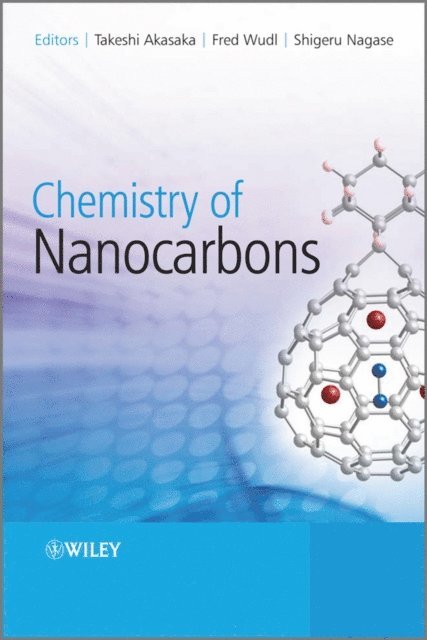
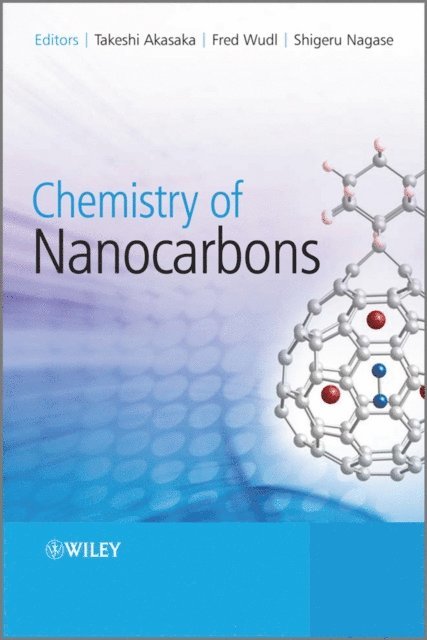
    Chemistry of Nanocarbons

    AvTakeshi Akasaka,Fred Wudl

    Inbunden, Engelska, 2010

    1 623 kr

    Beställningsvara. Skickas inom 5-8 vardagar. Fri frakt över 249 kr.

    Beskrivning

    During the last decade, fullerenes and carbon nanotubes have attracted special interest as new nanocarbons with novel properties. Because of their hollow caged structure, they can be used as containers for atoms and molecules, and nanotubes can be used as miniature test-tubes.Chemistry of Nanocarbons presents the most up-to-date research on chemical aspects of nanometer-sized forms of carbon, with emphasis on fullerenes, nanotubes and nanohorns. All modern chemical aspects are mentioned, including noncovalent interactions, supramolecular assembly, dendrimers, nanocomposites, chirality, nanodevices, host-guest interactions, endohedral fullerenes, magnetic resonance imaging, nanodiamond particles and graphene. The book covers experimental and theoretical aspects of nanocarbons, as well as their uses and potential applications, ranging from molecular electronics to biology and medicine.

    Produktinformation

    • Utgivningsdatum:2010-06-18
    • Mått:175 x 252 x 33 mm
    • Vikt:1 066 g
    • Format:Inbunden
    • Språk:Engelska
    • Antal sidor:544
    • Förlag:John Wiley & Sons Inc
    • ISBN:9780470721957

    Utforska kategorier

    • Teknik: allmänt inom Naturvetenskap och teknik
    • Maskinteknik och material inom Naturvetenskap och teknik

    Mer om författaren

    Takeshi Akasaka is Professor at the Center for Tsukuba Advanced Research Alliance TARA Center) and Department of Chemistry, University of Tsukuba, Japan. His research interests cover the development and chemical functionalization of fullerenes, metallofullerenes, endofullerenes and carbon nanotubes.Fred Wudl is a Professor of Chemistry and Materials and Co-Director of the Center for Polymers and Organic Solids at the University of California, Santa Barbara. He is most widely known for his work on organic conductors and superconductors. Currently he is interested in the optical and electrooptical properties of processable conjugated polymers as well as in the organic chemistry of fullerenes.Shigeru Nagase is Professor at the Institute for Molecular Science, Okazaki, Japan. He has made a wide range of original contributions in theoretical and computational chemistry. He has performed many important studies of fullerene, endofullerenes, carbon nanotubes and carbon peapods as well as silicon and germanium clusters.

    Recensioner i media

    "This volume presents the most up-to-date research on the chemical aspects (both experimental and theoretical) of nanometer-sized forms of carbon, paying special attention to fullerenes, nanotubes, and nanohorns. Contributors discuss topics such as noncovalent interactions, supramolecular assembly, dendrimers, nanocomposites, chirality, nanodevices, host-guest interactions, endohedral fullerenes, magnetic resonance imaging, nanodiamond particles, and graphene." (Booknews, 1 April 2011) "All three editors are prolific authors in their own right, and their high standing among scientists in the nanocarbon community has enabled them to recruit an exceptionally distinguished team of authors for the chapters. The book is quite reasonably priced and belongs in the personal libraries of all scientists who are actively engaged in research on the chemistry of nanocarbons. Every university chemistry library should also have a copy." (JACS, February 2011)"The book does provide a useful reference resource for the topics covered and is a likely addition to the international bookshelf." (Chemistry World, December 2010)

    Innehållsförteckning

    • PrefaceAcknowledgementsContributorsAbbreviations1 Noncovalent Functionalization of Carbon NanotubesClaudia Backes and Andreas Hirsch1.1 Introduction1.2 Overview of Functionalization Methods1.3 The Noncovalent Approach.1.4 Conclusion2 Supramolecular Assembly of Fullerenes and Carbon Nanotubes HybridsMa Angeles Herranz, Beatriz M. Illescas, Emilio M. Perez and Nazario Martýn2.1 Introduction2.2 Hydrogen Bonded C60-Donor Ensembles2.3 Concave exTTF Derivatives as Recognizing Motifs for Fullerene2.4 Noncovalent Functionalization of Carbon Nanotubes2.5 Summary and Outlook3 Properties of Fullerene-Containing DendrimersJuan-Jose Cid Martin and Jean-Francois Nierengarten3.1 Introduction3.2 Dendrimers with a Fullerene Core3.3 Fullerene-Rich Dendrimers3.4 Conclusions4 Novel Electron Donor Acceptor NanocompositesHiroshi Imahori, Dirk M. Guldi and Shunichi Fukuzumi4.1 Introduction4.2 Electron Donor-Fullerene Composites4.3 Carbon Nanotubes4.4 Other Nanocarbon Composites5 Higher Fullerenes: Chirality and Covalent AdductsAgnieszka Kraszewska, Franc¸ois Diederich and Carlo Thilgen5.1 Introduction5.2 The Chemistry of C705.3 The Higher Fullerenes Beyond C705.4 Concluding Remarks6 Application of Fullerenes to NanodevicesYutaka Matsuo and Eiichi Nakamura6.1 Introduction6.2 Synthesis of Transition Metal Fullerene Complexes6.3 Organometallic Chemistry of Metal Fullerene Complexes6.4 Synthesis of Multimetal Fullerene Complexes6.5 Supramolecular Structures of Penta(organo)[60]fullerene Derivatives6.6 Reduction of Penta(organo)[60]fullerenes to Generate Polyanions6.7 Photoinduced Charge Separation6.8 Photocurrent-Generating Organic and Organometallic Fullerene Derivatives6.9 Conclusion7 Supramolecular Chemistry of Fullerenes: Host Molecules for Fullerenes on the Basis of p-p InteractionTakeshi Kawase7.1 Introduction7.2 Fullerenes as an Electron Acceptor7.3 Host Molecules Composed of Aromatic p-systems7.4 Complexes with Host Molecules Based on Porphyrin p Systems7.5 Complexes with Host Molecules Bearing a Cavity Consisting of Curved p System7.6 The Nature of the Supramolecular Property of Fullerenes8 Molecular Surgery toward Organic Synthesis of Endohedral FullerenesMichihisa Murata, Yasujiro Murata and Koichi Komatsu8.1 Introduction8.2 Molecular-Surgery Synthesis of Endohedral C60 Encapsulating Molecular Hydrogen8.3 Chemical Functionalization of H2@C608.4 Utilization of the Encapsulated H2 as an NMR Probe8.5 Physical Properties of an Encapsulated H2 in C608.6 Molecular-Surgery Synthesis of Endohedral C70 Encapsulating Molecular Hydrogen8.7 Outlook9 New Endohedral Metallofullerenes: Trimetallic Nitride Endohedral FullerenesMarilyn M. Olmstead, Alan L. Balch, Julio R. Pinzon, Luis Echegoyen, Harry W. Gibson and Harry C. Dorn9.1 Discovery, Preparation, and Purification9.2 Structural Studies9.3 Summary and Conclusions10 Recent Progress in Chemistry of Endohedral MetallofullerenesTakahiro Tsuchiya, Takeshi Akasaka and Shigeru Nagase10.1 Introduction10.2 Chemical Derivatization of Mono-Metallofullerenes10.3 Chemical Derivatization of Di-Metallofullerenes10.4 Chemical Derivatization of Trimetallic Nitride Template Fullerene10.5 Chemical Derivatization of Metallic Carbaide Fullerene10.6 Missing Metallofullerene10.7 Supramolecular Chemistry10.8 Conclusion11 Gadonanostructures as Magnetic Resonance Imaging Contrast AgentsJeyarama S. Ananta and Lon J. Wilson11.1 Magnetic Resonance Imaging (MRI) and the Role of Contrast Agents (CAs)11.2 The Advantages of Gadonanostructures as MRI Contrast Agent Synthons11.3 Gadofullerenes as MRI Contrast Agents11.4 Understanding the Relaxation Mechanism of Gadofullerenes11.5 Gadonanotubes as MRI Contrast Agents12 Chemistry of Soluble Carbon Nanotubes: Fundamentals and ApplicationsTsuyohiko Fujigaya and Naotoshi Nakashima12.1 Introduction12.2 Characterizations of Dispersion States12.3 CNT Solubilization by Small Molecules12.4 Solubilization by Polymers12.5 Nanotube/Polymer Hybrids and Composites12.6 Summary13 Functionalization of Carbon Nanotubes for Nanoelectronic and Photovoltaic ApplicationsStephane Campidelli and Maurizio Prato13.1 Introduction13.2 Functionalization of Carbon Nanotubes13.3 Properties and Applications13.4 Conclusion14 Dispersion and Separation of Single-walled Carbon NanotubesYutaka Maeda, Takeshi Akasaka, Jing Lu and Shigeru Nagase14.1 Introduction14.2 Dispersion of SWNTs14.3 Purification and Separation of SWNTs Using Amine14.4 Conclusion15 Molecular Encapsulations into Interior Spaces of Carbon Nanotubes and NanohornsT. Okazaki, S. Iijima and M. Yudasaka15.1 Introduction15.2 SWCNT Nanopeapods15.3 Material Incorporation and Release in/from SWNH15.4 Summary16 Carbon Nanotube for Imaging of Single Molecules in MotionEiichi Nakamura16.1 Introduction16.2 Electron Microscopic Observation of Small Molecules16.3 TEM Imaging of Alkyl Carborane Molecules16.4 Alkyl Chain Passing through a Hole16.5 3D Structural Information on Pyrene Amide Molecule16.6 Complex Molecule 4 Fixed outside of Nanotube16.7 Conclusion17 Chemistry of Single-Nano Diamond ParticlesEiji Osawa17.1 Introduction17.2 Geometrical Structure17.3 Electronic Structure17.4 Properties17.5 Applications17.6 Recollection and Perspectives18 Properties of p-electrons in Graphene Nanoribbons and NanographenesDe-en Jiang, Xingfa Gao, Shigeru Nagase and Zhongfang Chen18.1 Introduction18.2 Edge Effects in Graphene Nanoribbons and Nanographenes18.3 Electronic and Magnetic Properties of Graphene Nanoribbons and Nanographenes18.4 Outlook19 Carbon Nano OnionsLuis Echegoyen, Angy Ortiz, Manuel N. Chaur and Amit J. Palkar19.1 Introduction19.2 Physical Properties of Carbon Nano Onions Obtained from Annealing19.3 Raman Spectroscopy of Carbon Nano Onions Prepared by Annealing Nanodiamonds19.4 Electron Paramagnetic Resonance Spectroscopy19.5 Carbon Nano Onions Prepared from Arcing Graphite Underwater19.6 Reactivity of Carbon Nano Onions (CNOs)19.7 Potential Applications of CNOsAcknowledgementsReferencesIndex