• Fri frakt över 249 kr
  • •
  • Snabba leveranser
  • •
  • Billiga böcker
Kundservice

Du är på sajten för privatpersoner.

Företag, bibliotek eller offentlig verksamhet?

Du handlar på classic.bokus.com, där alla dina funktioner finns intakta.
Till classic.bokus.com
Bokus logotyp. Gå till startsidan.
  • Erbjudanden
  • Nyheter
  • Student
  • Topplistor
  • Barn & ungdom
  • Bokus Play
  • E-böcker
  • Pocketböcker
  • Spel & pussel

10% rabatt på allt med kod: NYSTART10 →

Sidfot

Mina sidor

    Hjälp

    • Kundservice
    • Vanliga frågor och svar
    • Frakt och leverans
    • Retur vid ångerrätt
    • Reklamera vara
    • Betalning
    • Köpvillkor
    • Allmänna villkor
    • Information om webbplatsens tillgänglighet

    Om Bokus

    • Om oss
    • Pressrum
    • För studenter
    • För företag
    • För bibliotek och offentlig verksamhet
    • För leverantörer
    • Hållbarhet

    Populärt

    • Aktuella erbjudanden
    • Presentkort
    • Studentlitteratur
    • Nya böcker
    • Topplistor
    • Signerade böcker
    • Engelska böcker

    Inspiration

    • Boktips
    • BookTok
    • Populära bokserier
    • Barnbokskaraktärer
    • Populära författare
    Logotyp för Bokus
    Följ oss på Facebook (extern länk)Följ oss på Instagram (extern länk)Följ oss på YouTube (extern länk)Följ oss på TikTok (extern länk)
    bokus @ CookiesAnpassa cookiesIntegritetspolicyKöpvillkor
    Till Citymail hemsida (extern länk)Till Budbee hemsida (extern länk)Till Postnord hemsida (extern länk)Till Schenker hemsida (extern länk)Till Early Bird hemsida (extern länk)Till Walleys hemsida (extern länk)
    1. Naturvetenskap och teknik
    2. Geovetenskap
    3. Geografi

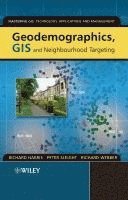
    Geodemographics, GIS and Neighbourhood Targeting

    AvRichard Harris,Peter Sleight

    Häftad, Engelska, 2005

    Del 8 i serien Mastering GIS: Technol, Applications & Mgmnt

    1 032 kr

    Beställningsvara. Skickas inom 5-8 vardagar. Fri frakt över 249 kr.

    Beskrivning

    Geodemographic classification is ‘big business’ in the marketing and service sector industries, and in public policy there has also been a resurgence of interest in neighbourhood initiatives and targeting. As an increasing number of professionals realise the potential of geographic analysis for their business or organisation, there exists a timely gap in the market for a focussed book on geodemographics and GIS. Geodemographics: neighbourhood targeting and GIS provides both an introduction to and overview of the methods, theory and classification techniques that provide the foundation of neighbourhood analysis and commercial geodemographic products. Particular focus is given to the presentation and use of neighbourhood classification in GIS. Authored by leading marketing professionals and a prominent academic, this book presents methods, theory and classification techniques in a reader-friendly mannerSupported by private and public sector case studies and vignettesThe applied ‘how to’ sections will specifically appeal to the intended audience at work in business and service planningIncludes information on the recent UK and US Census products and resulting neighbourhood classifications

    Produktinformation

    • Utgivningsdatum:2005-02-04
    • Mått:152 x 231 x 19 mm
    • Vikt:510 g
    • Format:Häftad
    • Språk:Engelska
    • Serie:Mastering GIS: Technol, Applications & Mgmnt
    • Antal sidor:320
    • Förlag:John Wiley & Sons Inc
    • ISBN:9780470864142

    Utforska kategorier

    • Geografi inom Naturvetenskap och teknik

    Mer om författaren

    Richard Harris, University of Bristol, UK. Peter Sleight, Target Market Consultancy, UK.

    Recensioner i media

    "... a book that is unique both in its approach and it s content ... a valuable contribution to this area of research...." (GIS Professional, March 2006)

    Innehållsförteckning

    • List of Case Study Contributors xiPreface xiii1 Introducing Geodemographics 1Learning Objectives 1Introduction 21.1 The use of geodemographics 31.2 A simple application: opening a coffee shop in Atlantic City 51.3 Another application: guiding neighbourhood regeneration funding 101.4 Using geodemographics for retail targeting 121.5 How it works: a short theory of geodemographics 14Case study: modelling price sensitivity and geodemographic categories in the restaurant market 19Case study: using geodemographics in the public sector 211.6 Where next? An overview of the following chapters 241.7 Conclusion 26Summary 26Further Reading 272 London to Chicago and Back Again! The Origins of Geodemographics 29Learning Objectives 29Introduction 302.1 The life and labours of an early neighbourhood analyst 302.2 From London to Chicago and beyond! 372.3 A note on measuring deprivation 42Case study: Charles Booth – yesterday once more? 452.4 Conclusion 49Summary 50Further Reading 513 The Evolution of Geodemographics and the Market Today 53Learning Objectives 53Introduction 543.1 From census to commerce 553.2 Geodemographics today 61Case study: the US market for geodemographics 673.3 The role of market research linkages 703.4 Use of non-census data 703.5 Conclusion 73Summary 75Further Reading 754 Geodemographics and GIS 77Learning Objectives 77Introduction 784.1 Principles of GIS 794.2 Mapping geodemographic information with GIS 884.3 An interesting pattern? 924.4 Confounded by choropleths! 95Case study: Using GIS for neighbourhood analysis and targeting – a commercial perspective 994.5 Spatial interaction models 1034.6 Conclusion 106Summary 107Further Reading 1085 Geodemographic Information Systems and Analysis 109Learning Objectives 109Introduction 1105.1 Data collection and input 1115.2 Data analysis 1155.3 Data visualization and output 137Case study: Different neighbourhoods, different policing styles 1415.4 Conclusion 143Summary 144Further Reading 1456 How Geodemographic Classifications are Built 147Learning Objectives 147Introduction 1486.1 Data input – sources of data for neighbourhood classification 1486.2 Preparing the data for classification 1506.3 Evaluation of input variables 1526.4 Selecting weights 1596.5 Clustering 1606.6 Optimization process and manual intervention 1666.7 Forming a cluster hierarchy 1686.8 Labels, portraits and visualization tools 1716.9 A worked example of clustering 1736.10 Conclusion 181Summary 182Further Reading 1837 Geodemographics Around the World 185Learning Objectives 185Introduction 1867.1 The internationalization of geodemographics 187Case study: a brief comparison of selected censuses from across the world 1897.2 Census data sources – some differences in what is asked and where 1937.3 Differences in the availability of non-census data sources 1957.4 Variations in the detail of the postal delivery system 1967.5 Geographies of neighbourhood worldwide 1967.6 Conclusion 204Summary 205Further Reading 2068 ‘But Does It Work?’ Geodemographics in the Dock 207Learning Objectives 207Introduction 2088.1 The case for the prosecution 2098.2 The case for the defence 225‘Witness’ 1: Example of the Nottingham Youth Justice Board 228‘Witness’ 2: Example of Shotton Paper Company plc 230‘Witness’ 3: Example of The University of Central Lancashire 231‘Witness’ 4: Example of Camelot Group plc 233Validating geodemographics – the Luton case study 2368.3 Conclusion 239Summary 240Further Reading 2419 New Data, New Approaches: from Geodemographics to Geolifestyles 243Learning Objectives 243Introduction 244Case study: Lifestyles analysis and new approaches 2469.1 Using GIS to map lifestyle data 2499.2 Looking for ‘hot spots’ 2579.3 From revelation to explanation 2619.4 Data-handling issues 2639.5 Conclusion 271Summary 271Further Reading 27210 Postscript: There are three Is in geodemographics! 273References 279Index 289