Mastering GIS: Technol, Applications & Mgmnt - Böcker
Visar alla böcker i serien Mastering GIS: Technol, Applications & Mgmnt. Handla med fri frakt och snabb leverans.
6 produkter
6 produkter
Del 2 - Mastering GIS: Technol, Applications & Mgmnt
Geographic Information Science
Mastering the Legal Issues
Inbunden, Engelska, 2005
2 066 kr
Skickas inom 7-10 vardagar
Spatial information users and providers are increasingly concerned about the legal implications relating to the use and dissemination of geographic information for which there are no right or wrong methods of practice, and no one source of information. This book fills the gap by addressing key issues in contract law, intellectual property law, rights and responsabilities and liability as they relate to the GI community. The first book to interpret the law relating to GI Science and outline its implications to a general readershipProvides a comprehensive discourse in law and GI Science irrespective of jurisdictionOffers a global perspective throughout with case materials coming from the UK, North America, the EU and Australasia
Del 1 - Mastering GIS: Technol, Applications & Mgmnt
Geographic Information Science
Mastering the Legal Issues
Häftad, Engelska, 2005
1 122 kr
Skickas inom 7-10 vardagar
Spatial information users and providers are increasingly concerned about the legal implications relating to the use and dissemination of geographic information for which there are no right or wrong methods of practice, and no one source of information. This book fills the gap by addressing key issues in contract law, intellectual property law, rights and responsabilities and liability as they relate to the GI community. The first book to interpret the law relating to GI Science and outline its implications to a general readershipProvides a comprehensive discourse in law and GI Science irrespective of jurisdictionOffers a global perspective throughout with case materials coming from the UK, North America, the EU and Australasia
2 459 kr
Skickas inom 11-20 vardagar
The growing potential of GIS for supporting policing and crime reduction is now being recognised by a broader community. GIS can be employed at different levels to support operational policing, tactical crime mapping, detection, and wider-ranging strategic analyses. With the use of GIS for crime mapping increasing, this book provides a definitive reference. GIS and Crime Mapping provides essential information and reference material to support readers in developing and implementing crime mapping. Relevant case studies help demonstrate the key principles, concepts and applications of crime mapping.This book combines the topics of theoretical principles, GIS, analytical techniques, data processing solutions, information sharing, problem-solving approaches, map design, and organisational structures for using crime mapping for policing and crime reduction. Delivered in an accessible style, topics are covered in a manner that underpins crime mapping use in the three broad areas of operations, tactics and strategy. Provides a complete start-to-finish coverage of crime mapping, including theory, scientific methodologies, analysis techniques and design principles.Includes a comprehensive presentation of crime mapping applications for operational, tactical and strategic purposes.Includes global case studies and examples to demonstrate good practice.Co-authored by Spencer Chainey, a leading researcher and consultant on GIS and crime mapping, and Jerry Ratcliffe, a renowned professor and former police officer.This book is essential reading for crime analysts and other professionals working in intelligence roles in law enforcement or crime reduction, at the local, regional and national government levels. It is also an excellent reference for undergraduate and Masters students taking courses in GIS, Geomatics, Crime Mapping, Crime Science, Criminal Justice and Criminology.
820 kr
Skickas inom 7-10 vardagar
The growing potential of GIS for supporting policing and crime reduction is now being recognised by a broader community. GIS can be employed at different levels to support operational policing, tactical crime mapping, detection, and wider-ranging strategic analyses. With the use of GIS for crime mapping increasing, this book provides a definitive reference. GIS and Crime Mapping provides essential information and reference material to support readers in developing and implementing crime mapping. Relevant case studies help demonstrate the key principles, concepts and applications of crime mapping.This book combines the topics of theoretical principles, GIS, analytical techniques, data processing solutions, information sharing, problem-solving approaches, map design, and organisational structures for using crime mapping for policing and crime reduction. Delivered in an accessible style, topics are covered in a manner that underpins crime mapping use in the three broad areas of operations, tactics and strategy. Provides a complete start-to-finish coverage of crime mapping, including theory, scientific methodologies, analysis techniques and design principles.Includes a comprehensive presentation of crime mapping applications for operational, tactical and strategic purposes.Includes global case studies and examples to demonstrate good practice.Co-authored by Spencer Chainey, a leading researcher and consultant on GIS and crime mapping, and Jerry Ratcliffe, a renowned professor and former police officer.This book is essential reading for crime analysts and other professionals working in intelligence roles in law enforcement or crime reduction, at the local, regional and national government levels. It is also an excellent reference for undergraduate and Masters students taking courses in GIS, Geomatics, Crime Mapping, Crime Science, Criminal Justice and Criminology.
Del 3 - Mastering GIS: Technol, Applications & Mgmnt
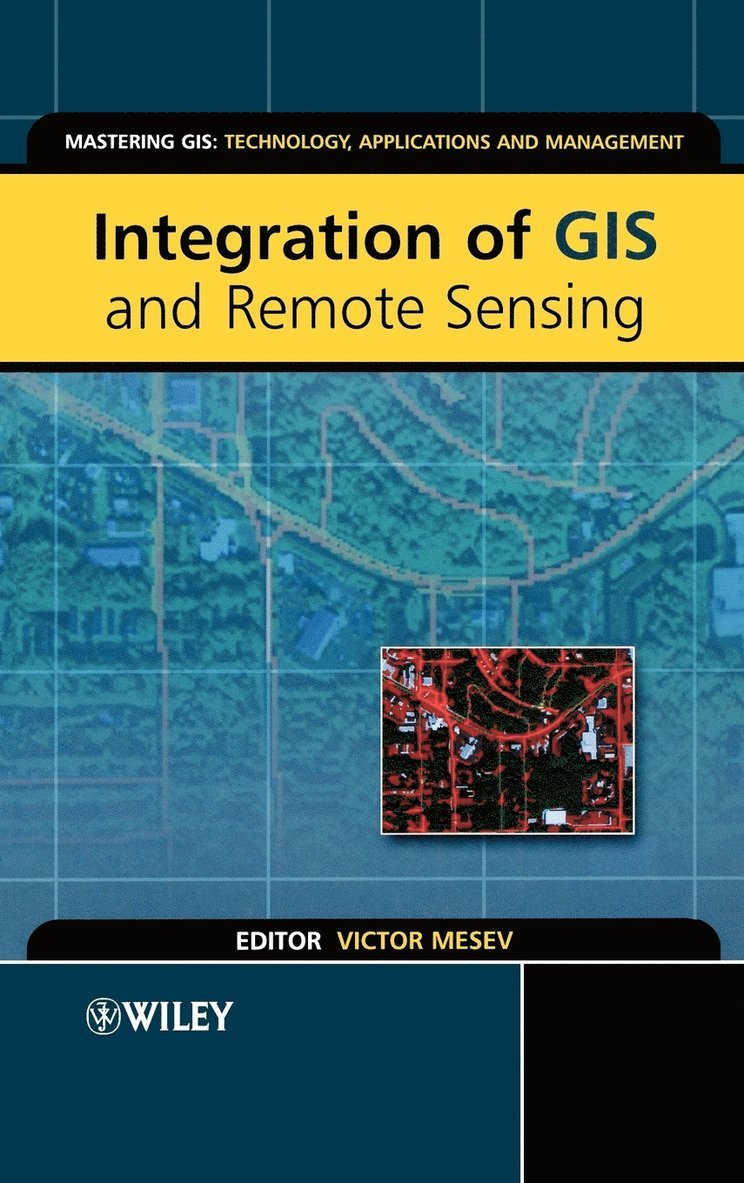
Integration of GIS and Remote Sensing
Inbunden, Engelska, 2007
2 066 kr
Skickas inom 7-10 vardagar
In an age of unprecedented proliferation of data from disparate sources the urgency is to create efficient methodologies that can optimise data combinations and at the same time solve increasingly complex application problems. Integration of GIS and Remote Sensing explores the tremendous potential that lies along the interface between GIS and remote sensing for activating interoperable databases and instigating information interchange. It concentrates on the rigorous and meticulous aspects of analytical data matching and thematic compatibility - the true roots of all branches of GIS/remote sensing applications. However closer harmonization is tempered by numerous technical and institutional issues, including scale incompatibility, measurement disparities, and the inescapable notion that data from GIS and remote sensing essentially represent diametrically opposing conceptual views of reality. The first part of the book defines and characterises GIS and remote sensing and presents the reader with an awareness of the many scale, taxonomical and analytical problems when attempting integration. The second part of the book moves on to demonstrate the benefits and costs of integration across a number of human and environmental applications.This book is an invaluable reference for students and professionals dealing not only with GIS and remote sensing, but also computer science, civil engineering, environmental science and urban planning within the academic, governmental and commercial/business sectors.
Del 8 - Mastering GIS: Technol, Applications & Mgmnt
Geodemographics, GIS and Neighbourhood Targeting
Häftad, Engelska, 2005
950 kr
Skickas inom 7-10 vardagar
Geodemographic classification is ‘big business’ in the marketing and service sector industries, and in public policy there has also been a resurgence of interest in neighbourhood initiatives and targeting. As an increasing number of professionals realise the potential of geographic analysis for their business or organisation, there exists a timely gap in the market for a focussed book on geodemographics and GIS. Geodemographics: neighbourhood targeting and GIS provides both an introduction to and overview of the methods, theory and classification techniques that provide the foundation of neighbourhood analysis and commercial geodemographic products. Particular focus is given to the presentation and use of neighbourhood classification in GIS. Authored by leading marketing professionals and a prominent academic, this book presents methods, theory and classification techniques in a reader-friendly mannerSupported by private and public sector case studies and vignettesThe applied ‘how to’ sections will specifically appeal to the intended audience at work in business and service planningIncludes information on the recent UK and US Census products and resulting neighbourhood classifications