• Fri frakt över 249 kr
  • •
  • Snabba leveranser
  • •
  • Billiga böcker
Kundservice

Du är på sajten för privatpersoner.

Företag, bibliotek eller offentlig verksamhet?

Du handlar på classic.bokus.com, där alla dina funktioner finns intakta.
Till classic.bokus.com
Bokus logotyp. Gå till startsidan.
  • Erbjudanden
  • Student
  • Topplistor
  • Barn & ungdom
  • Bokus Play
  • E-böcker
  • Ljudböcker
  • Pocketböcker
  • Spel och pussel

Skapa nya rutiner – hälsoböcker upp till 50% →

Sidfot

Mina sidor

    Hjälp

    • Kundservice
    • Vanliga frågor och svar
    • Frakt och leverans
    • Retur vid ångerrätt
    • Reklamera vara
    • Betalning
    • Köpvillkor
    • Allmänna villkor
    • Information om webbplatsens tillgänglighet

    Om Bokus

    • Om oss
    • Pressrum
    • För studenter
    • För företag
    • För bibliotek och offentlig verksamhet
    • För leverantörer
    • Hållbarhet

    Populärt

    • Aktuella erbjudanden
    • Presentkort
    • Studentlitteratur
    • Nya böcker
    • Topplistor
    • Signerade böcker
    • Engelska böcker

    Inspiration

    • Boktips
    • BookTok
    • Barnbokskaraktärer
    • Populära författare
    Logotyp för Bokus
    Följ oss på Facebook (extern länk)Följ oss på Instagram (extern länk)Följ oss på YouTube (extern länk)Följ oss på TikTok (extern länk)
    bokus @ CookiesAnpassa cookiesIntegritetspolicyKöpvillkor
    Till Citymail hemsida (extern länk)Till Budbee hemsida (extern länk)Till Postnord hemsida (extern länk)Till Schenker hemsida (extern länk)Till Early Bird hemsida (extern länk)Till Walleys hemsida (extern länk)
    1. Naturvetenskap och teknik
    2. Matematik och naturvetenskap
    3. Biologi
    4. Biokemi

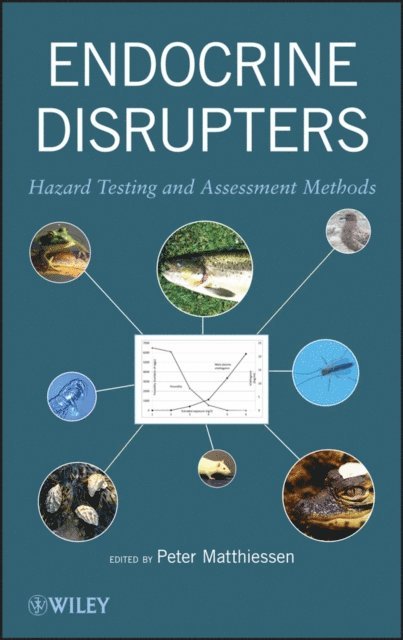
    Endocrine Disrupters

    Hazard Testing and Assessment Methods

    AvPeter Matthiessen

    Inbunden, Engelska, 2013

    1 614 kr

    Beställningsvara. Skickas inom 5-8 vardagar. Fri frakt över 249 kr.

    Fler format och utgåvor

    E-bok

    1 867 kr

    E-bok

    1 861 kr

    Beskrivning

    Enables researchers to assess the effects of endocrine disrupters as well as comply with new environmental regulationsEndocrine disrupters are chemicals—both man-made and natural—that interfere with the body's endocrine system, potentially resulting in adverse developmental, reproductive, neurological, and immune effects. In recent years, a number of regulatory authorities around the world have drafted or enacted legislation that requires the detection and assessment of the effects of endocrine disrupters on both humans and wildlife. In response, this book provides comprehensive, up-to-date information on the latest tested and proven methods used to detect and assess the environmental hazards posed by endocrine-disrupting chemicals.Endocrine Disrupters is divided into chapters covering each major taxon as well as chapters dedicated to hazard assessment and regulation. The book covers testing methods for all the vertebrate groups and several invertebrate phyla, including: Crustaceans and mollusksInsectsFishAmphibians and reptilesBirds and mammalsMoreover, the book emphasizes practical, ethical testing methods that combine sensitivity, efficiency, statistical power, and reasonable cost.Each chapter is written by one or more international experts in ecotoxicology, offering readers step-by-step guidance for implementing each method based on the latest research and the authors' firsthand laboratory experience. Furthermore, all the chapters have been subjected to a rigorous peer review and edited in light of the reviewers' comments. References at the end of each chapter guide readers to the literature in the field.Endocrine Disrupters is recommended for scientists who need to test chemicals for possible endocrine-disrupting properties. It is also recommended for regulatory authorities who need to decide whether particular chemicals can be safely marketed.


    Produktinformation

    • Utgivningsdatum:2013-04-26
    • Mått:165 x 241 x 27 mm
    • Vikt:708 g
    • Format:Inbunden
    • Språk:Engelska
    • Antal sidor:416
    • Förlag:John Wiley & Sons Inc
    • ISBN:9780470932094

    Utforska kategorier

    • Biokemi inom Naturvetenskap och teknik

    Mer om författaren

    PETER MATTHIESSEN, PhD, is an aquatic ecotoxicologist who works as an independent consultant. Specializing in the study of endocrine disrupters, he has conducted extensive research into how sewage effluents cause feminization in wild male fish as well as how tributyltin-based antifoulants cause masculinization in wild female mollusks. Professor Matthiessen is a member of the UK Advisory Committee on Pesticides and Co-chair of the OECD Validation Management Group for Ecotoxicity Tests. He has contributed to the development of standardized ecotoxicity assays with sensitivity for endocrine disrupters as well as written guidance for the interpretation of the resulting data.

    Innehållsförteckning

    • Preface ixContributors xi1 Ecotoxicity Test Methods for Endocrine-Disrupting Chemicals: An Introduction 1Peter Matthiessen1.1 Background 11.2 Regulatory Concerns 21.3 Invertebrates 21.4 Vertebrates 31.5 Testing Schemes for EDCs 5Reference 62 Endocrine Disruption inWildlife: Background, Effects, and Implications 7Dick Vethaak and Juliette Legler2.1 Background to Endocrine Disruption 82.2 Effects of EDCs on Wildlife 192.3 Weight of Evidence and Ecological Significance of ED Effects 322.4 Implications for Effect Assessment and Toxicity Testing 362.5 Need for More Field Studies and an Integrated Approach 382.6 Concluding Points 39References 403 The Regulatory Need for Tests to Detect EDCs and Assess Their Hazards toWildlife 59Hans-Christian Stolzenberg, Tobias Frische, Vicki L. Dellarco, Gary Timm, Anne Gourmelon, Taisen Iguchi, Flemming Ingerslev, and Mike Roberts3.1 Emerging Concerns and Policy Responses: Focusing on EDCs as a Large Pseudo-Uniform Group of Substances 603.2 General Approaches in Substance-Related Regulatory Frameworks (EU) 803.3 How to Make EDC Definitions Operational for Substance-Related Regulatory Work 873.4 Future Perspectives 913.5 Conclusions 92References 934 Techniques for Measuring Endocrine Disruption in Insects 100Lennart Weltje4.1 Introduction 1004.2 Methods 1054.3 Discussion 1084.4 Conclusion 1104.5 Acknowledgments 110References 1105 Crustaceans 116Magnus Breitholtz5.1 Introduction 1165.2 Background to Crustacean Endocrinology 1185.3 State of the Art: What Do We Know About Endocrine Disruption in Crustaceans? 1215.4 Available Subchronic/Chronic Standard Test Protocols 1285.5 Complementary Tools for Identification of Endocrine Disruption 1295.6 Summary and Conclusions 132References 1346 Endocrine Disruption in Molluscs: Processes and Testing 143Patricia D. McClellan-Green6.1 Background and Introduction 1436.2 What Constitutes the Endocrine System in Molluscs? 1456.3 End Points and Biomarkers of Endocrine Disruption 1546.4 Current Test Methods Using Molluscs 1646.5 Proposed Test Methods 1676.6 Conclusions 171References 1727 Using Fish to Detect Endocrine Disrupters and Assess Their Potential Environmental Hazards 185Peter Matthiessen7.1 Introduction 1857.2 International Efforts to Standardize Fish-Based Methods for Screening and Testing Endocrine-Disrupting7.3 Fish-Based Screens Developed by OECD for Endocrine-Disrupting Chemicals 1897.4 Progress with Developing Fish Partial Life Cycle Tests for Endocrine Disrupters 1947.5 Prospects for the Standardization of Fish Full Life Cycle and Multigeneration Tests 1957.6 Strengths and Weaknesses of a Hazard Evaluation Strategy Based Partly on Available and Proposed Fish Screens and Tests 1977.7 Conclusions 198References 1988 Screening and Testing for Endocrine-Disrupting Chemicals in Amphibian Models 202Daniel B. Pickford8.1 Introduction 2028.2 Potential Uses of Amphibians in Endocrine Disrupter Screening and Testing Programs 2038.3 Embryonic Development 2058.4 Hatching 2088.5 Larval Development 2098.6 Higher-Tier Tests with Amphibians 2248.7 Other and Emerging Test Methods 2278.8 Summary and Conclusions 229References 2329 Endocrine Disruption and Reptiles: Using the Unique Attributes of Temperature-Dependent Sex Determination to Assess Impacts 245Satomi Kohno and Louis J. Guillette, Jr.9.1 Introduction 2459.2 Approaches to Examine Effects of EDCs 2529.3 Induction of Sex Reversal In Ovo 2559.4 Analysis of Sex-Reversed Animals 2609.5 Conclusions 265References 26610 Birds 272Paul D. Jones, Markus Hecker, Steve Wiseman, and John P. Giesy10.1 Introduction 27210.2 Differences Between Birds and Mammals and Among Bird Species 27510.3 In Vitro Techniques 27810.4 Studies with Embryos 28010.5 In Vivo Techniques 28010.6 Examples of EDC Effects from Field Studies 28510.7 Proposed Two-Generation Test 28810.8 Conclusions 291References 29211 Mammalian Methods for Detecting and Assessing Endocrine-Active Compounds 304M. Sue Marty11.1 Introduction 30411.2 Mammalian Tier 1 Screening Assays 30611.3 Tier 2 Tests 32611.4 Human and Wildlife Relevance of Estrogen, Androgen, and Thyroid Screening Assays 32911.5 Potential Future Assays for Endocrine Screening 330References 33212 Application of the OECD Conceptual Framework for Assessing the Human Health and Ecological Effects of Endocrine Disrupters 341Thomas H. Hutchinson, Jenny Odum, and Anne Gourmelon12.1 Introduction 34212.2 Overview of the OECD Revised CF 34312.3 Application of the Klimisch Criteria to the EE2 and VIN Case Studies 34612.4 Case Study: Data Examples for 17-Ethynylestradiol 34612.5 Case Study: Data Examples for Vinclozolin 35712.6 Conclusions 367References 36813 The Prospects for Routine Testing of Chemicals for Endocrine-Disrupting Properties and Potential Ecological Impacts 373Peter Matthiessen13.1 Introduction 37313.2 Are There Gaps in the Test Suite for EDCs? 37413.3 “New” Modes of Endocrine-Disrupting Action 37613.4 How Should Tests for EDCs Be Deployed in an Integrated Fashion? 37713.5 Use of Weight of Evidence when Assessing Possible EDCs 38013.6 Conclusions 382References 382Index 385