• Fri frakt över 249 kr
  • •
  • Snabba leveranser
  • •
  • Billiga böcker
Kundservice

Du är på sajten för privatpersoner.

Företag, bibliotek eller offentlig verksamhet?

Du handlar på classic.bokus.com, där alla dina funktioner finns intakta.
Till classic.bokus.com
Bokus logotyp. Gå till startsidan.
  • Erbjudanden
  • Nyheter
  • Student
  • Topplistor
  • Barn & ungdom
  • Bokus Play
  • E-böcker
  • Pocketböcker
  • Spel & pussel

10% rabatt på allt med kod NYSTART10 →

Sidfot

Mina sidor

    Hjälp

    • Kundservice
    • Vanliga frågor och svar
    • Frakt och leverans
    • Retur vid ångerrätt
    • Reklamera vara
    • Betalning
    • Köpvillkor
    • Allmänna villkor
    • Information om webbplatsens tillgänglighet

    Om Bokus

    • Om oss
    • Pressrum
    • För studenter
    • För företag
    • För bibliotek och offentlig verksamhet
    • För leverantörer
    • Hållbarhet

    Populärt

    • Aktuella erbjudanden
    • Presentkort
    • Studentlitteratur
    • Nya böcker
    • Topplistor
    • Signerade böcker
    • Engelska böcker

    Inspiration

    • Boktips
    • BookTok
    • Populära bokserier
    • Barnbokskaraktärer
    • Populära författare
    Logotyp för Bokus
    Följ oss på Facebook (extern länk)Följ oss på Instagram (extern länk)Följ oss på YouTube (extern länk)Följ oss på TikTok (extern länk)
    bokus @ CookiesAnpassa cookiesIntegritetspolicyKöpvillkor
    Till Citymail hemsida (extern länk)Till Budbee hemsida (extern länk)Till Postnord hemsida (extern länk)Till Schenker hemsida (extern länk)Till Early Bird hemsida (extern länk)Till Walleys hemsida (extern länk)
    1. Naturvetenskap och teknik
    2. Matematik och naturvetenskap
    3. Biologi
    4. Biovetenskap

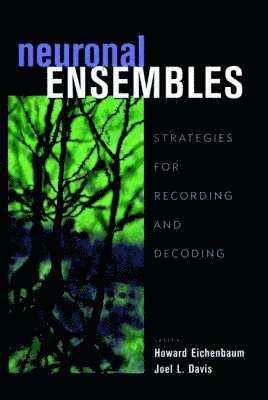
    Neuronal Ensembles

    Strategies for Recording and Decoding

    AvHoward B. Eichenbaum,Joel L. Davis

    Inbunden, Engelska, 1998

    3 126 kr

    Beställningsvara. Skickas inom 11-20 vardagar. Fri frakt över 249 kr.

    Beskrivning

    The distributed coding hypothesis --the view that complex cognitivefunctions such as visual perception or memory formation are thework of large networks of neurons in areas of the cerebral cortex--is widely accepted in contemporary neuroscience. Yet only inrecent years have tools emerged that can monitor theelectrophysiological activity of neuron ensembles in the corticalareas of awake, behaving animals. The use of these multichannelrecording techniques in biological network analysis is changing theway scientists view brain function. These methods also offer thepossibility of a direct test of the distributed codinghypothesis. Neuronal Ensembles: Strategies for Recording and Decoding presentsa comprehensive treatment of multichannel recording techniques--how to apply them and how to analyze the vast amounts of datathey generate. Composed of contributions by leading neuroscientistsat the forefront of this technology, the book covers groundbreakingwork in multichannel microelectrode technology, analyses of singleneuron spike trains, and ensemble analysis of cell populations. Theauthors outline established techniques, offer practical tips ondeveloping new methods, and share their ideas for further brainresearch. Topics covered include:* Extracellular recording and analysis of neural activity* The relationship between neuronal codes and cortical organization* Cell assemblies and cognitive function* Neuronal population coding* Motor cortical information processing* Detection and identification of ensemble codes in the motorcortex* Ensemble recordings and the nature of stimulus representation inhippocampal cognitive maps* Methods, results, and issues related to recording neuralensembles* Neuronal ensemble dynamics in the hippocampus and neocortexduring sleep and waking* Behavioral, electrophysiological, and genetic approaches to thestudy of synaptic plasticity and memory Neuronal Ensembles: Strategies for Recording and Decoding is animportant reference for researchers, graduate students, andpostdoctoral fellows in all areas of neuroscience, cognitiveneuroscience, and bioengineering.

    Produktinformation

    • Utgivningsdatum:1998-04-22
    • Mått:187 x 258 x 21 mm
    • Vikt:662 g
    • Format:Inbunden
    • Språk:Engelska
    • Antal sidor:288
    • Förlag:John Wiley & Sons Inc
    • ISBN:9780471179405

    Utforska kategorier

    • Biovetenskap inom Naturvetenskap och teknik

    Mer om författaren

    Howard B. Eichenbaum was an American psychologist and neuroscientist who studied the hippocampus. He was a university professor and director of the Center for Memory and Brain at Boston University, having previously worked at Wellesley College. He was the editor-in-chief of the scientific journal Hippocampus. Joel L. Davis is the editor of Neuronal Ensembles: Strategies for Recording and Decoding, published by Wiley.

    Recensioner i media

    "This book is a collection of articles derived from a recent workshop sponsored by the Office of Naval Research. The list of contributors is impressive." --The Quarterly Review of Biology, June 1999

    Innehållsförteckning

    • Preface ixContributors vii1. Introduction: Biological Neural Networks 1H. Eichenbaum & J.Davis2. Extracellular Recording and Analysis of Neuronal Activity: FromSingle Cells to Ensembles 17Z. Nadasdy, et al.3. The Relationship Between Neuronal Codes and Cortical Organization 57B. Richmond & T. Gawne4. Cell Assemblies and the Ghost in the Machine 81G. Schoenbaum5. Neuronal Population Coding: Multielectrode Recordings in PrimateCerebral Cortex 117D. Lee, et al.6 Motor Cortical Information Processing 137J. Si, et al.7. Detection and Identification of Ensemble Codes in Motor Cortex 161 N.Hatsopoulos, et al.8. Ensemble Recordings and the Nature of Stimulus Representation inHippocampal Cognitive Maps 177H. Tanila & M. Shaprio9. Methods, Results, and Issues Related to Recording Neural Ensembles  207R. Hampson & S. Deadwyler10. Neuronal Ensemble Dynamics in Hippocampus and Neocortex DuringSleep and Waking 235W. Skaggs & B. McNaughton11. Behavioral, Electrophysiological, and Genetic Approaches to theStudy of Synaptic Plasticity and Memory 247M. WilsonAppendix 257Index 261