• Fri frakt över 249 kr
  • •
  • Snabba leveranser
  • •
  • Billiga böcker
Kundservice

Du är på sajten för privatpersoner.

Företag, bibliotek eller offentlig verksamhet?

Du handlar på classic.bokus.com, där alla dina funktioner finns intakta.
Till classic.bokus.com
Bokus logotyp. Gå till startsidan.
  • Erbjudanden
  • Nyheter
  • Student
  • Topplistor
  • Barn & ungdom
  • Bokus Play
  • E-böcker
  • Pocketböcker
  • Spel & pussel

10% rabatt på allt med kod: NYSTART10 →

Sidfot

Mina sidor

    Hjälp

    • Kundservice
    • Vanliga frågor och svar
    • Frakt och leverans
    • Retur vid ångerrätt
    • Reklamera vara
    • Betalning
    • Köpvillkor
    • Allmänna villkor
    • Information om webbplatsens tillgänglighet

    Om Bokus

    • Om oss
    • Pressrum
    • För studenter
    • För företag
    • För bibliotek och offentlig verksamhet
    • För leverantörer
    • Hållbarhet

    Populärt

    • Aktuella erbjudanden
    • Presentkort
    • Studentlitteratur
    • Nya böcker
    • Topplistor
    • Signerade böcker
    • Engelska böcker

    Inspiration

    • Boktips
    • BookTok
    • Populära bokserier
    • Barnbokskaraktärer
    • Populära författare
    Logotyp för Bokus
    Följ oss på Facebook (extern länk)Följ oss på Instagram (extern länk)Följ oss på YouTube (extern länk)Följ oss på TikTok (extern länk)
    bokus @ CookiesAnpassa cookiesIntegritetspolicyKöpvillkor
    Till Citymail hemsida (extern länk)Till Budbee hemsida (extern länk)Till Postnord hemsida (extern länk)Till Schenker hemsida (extern länk)Till Early Bird hemsida (extern länk)Till Walleys hemsida (extern länk)
    1. Historia och arkeologi
    2. Historia
    3. Historia: särskilda händelser och ämnen
    4. Socialhistoria och kulturhistoria

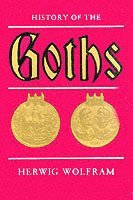
    History of the Goths

    AvHerwig Wolfram

    Häftad, Engelska, 1990

    335 kr

    Beställningsvara. Skickas inom 5-8 vardagar. Fri frakt över 249 kr.

    Beskrivning

    Incorporating exciting new material that has come to light since the last German edition of 1980, Herwig Wolfram places Gothic history within its proper context of late Roman society and institutions. He demonstrates that the barbarian world of the Goths was both a creation of and an essential element of the late Roman Empire.

    Produktinformation

    • Utgivningsdatum:1990-02-13
    • Mått:159 x 235 x 30 mm
    • Vikt:862 g
    • Format:Häftad
    • Språk:Engelska
    • Antal sidor:580
    • Förlag:University of California Press
    • ISBN:9780520069831
    • Översättare:Thomas Dunlap

    Utforska kategorier

    • Socialhistoria och kulturhistoria inom Historia och arkeologi
    • Europas historia inom Historia och arkeologi
    • Forntidens historia inom Historia och arkeologi

    Mer om författaren

    Herwig Wolfram is Professor of History at the University of Vienna and Director of the Austrian Institute for Historical Research.

    Innehållsförteckning

    • Preface     Introduction      Gothic History as Historical Ethnography1. The Names        The Gothic Name       The Dual Names of the Two Gothic Peoples      Visigoths and Ostrogoths as Western Goths and Eastern Goths     The Epic and the Derisive Names of the Goths     Biblical and Classical Names for the Goths   Gothic Royal Houses and Their Names       2. The Formation of the Gothic Tribes before the Invasion of the Huns      Gutones and Guti      Politics and Institutions of the Gutones The Trek to the Black Sea    The Goths at the Black Sea    The Gothic Invasions of the Third Century   The Gothic Advance into the Aegean     Aurelian and the Division of the Goths   The Tervingian-Vesian Confederation at the Danube     The Events of 291 to 364    The Era of Athanaric, 365-376/381     Ulfilas and the Beginning of the Conversion of the Goths  The Ostrogothic Greutungi until the Invasion of the Huns   Ermanaric's Greutungian Kingdom and Its Dissolution    Political Organization and Culture of the Goths at the Danube and the Black Sea   The Gutthiuda: The Land of the Tervingi and Taifali   The Kuni: Community of Descent and Subdivision of the Gutthiuda    The Harjis, the Tribal Army    Gards, Batirgs, Sibja: Lordship, Retainers, Community of Law       Haims (Village): The Social World of the Gothic Freeman    Cult and Religion among the Goths     Language and Daily Life    The Ostrogothic-Greutungian Kingship     3. The Forty-year Migration and the Formation of the Visigoths, 376/378 to 416/418        The Invasion and Settlement of the Goths in Thrace    From the Crossing of the Danube (376) to the Battle of Adrianople (378)    Theodosius and the Settlement of the Goths in Thrace   The Balkan Campaigns of 395-401       The Foedus of 397 and the Settlement of the Goths in Macedonia     Alaric's Elevation to the Kingship  Fravitta and Eriulf   Gainas and Tribigild    The Goths in the Western Empire, 401-418      Alaric's Italian Wars   Athaulf and the Gothic Trek Westward     Athaulf 's Contribution to the Visigothic Ethnogenesis The Visigoths Become Horsemen      Radagaisus and His Contribution to the VisigothicEthnogenesis    Valia and the Goths "in Roman Service"     4. The Kingdom of Toulouse, 418 to 507            The Aquitanian Federates, 418-466      The Visigothic "Superpower," 466-507       Euric (466-484) and the Breach of the Foedus of 416/418      The Conquest of the Auvergne and Tarraconensis       The Last Battles with the Empire    The Organization and Development of Dominion        Alaric II (484-507)    The Legal and Ecclesiastical Policies of Euric and Alaric II The Legislation of Euric and Alaric II   The Ecclesiastical Policies of Euric and Alaric II The King and the Royal Clan      The Royal Family      The King      Court Life: Religion, Language, and Culture    The Kingship: Its Functions and Functionaries    Military Organization     The Courtiers     Royal Estates and Finances     The Settlement of the Visigoths   The Peoples of the Kingdom of Toulouse: Ethnic and Social Composition     Goths and Romans in the Kingdom of Toulouse        Jews, Greeks, and Syrians    The Native Barbarians     The Immigrant Barbarians      Conditions of Dependency      The End That Was No End 5. The "New" Ostrogoths          The Division and Reunification of the Amal Goths, 375-451      Pannonian Greutungi, Hunnic Goths, and Ostrogoths        The Ostrogothic Kingdom in Pannonia, 456/457-473        The Ostrogoths in the Balkans, 473-488      Theodoric's Battle for Italy, 488-493   The Ostrogothic March to Italy     The Battles in Italy, 489-493    Flavius Theodericus Rex: King of the Goths and Italians, 493-526  Theodoric's Efforts To Obtain Imperial Recognition,490/493-497                Some Questions      Theodoric's Kingdom: An Attempt at a Constitutional Analysis    Theodoric's Rule in Theory and Practice    Exercitus Gothorum      Comites Gothorum, Duces, Saiones, Millenarii, Mediocres, Capillati    The Settlement of the Gothic Army     Polyethnicity, Social Status, and Compulsory Military Service Ostrogothic Weapons and Fighting Techniques       Theodoric's Barbarian Policy and the Securing of Italy  The Vandals     The Visigoths     The Burgundians      The Franks     Raetia and Western Illyricum under Ostrogothic Dominion      Barbarian Traditions and Ethnography      Theodoric's Roman Policy and the End of His Kingship, 526      The Amal Successors of Theodoric, 526-536      Athalaric (526-534)     Theodahad (534-536)       The Non-Amal Kings and the Fall of the Ostrogothic Kingdom, 536-552       Vitigis (536-540)    Hildebad and Eraric (540/541)     Totila (541-552)     The Epilogue: Teja (552)     Appendixes       1. Roman Emperors2. A Survey of Gothic History3. Genealogical Charts of the Balthi and AmaliNotes     List of Abbreviations      Bibliography      Index     Maps