• Fri frakt över 249 kr
  • •
  • Snabba leveranser
  • •
  • Billiga böcker
Kundservice

Du är på sajten för privatpersoner.

Företag, bibliotek eller offentlig verksamhet?

Du handlar på classic.bokus.com, där alla dina funktioner finns intakta.
Till classic.bokus.com
Bokus logotyp. Gå till startsidan.
  • Erbjudanden
  • Student
  • Topplistor
  • Barn & ungdom
  • Bokus Play
  • E-böcker
  • Ljudböcker
  • Pocketböcker
  • Spel & pussel

10% rabatt på allt med kod NYSTART10 →

Sidfot

Mina sidor

    Hjälp

    • Kundservice
    • Vanliga frågor och svar
    • Frakt och leverans
    • Retur vid ångerrätt
    • Reklamera vara
    • Betalning
    • Köpvillkor
    • Allmänna villkor
    • Information om webbplatsens tillgänglighet

    Om Bokus

    • Om oss
    • Pressrum
    • För studenter
    • För företag
    • För bibliotek och offentlig verksamhet
    • För leverantörer
    • Hållbarhet

    Populärt

    • Aktuella erbjudanden
    • Presentkort
    • Studentlitteratur
    • Nya böcker
    • Topplistor
    • Signerade böcker
    • Engelska böcker

    Inspiration

    • Boktips
    • BookTok
    • Populära bokserier
    • Barnbokskaraktärer
    • Populära författare
    Logotyp för Bokus
    Följ oss på Facebook (extern länk)Följ oss på Instagram (extern länk)Följ oss på YouTube (extern länk)Följ oss på TikTok (extern länk)
    bokus @ CookiesAnpassa cookiesIntegritetspolicyKöpvillkor
    Till Citymail hemsida (extern länk)Till Budbee hemsida (extern länk)Till Postnord hemsida (extern länk)Till Schenker hemsida (extern länk)Till Early Bird hemsida (extern länk)Till Walleys hemsida (extern länk)
    1. Historia och arkeologi
    2. Historia
    3. Asiens historia

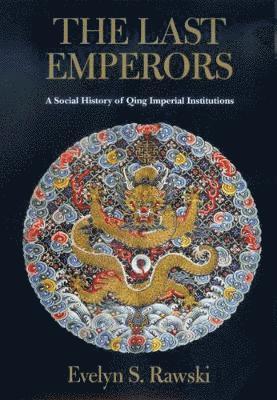
    Last Emperors

    A Social History of Qing Imperial Institutions

    AvEvelyn S. Rawski

    Häftad, Engelska, 2001

    Del i serien University of California Press

    317 kr

    Beställningsvara. Skickas inom 5-8 vardagar. Fri frakt över 249 kr.

    Beskrivning

    The Qing Dynasty (1644-1911) was the last and arguably the greatest of the conquest dynasties to rule China. Its rulers, Manchus from the north, held power for three centuries despite major cultural and ideological differences with the Han majority. In this book, Evelyn Rawski offers a bold new interpretation of the remarkable success of this dynasty, arguing that it derived not from the assimilation of the dominant Chinese culture, as has previously been believed, but rather from an artful synthesis of Manchu leadership styles with Han Chinese policies.

    Produktinformation

    • Utgivningsdatum:2001-02-05
    • Mått:152 x 229 x 29 mm
    • Vikt:745 g
    • Format:Häftad
    • Språk:Engelska
    • Serie:University of California Press
    • Antal sidor:466
    • Förlag:University of California Press
    • ISBN:9780520228375

    Utforska kategorier

    • Asiens historia inom Historia och arkeologi

    Mer om författaren

    Evelyn S. Rawski is University Professor of History at the University of Pittsburgh, coauthor of Chinese Society in the Eighteenth Century (1987), and coeditor of Harmony and Counterpoint: Ritual Music in Chinese Context (1996), Death Ritual in Late Imperial and Modern China (California, 1988), and Popular Culture in Late Imperial China (California, 1985).

    Recensioner i media

    "This book is of immense importance to the China field. Evelyn Rawski makes the greatest contribution we can expect from a superior scholarly work: to offer bold conceptual arguments while providing solid groundwork for generations of future researchers." -Susan Mann, author of Precious Records "Rawski's study represents a landmark beginning for a new historiography of China: here is an interior view of an imperial China far more complex and multicultural than previously known." -Dru Gladney, author of Ethnic Identity in China"

    Innehållsförteckning

    • List of IllustrationsList of TablesAcknowledgmentsIntroductionPART ONE: THE MATERIAL CULTURE OF THE QING COURT1. The Court Society PART TWO: THE SOCIAL ORGANIZATION OF THE QING COURT2. The Conquest Elite and the Imperial Lineage 3.Sibling Politics 4. Imperial Women5. Palace ServantsPART THREE: QING COURT RITUALS6. Rulership and Ritual Action in the Chinese Realm7. Shamanism and Tibetan Buddhism at Court8. Private RitualsConclusionAppendix 1. Names of Qing Emperors and the Imperial AncestorsAppendix 2. Imperial Princely RanksNotesBibliographyGlossary-Index