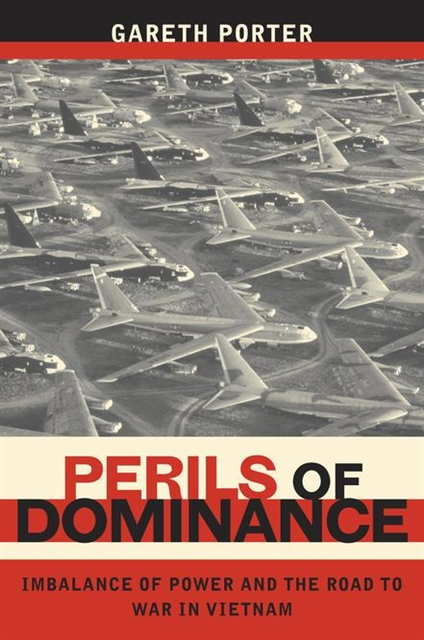
E-bok, Engelska, 2005
Perils of Dominance
446 kr
Läs direkt i Bokus Reader – eller ladda ned till din enhet (PDF kräver ofta zoom och scroll på små skärmar).
Beskrivning
Perils of Dominance is the first completely new interpretation of how and why the United States went to war in Vietnam. It provides an authoritative challenge to the prevailing explanation that U.S. officials adhered blindly to a Cold War doctrine that loss of Vietnam would cause a "domino effect" leading to communist domination of the area. Gareth Porter presents compelling evidence that U.S. policy decisions on Vietnam from 1954 to mid-1965 were shaped by an overwhelming imbalance of military power favoring the United States over the Soviet Union and China. He demonstrates how the slide into war in Vietnam is relevant to understanding why the United States went to war in Iraq, and why such wars are likely as long as U.S. military power is overwhelmingly dominant in the world.
Challenging conventional wisdom about the origins of the war, Porter argues that the main impetus for military intervention in Vietnam came not from presidents Kennedy and Johnson but from high-ranking national security officials in their administrations who were heavily influenced by U.S. dominance over its Cold War foes. Porter argues that presidents Eisenhower, Kennedy, and Johnson were all strongly opposed to sending combat forces to Vietnam, but that both Kennedy and Johnson were strongly pressured by their national security advisers to undertake military intervention. Porter reveals for the first time that Kennedy attempted to open a diplomatic track for peace negotiations with North Vietnam in 1962 but was frustrated by bureaucratic resistance. Significantly revising the historical account of a major turning point, Porter describes how Secretary of Defense Robert McNamara deliberately misled Johnson in the Gulf of Tonkin crisis, effectively taking the decision to bomb North Vietnam out of the president''s hands.
Challenging conventional wisdom about the origins of the war, Porter argues that the main impetus for military intervention in Vietnam came not from presidents Kennedy and Johnson but from high-ranking national security officials in their administrations who were heavily influenced by U.S. dominance over its Cold War foes. Porter argues that presidents Eisenhower, Kennedy, and Johnson were all strongly opposed to sending combat forces to Vietnam, but that both Kennedy and Johnson were strongly pressured by their national security advisers to undertake military intervention. Porter reveals for the first time that Kennedy attempted to open a diplomatic track for peace negotiations with North Vietnam in 1962 but was frustrated by bureaucratic resistance. Significantly revising the historical account of a major turning point, Porter describes how Secretary of Defense Robert McNamara deliberately misled Johnson in the Gulf of Tonkin crisis, effectively taking the decision to bomb North Vietnam out of the president''s hands.
Produktinformation
- Utgivningsdatum: 2005-06-13
- Språk: Engelska
- Filformat: PDF
- Kopieringsskydd: LCP
- ISBN: 9780520940406
- Förlag: University of California Press
Utforska kategorier
Betyg & recensioner
0 recensioner
Inga recensioner tillgängliga.