• Fri frakt över 249 kr
  • •
  • Snabba leveranser
  • •
  • Billiga böcker
Kundservice

Du är på sajten för privatpersoner.

Företag, bibliotek eller offentlig verksamhet?

Du handlar på classic.bokus.com, där alla dina funktioner finns intakta.
Till classic.bokus.com
Bokus logotyp. Gå till startsidan.
  • Erbjudanden
  • Nyheter
  • Student
  • Topplistor
  • Barn & ungdom
  • Bokus Play
  • E-böcker
  • Pocketböcker
  • Spel & pussel

10% rabatt på allt med kod: NYSTART10 →

Sidfot

Mina sidor

    Hjälp

    • Kundservice
    • Vanliga frågor och svar
    • Frakt och leverans
    • Retur vid ångerrätt
    • Reklamera vara
    • Betalning
    • Köpvillkor
    • Allmänna villkor
    • Information om webbplatsens tillgänglighet

    Om Bokus

    • Om oss
    • Pressrum
    • För studenter
    • För företag
    • För bibliotek och offentlig verksamhet
    • För leverantörer
    • Hållbarhet

    Populärt

    • Aktuella erbjudanden
    • Presentkort
    • Studentlitteratur
    • Nya böcker
    • Topplistor
    • Signerade böcker
    • Engelska böcker

    Inspiration

    • Boktips
    • BookTok
    • Populära bokserier
    • Barnbokskaraktärer
    • Populära författare
    Logotyp för Bokus
    Följ oss på Facebook (extern länk)Följ oss på Instagram (extern länk)Följ oss på YouTube (extern länk)Följ oss på TikTok (extern länk)
    bokus @ CookiesAnpassa cookiesIntegritetspolicyKöpvillkor
    Till Citymail hemsida (extern länk)Till Budbee hemsida (extern länk)Till Postnord hemsida (extern länk)Till Schenker hemsida (extern länk)Till Early Bird hemsida (extern länk)Till Walleys hemsida (extern länk)
    1. Juridik
    2. Särskilda rättsområden
    3. Miljö-, transport- och planeringsrätt
    4. Miljörätt

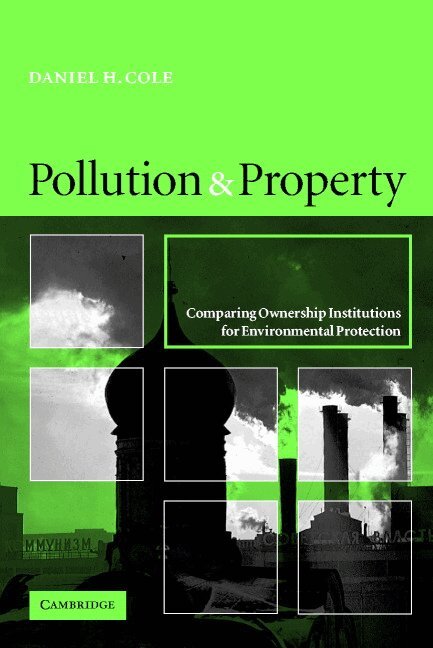
    Pollution and Property

    Comparing Ownership Institutions for Environmental Protection

    AvDaniel H. Cole

    Häftad, Engelska, 2002

    550 kr

    Beställningsvara. Skickas inom 10-15 vardagar. Fri frakt över 249 kr.

    Beskrivning

    Environmental protection and resource conservation depend on the imposition of property rights (broadly defined) because in the absence of some property system - private, common, or public - resource degradation and depletion are inevitable. But there is no universal, first-best property regime for environmental protection in this second-best world. Using case studies and examples taken from countries around the world, this 2002 book demonstrates that the choice of ownership institution is contingent upon institutional, technological, and ecological circumstances that determine the differential costs of instituting, implementing, and maintaining alternative regimes. Consequently, environmental protection is likely to be more effective and more efficient in a society that relies on multiple (and often mixed) property regimes. The book concludes with an assessment of the important contemporary issue of 'takings', which arise when different property regimes collide.

    Produktinformation

    • Utgivningsdatum:2002-07-18
    • Mått:150 x 227 x 18 mm
    • Vikt:364 g
    • Format:Häftad
    • Språk:Engelska
    • Antal sidor:226
    • Förlag:Cambridge University Press
    • ISBN:9780521001090

    Utforska kategorier

    • Miljörätt inom Juridik

    Recensioner i media

    'At last we have, in Dan Cole's careful and comprehensive work, an intellectually honest account of the role of property relations in pollution policy. Finally, clear thought stands a plausible chance of trumping ideology masquerading as analysis by lawyers and economists.' Daniel W. Bromley, University of Wisconsin-Madison

    Innehållsförteckning

    • 1. Pollution and property: the conceptual framework; 2. Public property/regulatory solutions to the tragedy of open access; 3. Mixed property/regulatory regimes for environmental protection; 4. Institutional and technological limits of mixed property/regulatory regimes; 5. The theory and limits of free market environmentalism (a private property/nonregulatory regime); 6. The limited utility of common property regimes for environmental protection; 7. The complexities of property regime choice for environmental protection; 8. When property regimes collide: the 'takings' problem; 9. Final thoughts.