• Fri frakt över 249 kr
  • •
  • Snabba leveranser
  • •
  • Billiga böcker
Kundservice

Du är på sajten för privatpersoner.

Företag, bibliotek eller offentlig verksamhet?

Du handlar på classic.bokus.com, där alla dina funktioner finns intakta.
Till classic.bokus.com
Bokus logotyp. Gå till startsidan.
  • Erbjudanden
  • Nyheter
  • Student
  • Topplistor
  • Barn & ungdom
  • Bokus Play
  • E-böcker
  • Pocketböcker
  • Spel & pussel

10% rabatt på allt med kod NYSTART10 →

Sidfot

Mina sidor

    Hjälp

    • Kundservice
    • Vanliga frågor och svar
    • Frakt och leverans
    • Retur vid ångerrätt
    • Reklamera vara
    • Betalning
    • Köpvillkor
    • Allmänna villkor
    • Information om webbplatsens tillgänglighet

    Om Bokus

    • Om oss
    • Pressrum
    • För studenter
    • För företag
    • För bibliotek och offentlig verksamhet
    • För leverantörer
    • Hållbarhet

    Populärt

    • Aktuella erbjudanden
    • Presentkort
    • Studentlitteratur
    • Nya böcker
    • Topplistor
    • Signerade böcker
    • Engelska böcker

    Inspiration

    • Boktips
    • BookTok
    • Populära bokserier
    • Barnbokskaraktärer
    • Populära författare
    Logotyp för Bokus
    Följ oss på Facebook (extern länk)Följ oss på Instagram (extern länk)Följ oss på YouTube (extern länk)Följ oss på TikTok (extern länk)
    bokus @ CookiesAnpassa cookiesIntegritetspolicyKöpvillkor
    Till Citymail hemsida (extern länk)Till Budbee hemsida (extern länk)Till Postnord hemsida (extern länk)Till Schenker hemsida (extern länk)Till Early Bird hemsida (extern länk)Till Walleys hemsida (extern länk)
    1. Samhälle och politik
    2. Samhälle och kultur
    3. Kultur och medier
    4. Kulturvetenskap

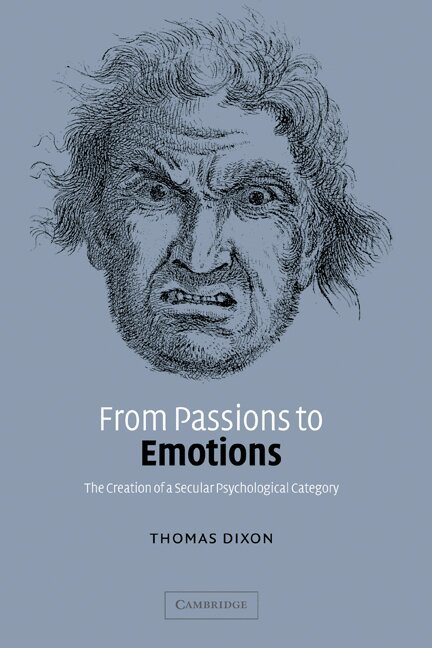
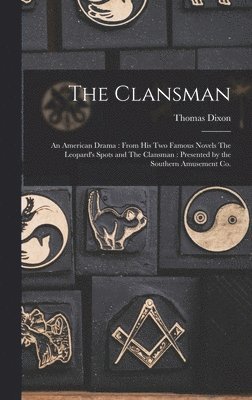
    From Passions to Emotions

    The Creation of a Secular Psychological Category

    AvThomas Dixon

    Häftad, Engelska, 2006

    356 kr

    Beställningsvara. Skickas inom 10-15 vardagar. Fri frakt över 249 kr.

    Fler format och utgåvor

    Inbunden

    1 523 kr

    Beskrivning

    Today there is a thriving 'emotions industry' to which philosophers, psychologists and neuroscientists are contributing. Yet until two centuries ago 'the emotions' did not exist. In this path-breaking study Thomas Dixon shows how, during the nineteenth century, the emotions came into being as a distinct psychological category, replacing existing categories such as appetites, passions, sentiments and affections. By examining medieval and eighteenth-century theological psychologies and placing Charles Darwin and William James within a broader and more complex nineteenth-century setting, Thomas Dixon argues that this domination by one single descriptive category is not healthy. Overinclusivity of 'the emotions' hampers attempts to argue with any subtlety about the enormous range of mental states and stances of which humans are capable. This book is an important contribution to the debate about emotion and rationality which has preoccupied western thinkers throughout the eighteenth and nineteenth centuries and has implications for contemporary debates.

    Produktinformation

    • Utgivningsdatum:2006-06-01
    • Mått:154 x 229 x 19 mm
    • Vikt:473 g
    • Format:Häftad
    • Språk:Engelska
    • Antal sidor:300
    • Förlag:Cambridge University Press
    • ISBN:9780521026697

    Utforska kategorier

    • Kulturvetenskap inom Samhälle och politik

    Mer om författaren

    Dr Thomas Dixon is a British Academy Postdoctoral Fellow at the Faculty of Divinity and a fellow of Churchill College, University of Cambridge.

    Recensioner i media

    'In sum, this is a deeply rewarding book, backed up by detailed scholarship; it deserves a place on the bookshelves of anyone concerned with the history both of passions and emotions.' History of Political Thought

    Innehållsförteckning

    • Acknowledgments; 1. Introduction: from passions and affections to emotions; 2. Passions and affections in Augustine and Aquinas; 3. From movements to mechanisms: passions, sentiments and affections in the Age of Reason; 4. The Scottish creation of 'the emotions': David Hume, Thomas Brown, Thomas Chalmers; 5. The physicalist appropriation of Brownian emotions: Alexander Bain, Herbert Spencer, Charles Darwin; 6. Christian and theistic responses to the physicalist emotions paradigm; 7. What was an emotion in 1884? William James and his critics; 8. Conclusions: how history can help us think about 'the emotions'; Bibliography; Index.