• Fri frakt över 249 kr
  • •
  • Snabba leveranser
  • •
  • Billiga böcker
Kundservice

Du är på sajten för privatpersoner.

Företag, bibliotek eller offentlig verksamhet?

Du handlar på classic.bokus.com, där alla dina funktioner finns intakta.
Till classic.bokus.com
Bokus logotyp. Gå till startsidan.
  • Erbjudanden
  • Nyheter
  • Student
  • Topplistor
  • Barn & ungdom
  • Bokus Play
  • E-böcker
  • Pocketböcker
  • Spel & pussel

10% rabatt på allt med kod: NYSTART10 →

Sidfot

Mina sidor

    Hjälp

    • Kundservice
    • Vanliga frågor och svar
    • Frakt och leverans
    • Retur vid ångerrätt
    • Reklamera vara
    • Betalning
    • Köpvillkor
    • Allmänna villkor
    • Information om webbplatsens tillgänglighet

    Om Bokus

    • Om oss
    • Pressrum
    • För studenter
    • För företag
    • För bibliotek och offentlig verksamhet
    • För leverantörer
    • Hållbarhet

    Populärt

    • Aktuella erbjudanden
    • Presentkort
    • Studentlitteratur
    • Nya böcker
    • Topplistor
    • Signerade böcker
    • Engelska böcker

    Inspiration

    • Boktips
    • BookTok
    • Populära bokserier
    • Barnbokskaraktärer
    • Populära författare
    Logotyp för Bokus
    Följ oss på Facebook (extern länk)Följ oss på Instagram (extern länk)Följ oss på YouTube (extern länk)Följ oss på TikTok (extern länk)
    bokus @ CookiesAnpassa cookiesIntegritetspolicyKöpvillkor
    Till Citymail hemsida (extern länk)Till Budbee hemsida (extern länk)Till Postnord hemsida (extern länk)Till Schenker hemsida (extern länk)Till Early Bird hemsida (extern länk)Till Walleys hemsida (extern länk)
    1. Skönlitteratur
    2. Litteraturvetenskap
    3. Litteraturvetenskap

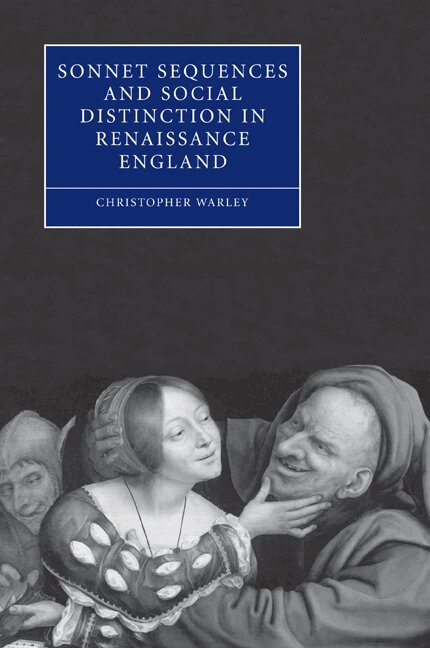
    Sonnet Sequences and Social Distinction in Renaissance England

    AvChristopher Warley

    Häftad, Engelska, 2009

    Del 49 i serien Cambridge Studies in Renaissance Literature and Culture

    579 kr

    Beställningsvara. Skickas inom 10-15 vardagar. Fri frakt över 249 kr.

    Fler format och utgåvor

    Inbunden

    1 458 kr

    Beskrivning

    Why were sonnet sequences popular in Renaissance England? In this study, Christopher Warley suggests that sonneteers created a vocabulary to describe, and to invent, new forms of social distinction before an explicit language of social class existed. The tensions inherent in the genre - between lyric and narrative, between sonnet and sequence - offered writers a means of reconceptualizing the relation between individuals and society, a way to try to come to grips with the broad social transformations taking place at the end of the sixteenth century. By stressing the struggle over social classification, the book revises studies that have tied the influence of sonnet sequences to either courtly love or to Renaissance individualism. Drawing on Marxist aesthetic theory, it offers detailed examinations of sequences by Lok, Sidney, Spenser, Shakespeare and Milton. It will be valuable to readers interested in Renaissance and genre studies, and post-Marxist theories of class.

    Produktinformation

    • Utgivningsdatum:2009-04-02
    • Mått:152 x 229 x 15 mm
    • Vikt:380 g
    • Format:Häftad
    • Språk:Engelska
    • Serie:Cambridge Studies in Renaissance Literature and Culture
    • Antal sidor:256
    • Förlag:Cambridge University Press
    • ISBN:9780521107532

    Utforska kategorier

    • Litteraturvetenskap inom Skönlitteratur

    Mer om författaren

    Christopher Warley is Assistant Professor at the Department of English, Oakland University, Michigan.

    Recensioner i media

    Review of the hardback: '… a bold book that should be welcomed by anyone keen to open up debate about the early modern period.' The Times Literary Supplement

    Innehållsförteckning

    • Preface; 1. Sonnet sequences and social distinction; 2. Post-romantic lyric: class and the critical apparatus of sonnet conventions; 3. 'An Englishe box': Calvinism and commodities in Anne Lok's A Meditation of a Penitent Sinner; 4. 'Nobler Desires' and Sidney's Astrophil and Stella; 5. 'So plenty makes me poore': Ireland, capitalism, and class in Spenser's Amoretti and Epithalamion; 6. 'Till my bad angel fire my good one out': engendering economic expertise in Shakespeare's Sonnets; 7. 'The English straine': absolutism, class, and Drayton's ideas, 1594–1619; Afterword: engendering class: Drayton, Wroth, Milton, and the genesis of the public sphere.