• Fri frakt över 249 kr
  • •
  • Snabba leveranser
  • •
  • Billiga böcker
Kundservice

Du är på sajten för privatpersoner.

Företag, bibliotek eller offentlig verksamhet?

Du handlar på classic.bokus.com, där alla dina funktioner finns intakta.
Till classic.bokus.com
Bokus logotyp. Gå till startsidan.
  • Erbjudanden
  • Nyheter
  • Student
  • Topplistor
  • Barn & ungdom
  • Bokus Play
  • E-böcker
  • Pocketböcker
  • Spel & pussel

10% rabatt på allt med kod: NYSTART10 →

Sidfot

Mina sidor

    Hjälp

    • Kundservice
    • Vanliga frågor och svar
    • Frakt och leverans
    • Retur vid ångerrätt
    • Reklamera vara
    • Betalning
    • Köpvillkor
    • Allmänna villkor
    • Information om webbplatsens tillgänglighet

    Om Bokus

    • Om oss
    • Pressrum
    • För studenter
    • För företag
    • För bibliotek och offentlig verksamhet
    • För leverantörer
    • Hållbarhet

    Populärt

    • Aktuella erbjudanden
    • Presentkort
    • Studentlitteratur
    • Nya böcker
    • Topplistor
    • Signerade böcker
    • Engelska böcker

    Inspiration

    • Boktips
    • BookTok
    • Populära bokserier
    • Barnbokskaraktärer
    • Populära författare
    Logotyp för Bokus
    Följ oss på Facebook (extern länk)Följ oss på Instagram (extern länk)Följ oss på YouTube (extern länk)Följ oss på TikTok (extern länk)
    bokus @ CookiesAnpassa cookiesIntegritetspolicyKöpvillkor
    Till Citymail hemsida (extern länk)Till Budbee hemsida (extern länk)Till Postnord hemsida (extern länk)Till Schenker hemsida (extern länk)Till Early Bird hemsida (extern länk)Till Walleys hemsida (extern länk)
    1. Historia och arkeologi
    2. Historia
    3. Europas historia

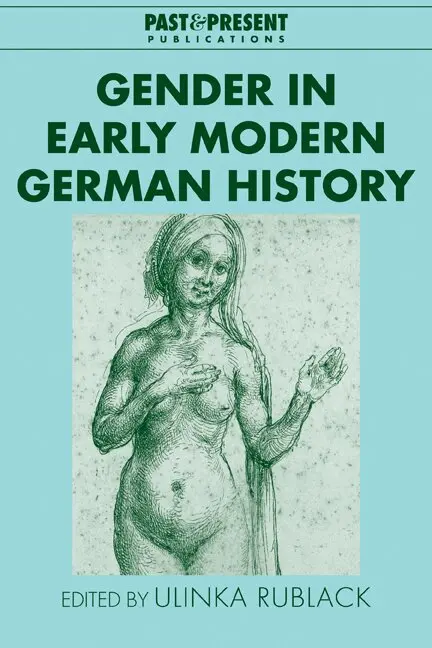
    Gender in Early Modern German History

    AvUlinka Rublack

    Häftad, Engelska, 2010

    Del i serien Past and Present Publications

    601 kr

    Beställningsvara. Skickas inom 10-15 vardagar. Fri frakt över 249 kr.

    Beskrivning

    Why did parents prosecute their children as witches? Why did a sixteenth-century midwife entice a burgher woman to pretend that she was giving birth to puppies? How did the life of a transsexual woman in early eighteenth-century Hamburg come to its end? This volume presents a range of startling case-studies from German society between the Renaissance and the Enlightenment which make us consider the meanings of gender and identity in the past and which relates, above all, to the lived experiences of men and women, whose lives and choices mattered. The book argues for approaches to early modern history which point to the complexity of peoples' attitudes, in terms of contemporary experiences of the physical, both emotional and imaginary; of shifting symbolisations of evil, sexual symbolisms, of perceived boundaries between the 'real' and the 'fantastical', family structures and spiritual worlds.

    Produktinformation

    • Utgivningsdatum:2010-11-04
    • Mått:152 x 229 x 18 mm
    • Vikt:440 g
    • Format:Häftad
    • Språk:Engelska
    • Serie:Past and Present Publications
    • Antal sidor:328
    • Förlag:Cambridge University Press
    • ISBN:9780521179973

    Utforska kategorier

    • Europas historia inom Historia och arkeologi

    Mer om författaren

    Ulinka Rublack is Lecturer in History, University of Cambridge, and a Fellow of St John's College.

    Recensioner i media

    "...[a] multifaceted anthology of solid scholarship, intriguing new historical approaches, and extensive historiography. The editor, together with her ten collaborators, has achieved a scholarly work of wide geographical and chronological scope...This anthology should not only be read by scholars and students of the early modern German period but by early modern Europeanists in general." Renaissance Quarterly

    Innehållsförteckning

    • Preface; 1. Introduction Ulinka Rublack; Part I. Masculinities: 2. What made a man a man? Sixteenth- and seventeenth-century findings Heide Wunder; 3. Men in witchcraft trials: towards a social anthropology of 'male' understandings of magic and witchcraft Eva Labouvie; Part II. Transgressions: 4. Monstrous deception: midwifery, fraud and gender in early modern Rothenburg ob der Tauber Alison Rowlands; 5. 'Evil imaginings and fantasies': child witches and the end of the witch craze Lyndal Roper; 6. Gender tales: the multiple identities of Maiden Heinrich, Hamburg 1700 Mary Lindemann; 7. Disembodied theory? Discourses of sex in early modern Germany Merry Wiesner; Part III. Politics: 8. Peasant protest and the language of womens' petitions: Christina Vend's supplications of 1629 Renate Blickle; 9. State formation, gender and the experience of governance in early modern Württemberg Ulinka Rublack; Part IV. Religion: 10. Cloistering womens' past: conflicting accounts of enclosure in a seventeenth-century Munich nunnery Ulrike Strasser; 11. Memory, religion and family in the writing of Pietist women Ulrike Gleixner; 12. One body, two confessions: mixed marriages in Germany Dagmar Freist.