• Fri frakt över 249 kr
  • •
  • Snabba leveranser
  • •
  • Billiga böcker
Kundservice

Du är på sajten för privatpersoner.

Företag, bibliotek eller offentlig verksamhet?

Du handlar på classic.bokus.com, där alla dina funktioner finns intakta.
Till classic.bokus.com
Bokus logotyp. Gå till startsidan.
  • Erbjudanden
  • Nyheter
  • Student
  • Topplistor
  • Barn & ungdom
  • Bokus Play
  • E-böcker
  • Pocketböcker
  • Spel & pussel

Må bättre, för mindre! Upp till 50% rabatt på hälsoböcker

Sidfot

Mina sidor

    Hjälp

    • Kundservice
    • Vanliga frågor och svar
    • Frakt och leverans
    • Retur vid ångerrätt
    • Reklamera vara
    • Betalning
    • Köpvillkor
    • Allmänna villkor
    • Information om webbplatsens tillgänglighet

    Om Bokus

    • Om oss
    • Pressrum
    • För studenter
    • För företag
    • För bibliotek och offentlig verksamhet
    • För leverantörer
    • Hållbarhet

    Populärt

    • Aktuella erbjudanden
    • Presentkort
    • Studentlitteratur
    • Nya böcker
    • Topplistor
    • Signerade böcker
    • Engelska böcker

    Inspiration

    • Boktips
    • BookTok
    • Populära bokserier
    • Barnbokskaraktärer
    • Populära författare
    Logotyp för Bokus
    Följ oss på Facebook (extern länk)Följ oss på Instagram (extern länk)Följ oss på YouTube (extern länk)Följ oss på TikTok (extern länk)
    bokus @ CookiesAnpassa cookiesIntegritetspolicyKöpvillkor
    Till Citymail hemsida (extern länk)Till Budbee hemsida (extern länk)Till Postnord hemsida (extern länk)Till Schenker hemsida (extern länk)Till Early Bird hemsida (extern länk)Till Walleys hemsida (extern länk)
    1. Ekonomi och Ledarskap
    2. Nationalekonomi
    3. Ekonomisk historia

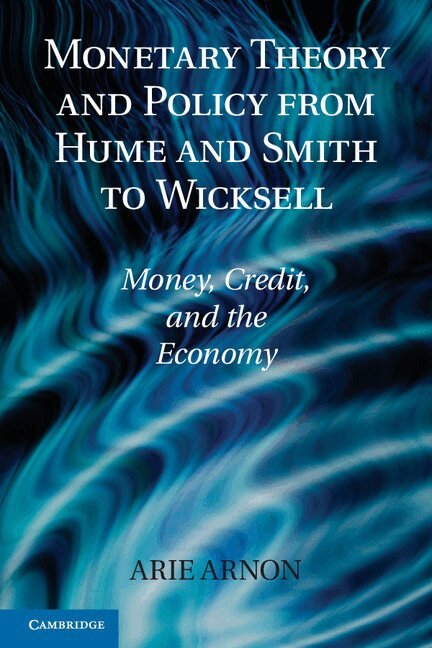
    Monetary Theory and Policy from Hume and Smith to Wicksell

    Money, Credit, and the Economy

    AvArie Arnon

    Inbunden, Engelska, 2010

    Del i serien Historical Perspectives on Modern Economics

    1 057 kr

    Beställningsvara. Skickas inom 10-15 vardagar. Fri frakt över 249 kr.

    Fler format och utgåvor

    Häftad

    601 kr

    Beskrivning

    This book provides a comprehensive survey of the major developments in monetary theory and policy from David Hume and Adam Smith to Walter Bagehot and Knut Wicksell. In particular, it seeks to explain why it took so long for a theory of central banking to penetrate mainstream thought. The book investigates how major monetary theorists understood the roles of the invisible and visible hands in money, credit and banking; what they thought about rules and discretion and the role played by commodity-money in their conceptualizations; whether or not they distinguished between the two different roles carried out via the financial system - making payments efficiently within the exchange process and facilitating intermediation in the capital market; how they perceived the influence of the monetary system on macroeconomic aggregates such as the price level, output and accumulation of wealth; and finally, what they thought about monetary policy.

    Produktinformation

    • Utgivningsdatum:2010-11-22
    • Mått:152 x 229 x 25 mm
    • Vikt:770 g
    • Format:Inbunden
    • Språk:Engelska
    • Serie:Historical Perspectives on Modern Economics
    • Antal sidor:448
    • Förlag:Cambridge University Press
    • ISBN:9780521191135

    Utforska kategorier

    • Ekonomisk historia inom Ekonomi och Ledarskap

    Mer om författaren

    Arie Arnon is Associate Professor of Economics at Ben-Gurion University and Head of the Economics and Society Program at Van Leer Jerusalem Institute, Israel. Professor Arnon's areas of research include the history of economic thought, macroeconomics and monetary theory. His books include Thomas Tooke: A Pioneer of Monetary Theory (1991), The Palestinian Economy: Between Imposed Integration and Voluntary Separation (1997, coauthored with I. Luski, A. Spivak and J. Weinblatt) and The Open Economy Macromodel: Past, Present, and Future (2002, coedited with W. Young). Professor Arnon has published articles in History of Political Economy, the Oxford Economic Papers, the Economic Journal and the Middle East Journal. He has served on the editorial boards of the European Journal of the History of Economic Thought, Economic Quarterly and Social Security: Journal of Welfare and Social Security Studies. He has held visiting positions at the University of California, Berkeley, Stanford University, the University of Pennsylvania, The New School and the School of Oriental and African Studies, University of London. He has also served as a Senior Economist in the Research Department of the Bank of Israel and as a consultant to the World Bank. Since 2002 Professor Arnon has been the coordinator of the Israeli team in the Aix Group, where experts from the Palestinian Authority, Israel, and the international community discuss various economic aspects of the conflict and develop scenarios and policy alternatives for a permanent peace settlement. A recent publication of the group is entitled Economic Dimensions of a Two State Agreement Between Israel and Palestine (2007).

    Recensioner i media

    Reviews of the hardback: 'This is the first history of the development of monetary ideas from Hume to Wicksell since Charles Rist's 1938 classic Histoire des doctrines relatives au credit et à la monnaie. Arie Arnon brings together a large literature and skilfully covers historical aspects of some of the main issues in monetary theory and policy that will attract the attention of historians of thought and monetary theoreticians alike.' Mauro Boianovsky, Universidade de Brasilia

    Innehållsförteckning

    • Introduction; Part I. Analytical and Historical Foundations: 1. Monetary theory circa 1750: David Hume; 2. Mid-eighteenth-century British financial system; 3. Adam Smith: the case for laissez faire in money and banking; 4. 'Monetary theories of credit' in exchange; Part II. Debating Monetary Theory under Inconvertibility: 5. New reality: the restriction period, 1797–1821; 6. Boyd versus Baring: the early round in the bullion debate; 7. Henry Thornton: ahead of his times; 8. Ricardo versus Bosanquet: the famous round in the Bullion debate; 9. 'Credit theories of money' in exchange and intermediation; Part III. Debating: Laissez Faire, Rules and Discretion: 10. From the resumption to 1837: more crises; 11. The currency school trio: Loyd, Torrens, Norman; 12. The banking school trio: Tooke, Fullarton, Wilson; 13. Neither discretion nor rules: Joplin and the free banking school; Part IV. The Road to Defensive Central Banking: 14. Bagehot and a new conventional wisdom; 15. Does Karl Marx fit in?; 16. Marshall and bi-metallism; Part V. A New Beginning: Towards Active Central Banking: 17. Wicksell's innovative monetary theory; 18. The puzzling slow rise of a theory of central banking: between the lender of last resort, passive and active monetary policy.