• Fri frakt över 249 kr
  • •
  • Snabba leveranser
  • •
  • Billiga böcker
Kundservice

Du är på sajten för privatpersoner.

Företag, bibliotek eller offentlig verksamhet?

Du handlar på classic.bokus.com, där alla dina funktioner finns intakta.
Till classic.bokus.com
Bokus logotyp. Gå till startsidan.
  • Erbjudanden
  • Nyheter
  • Student
  • Topplistor
  • Barn & ungdom
  • Bokus Play
  • E-böcker
  • Pocketböcker
  • Spel & pussel

10% rabatt på allt med kod NYSTART10 →

Sidfot

Mina sidor

    Hjälp

    • Kundservice
    • Vanliga frågor och svar
    • Frakt och leverans
    • Retur vid ångerrätt
    • Reklamera vara
    • Betalning
    • Köpvillkor
    • Allmänna villkor
    • Information om webbplatsens tillgänglighet

    Om Bokus

    • Om oss
    • Pressrum
    • För studenter
    • För företag
    • För bibliotek och offentlig verksamhet
    • För leverantörer
    • Hållbarhet

    Populärt

    • Aktuella erbjudanden
    • Presentkort
    • Studentlitteratur
    • Nya böcker
    • Topplistor
    • Signerade böcker
    • Engelska böcker

    Inspiration

    • Boktips
    • BookTok
    • Populära bokserier
    • Barnbokskaraktärer
    • Populära författare
    Logotyp för Bokus
    Följ oss på Facebook (extern länk)Följ oss på Instagram (extern länk)Följ oss på YouTube (extern länk)Följ oss på TikTok (extern länk)
    bokus @ CookiesAnpassa cookiesIntegritetspolicyKöpvillkor
    Till Citymail hemsida (extern länk)Till Budbee hemsida (extern länk)Till Postnord hemsida (extern länk)Till Schenker hemsida (extern länk)Till Early Bird hemsida (extern länk)Till Walleys hemsida (extern länk)
    1. Kultur
    2. Musikböcker
    3. Musik: stilar och genrer
    4. Opera

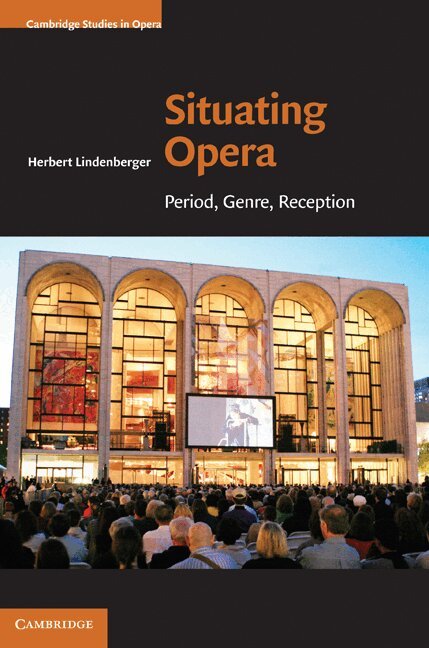
    Situating Opera

    Period, Genre, Reception

    AvHerbert Lindenberger

    Inbunden, Engelska, 2010

    Del i serien Cambridge Studies in Opera

    1 375 kr

    Beställningsvara. Skickas inom 10-15 vardagar. Fri frakt över 249 kr.

    Beskrivning

    Setting opera within a variety of contexts - social, aesthetic, historical - Lindenberger illuminates a form that has persisted in recognizable shape for over four centuries. The study examines the social entanglements of opera, for example the relation of Mozart's Abduction from the Seraglio and Verdi's Il trovatore to its initial and later audiences. It shows how modernist opera rethought the nature of theatricality and often challenged its viewers by means of both musical and theatrical shock effects. Using recent experiments in neuroscience, the book demonstrates how different operatic forms developed at different periods to create new ways of exciting a public. Lindenberger considers selected moments of operatic history from Monteverdi's Orfeo to the present to study how the form has communicated with its diverse audiences. Of interest to scholars and operagoers alike, this book advocates and exemplifies opera studies as an active, emerging area of interdisciplinary study.

    Produktinformation

    • Utgivningsdatum:2010-10-28
    • Mått:157 x 229 x 23 mm
    • Vikt:650 g
    • Format:Inbunden
    • Språk:Engelska
    • Serie:Cambridge Studies in Opera
    • Antal sidor:324
    • Förlag:Cambridge University Press
    • ISBN:9780521199896

    Utforska kategorier

    • Opera inom Kultur

    Mer om författaren

    Herbert Lindenberger is Avalon Professor of Humanities Emeritus at Stanford University. He is the author of Opera in History: From Monteverdi to Cage (1998), The Literature in History: On Genre, Values, Institutions (1990), Opera: The Extravagant Art (1984), and Saul's Fall: A Critical Fiction (1979).

    Recensioner i media

    "...very accessible and offer excellent insights into why operas of the 20th century and beyond seem to have a more limited audience than the lyrical dramatic operas of the 19th century." --Choice

    Innehållsförteckning

    • Prologue. Why opera? Why (how, where) situate?; 1. Anatomy of a war horse: Il trovatore from A to Z; 2. On opera and society (assuming a relationship); 3. Opera and the novel: antithetical or complementary?; 4. Opera by other means; 5. Opera and/as lyric; 6. From separatism to unity: aesthetic theorizing from Reynolds to Wagner; 7. Toward a characterization of modernist opera; 8. Anti-theatricality in twentieth-century opera; 9. A brief consumer's history of opera; Epilogue. Why (what, how, if) opera studies?; Works cited.