• Fri frakt över 249 kr
  • •
  • Snabba leveranser
  • •
  • Billiga böcker
Kundservice

Du är på sajten för privatpersoner.

Företag, bibliotek eller offentlig verksamhet?

Du handlar på classic.bokus.com, där alla dina funktioner finns intakta.
Till classic.bokus.com
Bokus logotyp. Gå till startsidan.
  • Erbjudanden
  • Nyheter
  • Student
  • Topplistor
  • Barn & ungdom
  • Bokus Play
  • E-böcker
  • Pocketböcker
  • Spel & pussel

10% rabatt på allt med kod: NYSTART10 →

Sidfot

Mina sidor

    Hjälp

    • Kundservice
    • Vanliga frågor och svar
    • Frakt och leverans
    • Retur vid ångerrätt
    • Reklamera vara
    • Betalning
    • Köpvillkor
    • Allmänna villkor
    • Information om webbplatsens tillgänglighet

    Om Bokus

    • Om oss
    • Pressrum
    • För studenter
    • För företag
    • För bibliotek och offentlig verksamhet
    • För leverantörer
    • Hållbarhet

    Populärt

    • Aktuella erbjudanden
    • Presentkort
    • Studentlitteratur
    • Nya böcker
    • Topplistor
    • Signerade böcker
    • Engelska böcker

    Inspiration

    • Boktips
    • BookTok
    • Populära bokserier
    • Barnbokskaraktärer
    • Populära författare
    Logotyp för Bokus
    Följ oss på Facebook (extern länk)Följ oss på Instagram (extern länk)Följ oss på YouTube (extern länk)Följ oss på TikTok (extern länk)
    bokus @ CookiesAnpassa cookiesIntegritetspolicyKöpvillkor
    Till Citymail hemsida (extern länk)Till Budbee hemsida (extern länk)Till Postnord hemsida (extern länk)Till Schenker hemsida (extern länk)Till Early Bird hemsida (extern länk)Till Walleys hemsida (extern länk)
    1. Samhälle och politik
    2. Samhälle och kultur
    3. Sociala grupper och identitet

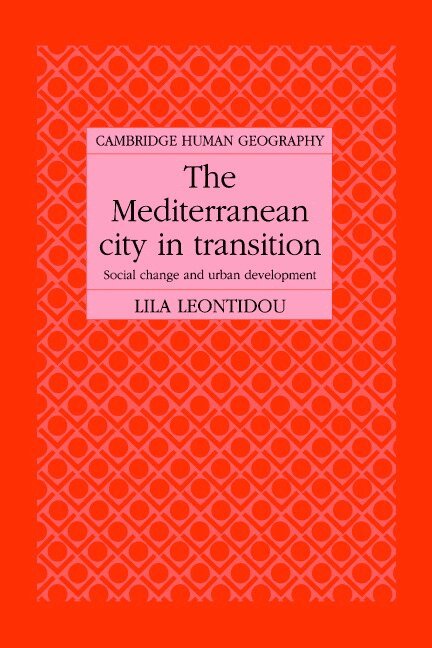
    The Mediterranean City in Transition

    Social Change and Urban Development

    AvLila Leontidou,Brian Robson

    Inbunden, Engelska, 1990

    Del i serien Cambridge Human Geography

    1 651 kr

    Beställningsvara. Skickas inom 10-15 vardagar. Fri frakt över 249 kr.

    Fler format och utgåvor

    Häftad

    798 kr

    Beskrivning

    Postwar capitalist development has involved a transition from polarization toward diffuse urbanization and flexibility. The timing and form of this transition and its effects on spatial structures have varied, as is especially evident in the case of Mediterranean Europe. Focusing upon Greater Athens between 1948 and 1981 - the crucial period of the transition - Lila Leontidou explores the role of social classes in urban development. The emergence of new processes in cities such as Athens, Salonica, Rome, Naples, Milan, Madrid, Barcelona and Lisbon is different in both timing and manner from that of northern European cities, but, as Dr Leontidou argues, this should not be attributed to poverty or inexplicable cultural peculiarities. Instead interaction between popular spontaneity, economic forces and State control has played a major role.

    Produktinformation

    • Utgivningsdatum:1990-04-26
    • Mått:152 x 228 x 25 mm
    • Vikt:590 g
    • Format:Inbunden
    • Språk:Engelska
    • Serie:Cambridge Human Geography
    • Antal sidor:316
    • Förlag:Cambridge University Press
    • ISBN:9780521344678

    Utforska kategorier

    • Sociala grupper och identitet inom Samhälle och politik
    • Socialhistoria och kulturhistoria inom Historia och arkeologi
    • Geografi inom Naturvetenskap och teknik

    Recensioner i media

    "Using secondary sources for comparisons with other Mediterranean cities and archival studies for Athens, Leontidou has amassed considerable evidence--much of it presented in tables and maps--about how working-class migrants provided shelter for themselves in an unregulated building economy. Taken as an empirical account, Leontidou's book fills a gap in the literature." Josef W. Konvitz, Journal of Interdisciplinary History

    Innehållsförteckning

    • List of figures; List of tables; Preface; List of abbreviations; Introduction; 1. Spontaneous urban development: in search of a theory for the Mediterranean city; 2. Cities of silence: Athens and Piraeus in the early twentieth century; 3. The Greek 'economic miracle' and the hidden proletariat; 4. The 'golden period' of spontaneous urban development, 1950–67; 5. Industrial restructuring versus the cities; 6. The end of spontaneity in urban development; 7. Athens and the uniqueness of urban development in Mediterranean Europe; References; Index.