• Fri frakt över 249 kr
  • •
  • Snabba leveranser
  • •
  • Billiga böcker
Kundservice

Du är på sajten för privatpersoner.

Företag, bibliotek eller offentlig verksamhet?

Du handlar på classic.bokus.com, där alla dina funktioner finns intakta.
Till classic.bokus.com
Bokus logotyp. Gå till startsidan.
  • Erbjudanden
  • Nyheter
  • Student
  • Topplistor
  • Barn & ungdom
  • Bokus Play
  • E-böcker
  • Pocketböcker
  • Spel & pussel

10% rabatt på allt med kod NYSTART10 →

Sidfot

Mina sidor

    Hjälp

    • Kundservice
    • Vanliga frågor och svar
    • Frakt och leverans
    • Retur vid ångerrätt
    • Reklamera vara
    • Betalning
    • Köpvillkor
    • Allmänna villkor
    • Information om webbplatsens tillgänglighet

    Om Bokus

    • Om oss
    • Pressrum
    • För studenter
    • För företag
    • För bibliotek och offentlig verksamhet
    • För leverantörer
    • Hållbarhet

    Populärt

    • Aktuella erbjudanden
    • Presentkort
    • Studentlitteratur
    • Nya böcker
    • Topplistor
    • Signerade böcker
    • Engelska böcker

    Inspiration

    • Boktips
    • BookTok
    • Populära bokserier
    • Barnbokskaraktärer
    • Populära författare
    Logotyp för Bokus
    Följ oss på Facebook (extern länk)Följ oss på Instagram (extern länk)Följ oss på YouTube (extern länk)Följ oss på TikTok (extern länk)
    bokus @ CookiesAnpassa cookiesIntegritetspolicyKöpvillkor
    Till Citymail hemsida (extern länk)Till Budbee hemsida (extern länk)Till Postnord hemsida (extern länk)Till Schenker hemsida (extern länk)Till Early Bird hemsida (extern länk)Till Walleys hemsida (extern länk)
    1. Filosofi och religion
    2. Filosofi
    3. Filosofiska discipliner

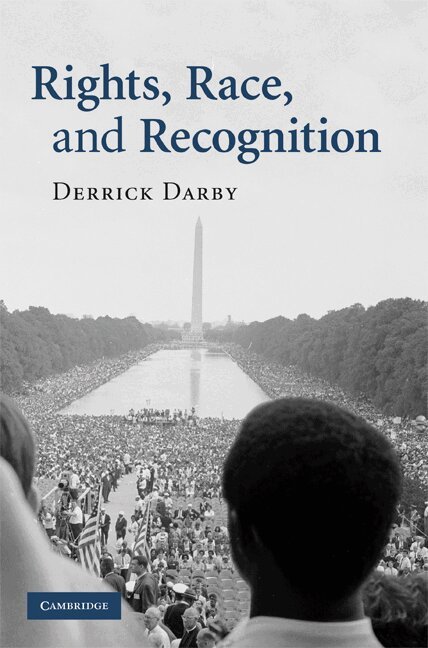
    Rights, Race, and Recognition

    AvDerrick Darby

    Inbunden, Engelska, 2009

    1 013 kr

    Beställningsvara. Skickas inom 10-15 vardagar. Fri frakt över 249 kr.

    Fler format och utgåvor

    Häftad

    315 kr

    Beskrivning

    What is the source of rights? Rights have been grounded in divine agency, human nature, and morally justified claims, and have been used to assess the moral status of legal and customary social practices. The orthodoxy is that some of our rights are a species of unrecognized or natural rights. For example, black slaves in antebellum America were said to have such rights, and this was taken to provide a basis for establishing the immorality of slavery. Derrick Darby exposes the main shortcomings of the orthodox conception of the source of rights and proposes a radical alternative. He draws on the legacy of race and racism in the USA to argue that all rights are products of social recognition. This bold, lucid and meticulously argued book will inspire readers to rethink the central role assigned to rights in moral, political, and legal theory as well as in everyday evaluative discourse.

    Produktinformation

    • Utgivningsdatum:2009-04-02
    • Mått:155 x 235 x 15 mm
    • Vikt:460 g
    • Format:Inbunden
    • Språk:Engelska
    • Antal sidor:208
    • Förlag:Cambridge University Press
    • ISBN:9780521515405

    Utforska kategorier

    • Filosofiska discipliner inom Filosofi och religion
    • Politiskt förtryck inom Samhälle och politik

    Mer om författaren

    Derrick Darby is Associate Professor of Philosophy, University of Kansas.

    Recensioner i media

    "....Rights, Race and Recognition offers an engaging and stimulating exploration of meta-ethical questions regarding moral rights, and, Darby's inclusion of the use of rights discourse in struggles for racial justice gives his text a political focus and immediacy that is most welcome.... Rights, Race and Recognition offers a rich theoretical landscape to be explored, and I have no doubt that others will find it equally compelling and stimulating. The book should be of interest to all those interested in the ways in which our theorization of rights can impact our political practice to ensure and protect those rights." Michael Monahan, Marquette University, Social Theory and Practice

    Innehållsförteckning

    • Introduction; 1. Having rights; 2. Rights without recognition; 3. Rights and recognition; 4. Race and rights; 5. What's wrong with slavery?; Conclusion.