• Fri frakt över 249 kr
  • •
  • Snabba leveranser
  • •
  • Billiga böcker
Kundservice

Du är på sajten för privatpersoner.

Företag, bibliotek eller offentlig verksamhet?

Du handlar på classic.bokus.com, där alla dina funktioner finns intakta.
Till classic.bokus.com
Bokus logotyp. Gå till startsidan.
  • Erbjudanden
  • Student
  • Topplistor
  • Barn & ungdom
  • Bokus Play
  • E-böcker
  • Ljudböcker
  • Pocketböcker
  • Spel och pussel

Pocketfynda! Hundratals böcker för 49 kr/st →

Sidfot

Mina sidor

    Hjälp

    • Kundservice
    • Vanliga frågor och svar
    • Frakt och leverans
    • Retur vid ångerrätt
    • Reklamera vara
    • Betalning
    • Köpvillkor
    • Allmänna villkor
    • Information om webbplatsens tillgänglighet

    Om Bokus

    • Om oss
    • Pressrum
    • För studenter
    • För företag
    • För bibliotek och offentlig verksamhet
    • För leverantörer
    • Hållbarhet

    Populärt

    • Aktuella erbjudanden
    • Presentkort
    • Studentlitteratur
    • Nya böcker
    • Topplistor
    • Signerade böcker
    • Engelska böcker

    Inspiration

    • Boktips
    • BookTok
    • Barnbokskaraktärer
    • Populära författare
    Logotyp för Bokus
    Följ oss på Facebook (extern länk)Följ oss på Instagram (extern länk)Följ oss på YouTube (extern länk)Följ oss på TikTok (extern länk)
    bokus @ CookiesAnpassa cookiesIntegritetspolicyKöpvillkor
    Till Citymail hemsida (extern länk)Till Budbee hemsida (extern länk)Till Postnord hemsida (extern länk)Till Schenker hemsida (extern länk)Till Early Bird hemsida (extern länk)Till Walleys hemsida (extern länk)
    1. Historia och arkeologi
    2. Historia
    3. Europas historia

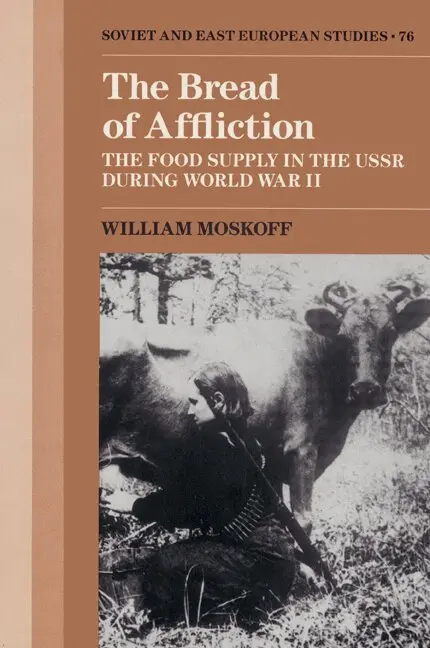
    The Bread of Affliction

    The Food Supply in the USSR during World War II

    AvWilliam Moskoff

    Häftad, Engelska, 20020-3 år

    Del 76 i serien Cambridge Russian, Soviet and Post-Soviet Studies

    629 kr

    Beställningsvara. Skickas inom 7-10 vardagar. Fri frakt över 249 kr.

    Fler format och utgåvor

    Inbunden

    1 444 kr

    Beskrivning

    This book tells how the Soviet Union fed itself after the invasion by the Germans during World War II. The author argues that central planning became much less important in feeding the population, and civilians were thereby forced to become considerably more self reliant in feeding themselves. A rationing system was instituted soon after the war began, but quickly became irrelevant because of the chronic food shortages. The breakdown in central supplies of food was accompanied by the diminished importance of the rouble, which in many places was replaced by bread and clothing as the medium of exchange. Although the Soviet army was given high precedence over civilians, the author also shows that the population living under German occupation was much worse off than were Soviet civilians living in the rear. In addition to extensive use of American and German archives from the war period, the author interviewed more than thirty Soviet emigres who survived the war.

    Produktinformation

    • Utgivningsdatum:2002-08-08
    • Mått:153 x 229 x 19 mm
    • Vikt:453 g
    • Ålder:0-3
    • Format:Häftad
    • Språk:Engelska
    • Läsålder:0-3
    • Serie:Cambridge Russian, Soviet and Post-Soviet Studies
    • Antal sidor:276
    • Förlag:Cambridge University Press
    • ISBN:9780521522830

    Utforska kategorier

    • Europas historia inom Historia och arkeologi

    Recensioner i media

    "This is the best book on the subject yet to appear in any language, and it is a delight to have it in print." W. Bruce Lincoln, Annals of the American Academy

    Innehållsförteckning

    • Acknowledgement; Abbreviations; Introduction; 1. On the eve of the War; 2. The desperate months of 1941: invasion and evacuation; 3. The German Occupation; 4. Producing food for the Unoccupied USSR: the factors of production; 5. Local food sources; 6. The first priority: feeding the armed forces; 7. Feeding the cities and towns: civilian rationing; 8. White and Black Markets: the safety valve for civilian food supply; 9. Crime and privilege; 10. Death's dominion: the Siege of Leningrad; 11. The newly liberated areas: restoring the food supply; 12. The wages of hunger: direct and indirect consequences of wartime food shortages; Conclusion; Bibliography.