• Fri frakt över 249 kr
  • •
  • Snabba leveranser
  • •
  • Billiga böcker
Kundservice

Du är på sajten för privatpersoner.

Företag, bibliotek eller offentlig verksamhet?

Du handlar på classic.bokus.com, där alla dina funktioner finns intakta.
Till classic.bokus.com
Bokus logotyp. Gå till startsidan.
  • Erbjudanden
  • Student
  • Topplistor
  • Barn & ungdom
  • Bokus Play
  • E-böcker
  • Ljudböcker
  • Pocketböcker
  • Spel och pussel

Pocketfynda! Hundratals böcker för 49 kr/st →

Sidfot

Mina sidor

    Hjälp

    • Kundservice
    • Vanliga frågor och svar
    • Frakt och leverans
    • Retur vid ångerrätt
    • Reklamera vara
    • Betalning
    • Köpvillkor
    • Allmänna villkor
    • Information om webbplatsens tillgänglighet

    Om Bokus

    • Om oss
    • Pressrum
    • För studenter
    • För företag
    • För bibliotek och offentlig verksamhet
    • För leverantörer
    • Hållbarhet

    Populärt

    • Aktuella erbjudanden
    • Presentkort
    • Studentlitteratur
    • Nya böcker
    • Topplistor
    • Signerade böcker
    • Engelska böcker

    Inspiration

    • Boktips
    • BookTok
    • Barnbokskaraktärer
    • Populära författare
    Logotyp för Bokus
    Följ oss på Facebook (extern länk)Följ oss på Instagram (extern länk)Följ oss på YouTube (extern länk)Följ oss på TikTok (extern länk)
    bokus @ CookiesAnpassa cookiesIntegritetspolicyKöpvillkor
    Till Citymail hemsida (extern länk)Till Budbee hemsida (extern länk)Till Postnord hemsida (extern länk)Till Schenker hemsida (extern länk)Till Early Bird hemsida (extern länk)Till Walleys hemsida (extern länk)
    1. Samhälle och politik
    2. Samhälle och kultur
    3. Kultur och medier
    4. Kulturvetenskap

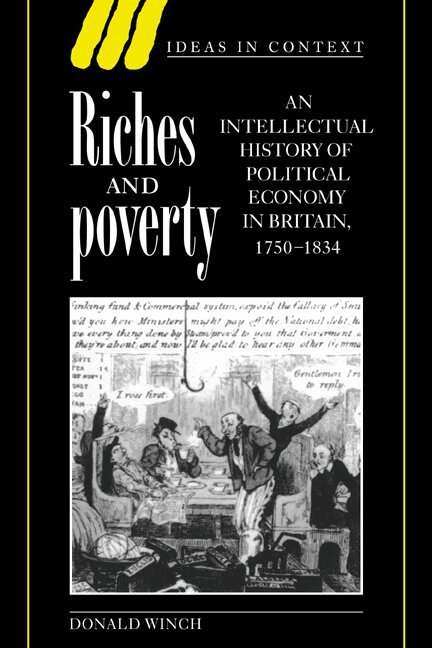
    Riches and Poverty

    An Intellectual History of Political Economy in Britain, 1750-1834

    AvDonald Winch,Quentin Skinner

    Häftad, Engelska, 1996

    Del 39 i serien Ideas in Context

    544 kr

    Beställningsvara. Skickas inom 7-10 vardagar. Fri frakt över 249 kr.

    Beskrivning

    In Riches and Poverty, Donald Winch explores the implications of a fundamental and influential idea in political economy. Adam Smith's science of the legislator provided a key to studying the rich and poor in commercial societies, transformed an ancient debate on luxury and inequality, and furnished a basis for assessing the American and French revolutions. Against this background, Britain embarked on its career as the first manufacturing nation, and Malthus made his first contributions to a debate which concluded with the Poor Law Amendment Act of 1834. Malthus provoked fierce opposition from the Lake poets, opening an intellectual rift that persisted throughout the nineteenth century and continues to influence our perceptions of cultural history. Donald Winch has written a compelling and consistently-argued narrative of these developments, which emphasises throughout the moral and political bearings of economic ideas.

    Produktinformation

    • Utgivningsdatum:1996-01-26
    • Mått:151 x 228 x 24 mm
    • Vikt:634 g
    • Format:Häftad
    • Språk:Engelska
    • Serie:Ideas in Context
    • Antal sidor:444
    • Förlag:Cambridge University Press
    • ISBN:9780521559201

    Utforska kategorier

    • Kulturvetenskap inom Samhälle och politik

    Recensioner i media

    'Riches and Poverty is a powerful, innovative and magesterial survey. Large swathes of it are virtually definitive.' Boyd Hilton, The Times Higher Education Supplement

    Innehållsförteckning

    • 1. After Adam Smith: prologue; Part I. Adam Smith's Science of the Legislator: 2. An excessive solicitude for posthumous reputation; 3. The secret concatenation; 4. The wisdom of Solomon; Part II. Adam Smith, Edmund Burke, and Factious Citizens: 5. Contested affinities; 6. The loss of regal government; 7. Burke's creed: politics, chivalry, and superstition; 8. The labouring poor; Part III. Robert Malthus as Political Moralist: 9. Imminence and immediacy: initial bearings; 10. New and extraordinary lights; 11. Rather a matter of feeling than argument; 12. A manufacturing animal: things not persons?; 13. The bountiful gift of providence; 14. Last things and other legacies; Part IV: 15. Epilogue.