• Fri frakt över 249 kr
  • •
  • Snabba leveranser
  • •
  • Billiga böcker
Kundservice

Du är på sajten för privatpersoner.

Företag, bibliotek eller offentlig verksamhet?

Du handlar på classic.bokus.com, där alla dina funktioner finns intakta.
Till classic.bokus.com
Bokus logotyp. Gå till startsidan.
  • Erbjudanden
  • Nyheter
  • Student
  • Topplistor
  • Barn & ungdom
  • Bokus Play
  • E-böcker
  • Pocketböcker
  • Spel & pussel

10% rabatt på allt med kod NYSTART10 →

Sidfot

Mina sidor

    Hjälp

    • Kundservice
    • Vanliga frågor och svar
    • Frakt och leverans
    • Retur vid ångerrätt
    • Reklamera vara
    • Betalning
    • Köpvillkor
    • Allmänna villkor
    • Information om webbplatsens tillgänglighet

    Om Bokus

    • Om oss
    • Pressrum
    • För studenter
    • För företag
    • För bibliotek och offentlig verksamhet
    • För leverantörer
    • Hållbarhet

    Populärt

    • Aktuella erbjudanden
    • Presentkort
    • Studentlitteratur
    • Nya böcker
    • Topplistor
    • Signerade böcker
    • Engelska böcker

    Inspiration

    • Boktips
    • BookTok
    • Populära bokserier
    • Barnbokskaraktärer
    • Populära författare
    Logotyp för Bokus
    Följ oss på Facebook (extern länk)Följ oss på Instagram (extern länk)Följ oss på YouTube (extern länk)Följ oss på TikTok (extern länk)
    bokus @ CookiesAnpassa cookiesIntegritetspolicyKöpvillkor
    Till Citymail hemsida (extern länk)Till Budbee hemsida (extern länk)Till Postnord hemsida (extern länk)Till Schenker hemsida (extern länk)Till Early Bird hemsida (extern länk)Till Walleys hemsida (extern länk)
    1. Naturvetenskap och teknik
    2. Matematik och naturvetenskap
    3. Biologi

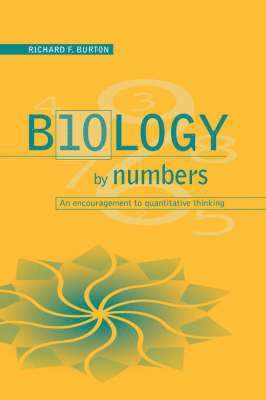
    Biology by Numbers

    An Encouragement to Quantitative Thinking

    AvRichard F. Burton

    Inbunden, Engelska, 1998

    959 kr

    Beställningsvara. Skickas inom 10-15 vardagar. Fri frakt över 249 kr.

    Fler format och utgåvor

    Häftad

    712 kr

    Beskrivning

    Biologists are notoriously reticent about using mathematics. This textbook is both an introduction to quantitative biology and a guide for the number-shy. Richard Burton fosters a sense of the fundamental importance and usefulness of mathematical principles in biology, with a fascinating range of examples. The book is geared towards the non-mathematician, and covers the basics as well as various more advanced topics from many diverse biological disciplines. Questions and calculations encourage active participation without holding up the reader. A key feature is the structure of the book. Rather than building it around biological disciplines, Dr Burton emphasises the common ways of reasoning used in areas as diverse as insect and population growth, seed mortality and sensory response (to mention a few that use logarithms). Written primarily for beginning undergraduates, this enlightening text will also be an essential aid for students throughout their undergraduate and graduate years.

    Produktinformation

    • Utgivningsdatum:1998-02-26
    • Mått:157 x 235 x 21 mm
    • Vikt:522 g
    • Format:Inbunden
    • Språk:Engelska
    • Antal sidor:256
    • Förlag:Cambridge University Press
    • ISBN:9780521571562

    Utforska kategorier

    • Biologi inom Naturvetenskap och teknik
    • Naturvetenskap:allmänt inom Naturvetenskap och teknik

    Recensioner i media

    'As a gentle introduction to mathematics for the numerically phobic biology undergraduate, Richard Burton's Biology by Numbers could hardly be bettered. Well-chosen examples take the agony out of algorithms and the confusion out of calculus.' New Scientist

    Innehållsförteckning

    • Preface; A guide to the book; 1. Putting two and two together; 2. Units, formulae and the use of old envelopes: confronting some obstacles to quantitative thinking; 3. Aspects of energy metabolism; 4. Getting things in proportion; 5. Perilous percentages, dangerous ratios; 6. Building a trophic pyramid; 7. Sodium in animals and plants; 8. Exchanges of water and carbon dioxide; 9. A geometric series; 10. Introduction to logarithms; 11. Bringing logarithms to life; 12. Exponential relationships; 13. Aspects of allometry; 14. More on allometry, and on quantitative patterns in nature; 15. How the abundance of food affects rates of feeding; 16. The characterization of trees and other branching systems; 17. Epilogue; References; Notes; Index.