• Fri frakt över 249 kr
  • •
  • Snabba leveranser
  • •
  • Billiga böcker
Kundservice

Du är på sajten för privatpersoner.

Företag, bibliotek eller offentlig verksamhet?

Du handlar på classic.bokus.com, där alla dina funktioner finns intakta.
Till classic.bokus.com
Bokus logotyp. Gå till startsidan.
  • Erbjudanden
  • Nyheter
  • Student
  • Topplistor
  • Barn & ungdom
  • Bokus Play
  • E-böcker
  • Pocketböcker
  • Spel & pussel

10% rabatt på allt med kod NYSTART10 →

Sidfot

Mina sidor

    Hjälp

    • Kundservice
    • Vanliga frågor och svar
    • Frakt och leverans
    • Retur vid ångerrätt
    • Reklamera vara
    • Betalning
    • Köpvillkor
    • Allmänna villkor
    • Information om webbplatsens tillgänglighet

    Om Bokus

    • Om oss
    • Pressrum
    • För studenter
    • För företag
    • För bibliotek och offentlig verksamhet
    • För leverantörer
    • Hållbarhet

    Populärt

    • Aktuella erbjudanden
    • Presentkort
    • Studentlitteratur
    • Nya böcker
    • Topplistor
    • Signerade böcker
    • Engelska böcker

    Inspiration

    • Boktips
    • BookTok
    • Populära bokserier
    • Barnbokskaraktärer
    • Populära författare
    Logotyp för Bokus
    Följ oss på Facebook (extern länk)Följ oss på Instagram (extern länk)Följ oss på YouTube (extern länk)Följ oss på TikTok (extern länk)
    bokus @ CookiesAnpassa cookiesIntegritetspolicyKöpvillkor
    Till Citymail hemsida (extern länk)Till Budbee hemsida (extern länk)Till Postnord hemsida (extern länk)Till Schenker hemsida (extern länk)Till Early Bird hemsida (extern länk)Till Walleys hemsida (extern länk)
    1. Samhälle och politik
    2. Samhälle och kultur
    3. Kultur och medier
    4. Kulturvetenskap

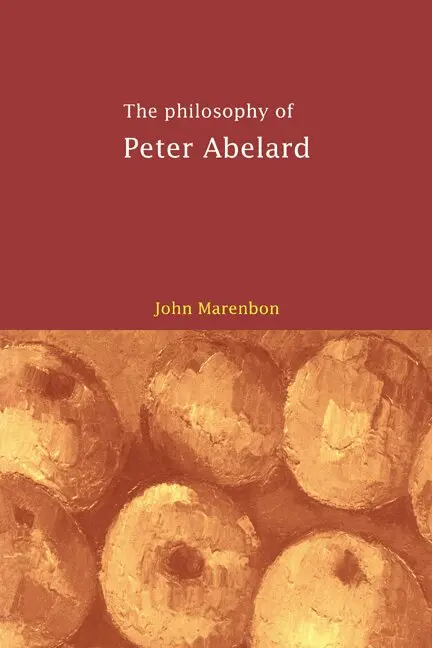
    The Philosophy of Peter Abelard

    AvJohn Marenbon

    Häftad, Engelska, 1999

    664 kr

    Beställningsvara. Skickas inom 10-15 vardagar. Fri frakt över 249 kr.

    Fler format och utgåvor

    Inbunden

    1 040 kr

    Beskrivning

    This 1997 book offers a major reassessment of the philosophy of Peter Abelard (1079-1142) which argues that he was not, as usually presented, a predominantly critical thinker but a constructive one. By way of evidence the author offers analyses of frequently discussed topics in Abelard's philosophy, and examines other areas such as the nature of substances and accidents, cognition, the definition of 'good' and 'evil', virtues and merit, and practical ethics in detail. Part I discusses Abelard's life and works, and considers problems of chronology and canon (including the question of the authenticity of the correspondence with Heloise). Part II analyses Abelard's ontology, epistemology and semantics, showing how he tried to reconstruct the ideas he had learned from Aristotle, Porphyry and Boethius to fit his presumption that there is nothing which is not a particular. Part III analyses Abelard's ethical theory, showing that it is far wider and more sophisticated than has been believed.

    Produktinformation

    • Utgivningsdatum:1999-09-23
    • Mått:152 x 229 x 22 mm
    • Vikt:580 g
    • Format:Häftad
    • Språk:Engelska
    • Antal sidor:396
    • Förlag:Cambridge University Press
    • ISBN:9780521663991

    Utforska kategorier

    • Kulturvetenskap inom Samhälle och politik

    Recensioner i media

    '… most satisfying to read, combining a clear sense of purpose with an exemplary clarity of thought. It is difficult to overestimate its importance for the study of Abelard and of twelfth-century intellectual culture in general.' Early Medieval Europe

    Innehållsförteckning

    • Preface; List of abbreviations; Note on the reference system; Introduction; Part I: 1. A life; 2. Teachings and writings on logic; 3. Abelard's theological project; Excursus I: the letters of Abelard and Heloise; Conclusion: Abelard's logic and his theory; Part II: Introduction; 4. Logic, philosophy and exegesis; 5. Substance, differentiae and accidents; 6. Forms and language; 7. Perception and knowledge; 8. Universals; Conclusion: dicta, non-things and the limits of Abelard's ontology; Part III: Introduction; 9. Ethics, God's power and his wisdom; 10. God's goodness: theodicy and the meaning of 'good'; 11. Act, intention and consent; 12. Contempt, law and conscience; 13. Virtue, love and merit; Excursus II: love, selflessness and Heloise; 14. Ethics, society and practice; Conclusion: Abelard's theological doctrines and his philosophical ethics; General conclusion; Appendix: Abelard as a 'critical thinker'; Select bibliography; Index.